Pilates event for a fashion brand — from showroom morning to runway
How to design a pilates event for a fashion brand: showroom morning, influencer wear-and-move, runway in an unconventional space, clothing in motion.
- Published
- June 1, 2026
- Updated
- June 1, 2026
Why pilates changes how people see clothing
Static collection presentations let viewers assess fabric, color and basic silhouette. Movement changes everything. Pilates shows how clothing works with the body: how it stretches, how folds fall, whether cuts work for different movements, whether fabric has the right elasticity. That knowledge does not come from product description — the participant experiences it.
Polish premium fashion is doing more activations beyond the classic season reveal. Warsaw Fashion Week creates a media window, but the best brands are starting to understand that a pilates event in an unconventional space — from a showroom to an art space — builds relationships with VIP clients while generating content that reaches more people than a photo of a color on a hanger.
Clothing in motion reveals the truth about cutting, materials and line change. This is testing, not presentation.
Three formats for fashion events: from intimacy to spectacle
Showroom Morning is the most intimate: 20–30 VIP clients in the brand showroom, a pilates session in capsule pieces from the fresh collection, comfortable clothing (premium leggings, crop top), freedom to move, photo-video documentation that goes to brand channels afterward. The format is built on trust — participants are already fans, the session strengthens the relationship and creates authentic UGC.
Influencer Wear-and-Move offers creative freedom: 15–25 fashion, lifestyle and beauty creators carefully selected for brand aesthetic test the collection through movement. The influencer feels part of the creative process, and the brand collects content that is more credible than static shoots. Runway in an Unconventional Space replaces stadiums: gallery, loft, garden, hotel terrace. Pilates replaces catwalk choreography — controlled movement, clear lines, fabrics seen in 360 degrees.
Anatomy of a Showroom Morning for a fashion brand
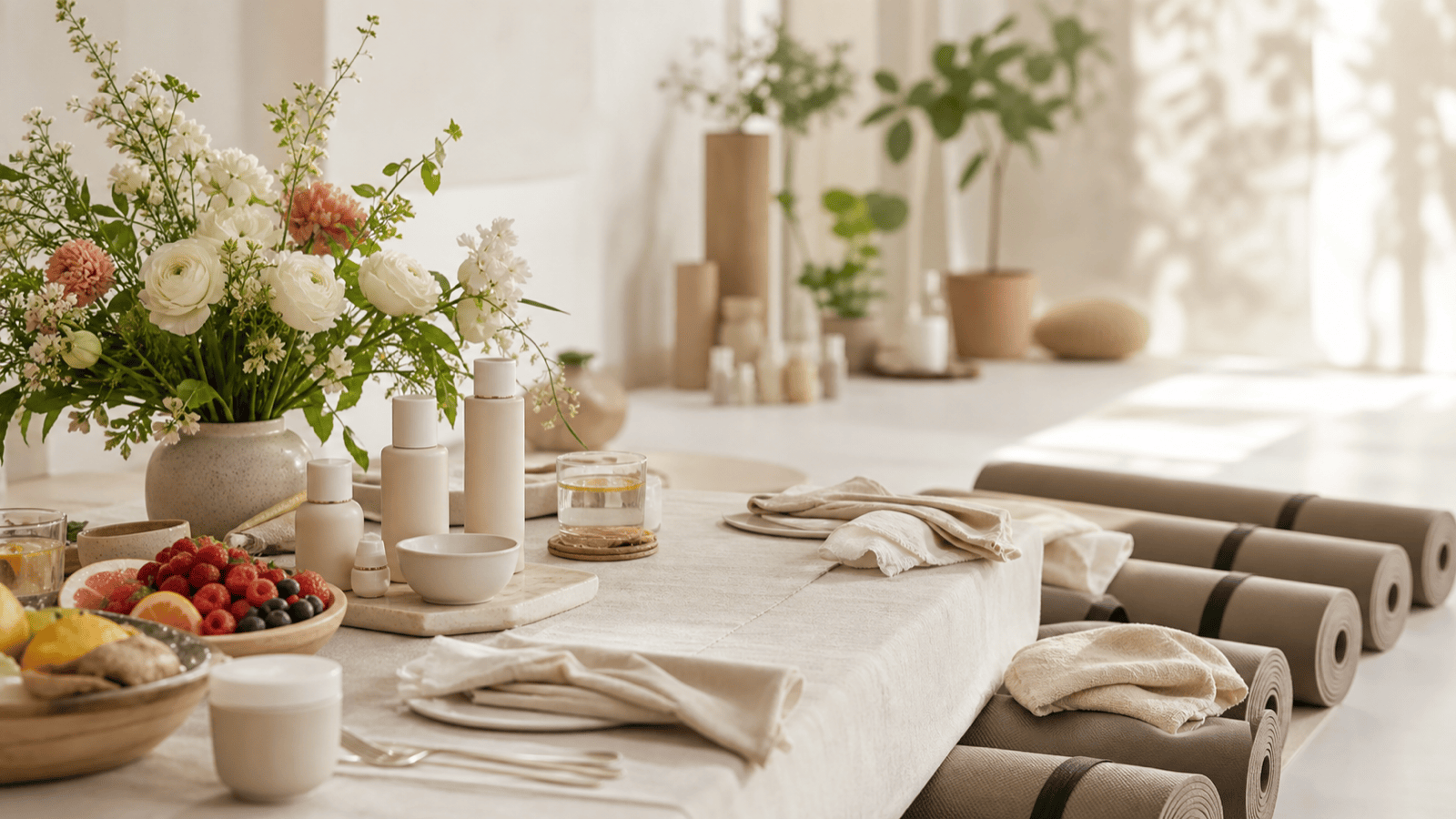
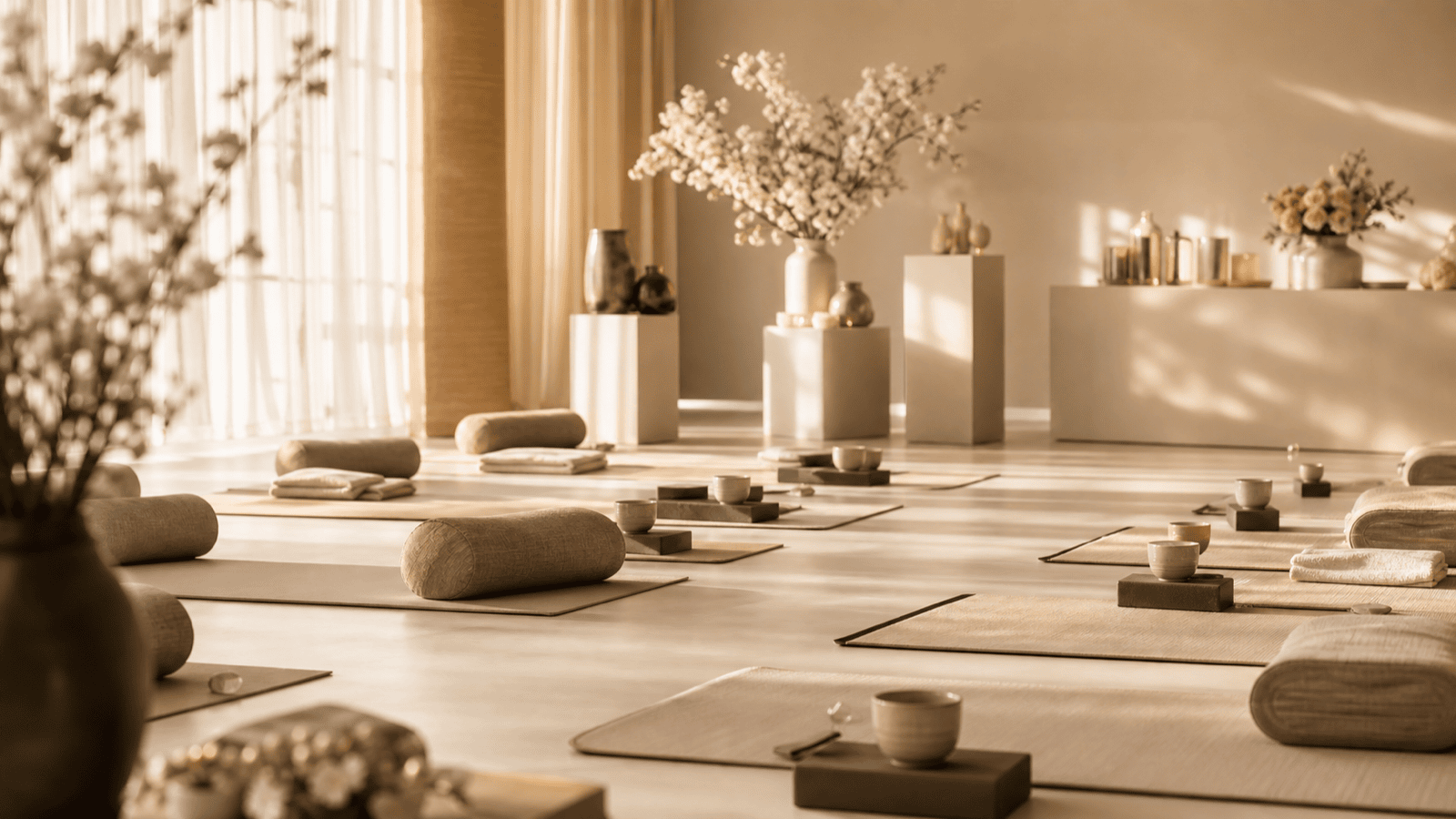
The meeting starts with cappuccino, greeting and exploring the showroom. On mats in the brand pieces, participants arrive in the clothes being shown. The pilates session is brief (45–55 minutes), intermediate level, with an instructor who understands the brand and talks about body control as a tool for wearing premium clothing. After the session: changing, refresh, green tea, treats, conversations. Every participant gets a gift bag and access to a special purchase line (30–50% discount, available 10 days).
The key is balancing the session as an experience with the session as a business tool. The participant should feel treated as VIP, not like a model. Photos are taken discreetly: clothing details, movement, faces that want to be shown. After the event, the brand has 15–25 ready posts, Stories, possibilities for newsletters.
Logistics from the brand side: sizing, fittings, archive
Preparing a Showroom Morning requires logistical time: selecting 2–3 outfits to test, checking if all sizes fit, whether cuts work in motion, whether materials show stress on mats. I recommend a test session with the instructor 3 weeks before the event — practical questions: whether leggings pinch too much, whether crop tops are comfortable, whether there is a light breeze, whether shoes (if worn) slide on mats.
After the event, logistics means archiving: importing photos, tagging for media libraries, a list of participants (personal follow-up, feedback request, invitation to the next event), a list of publications, publishing agreements (if any). A fashion brand often does this in batches 1–2 times a year — four or six events per season — so a storage system and image reuse becomes strategic.
Mistakes that ruin the impact of a fashion event
Most common: forcing the previous season into the current event. Clients see last season's clothing and lose interest in newness. The second mistake is unclear dress code communication: if the event is in a showroom and elegance matters, say so. Third: no photo documentation or only brand logo, not clothing on a moving body.
Fourth mistake is inviting people who do not understand the brand's aesthetic. Fifth: too few mats and tight space. Sixth: provocation without sense — if the brand is not associated with extravagance, do not build a runway around a fountain. The format should come from the brand's DNA, not from event trends.
How to turn this topic into a business decision
The practical value of "Pilates event for a fashion brand — from showroom morning to runway" is not another inspirational trend note. It is a decision framework for Brand Manager, Marketing Manager, Premium Showroom Manager: what the event should achieve, who must be in the room, what the guest should feel and which proof the brand or HR team needs after the day. When the topic is treated this way, pilates event fashion brand becomes a strategic format rather than an attractive extra on the agenda.
Start with the search intent behind pilates event fashion brand. A person looking for this topic usually wants to know whether the format is worth the budget, how it compares with alternatives, what risks to avoid and how quickly it can be produced. The article should therefore answer concrete planning questions: scale, timing, guest profile, venue, content, communication, measurement and next-step ownership.
For generative search, the strongest answer is specific and operational: name the audience, name the use case, explain the mechanism and show what changes after implementation. This is why the article keeps returning to fashion activation pilates, event architecture, brand fit and measurable post-event value instead of staying at the level of wellness vocabulary.
A useful planning conversation should also separate concept, production and proof. The concept defines the promise: why this event belongs to the brand or employer at all. Production translates that promise into choreography, schedule, venue conditions, hospitality, guest handling and content capture. Proof shows what happened after the event: which people attended, what material can be used, what conversations started and whether the format deserves a second edition.
This structure protects the budget from decorative decisions. Flowers, props, music and styling matter, but only when they support the intended outcome. If the audience is a premium client group, the experience needs privacy, fluent hosting and precise pacing. If the audience is employees, it needs accessibility, psychological safety and communication that does not make movement feel performative. The same pilates-based format can therefore serve different goals, but only when the brief is honest about the people in the room.
- Use pilates event fashion brand as the main entity in the brief and page title.
- Connect the topic to Fashion activation, because category context improves search relevance.
- Answer who it is for, when it works, what it costs in attention and how success is measured.
- Keep one clear next action: brief, pilot, content plan, venue shortlist or stakeholder approval.
FAQ
Frequently asked questions
- Does a pilates event fit every fashion brand?
- It works best for lifestyle brands, premium casualwear, activewear, luxury athleisure and premium collections focused on movement or elasticity. Formal brands (haute couture for events) need a different format, unless it is an after-show party.
- How much time to prepare a Showroom Morning?
- Minimum 4–6 weeks. Three weeks to confirm participants, logistical tests, clothing prep. One week for final communication and photo preparation.
Internal links