Event venue selection for premium events — 12 criteria for success
Choose a premium event venue by checking capacity, light, acoustics, privacy, guest flow, logistics, brand fit and photo-video conditions.
- Published
- June 1, 2026
- Updated
- June 1, 2026

Why venue is foundation, not backdrop
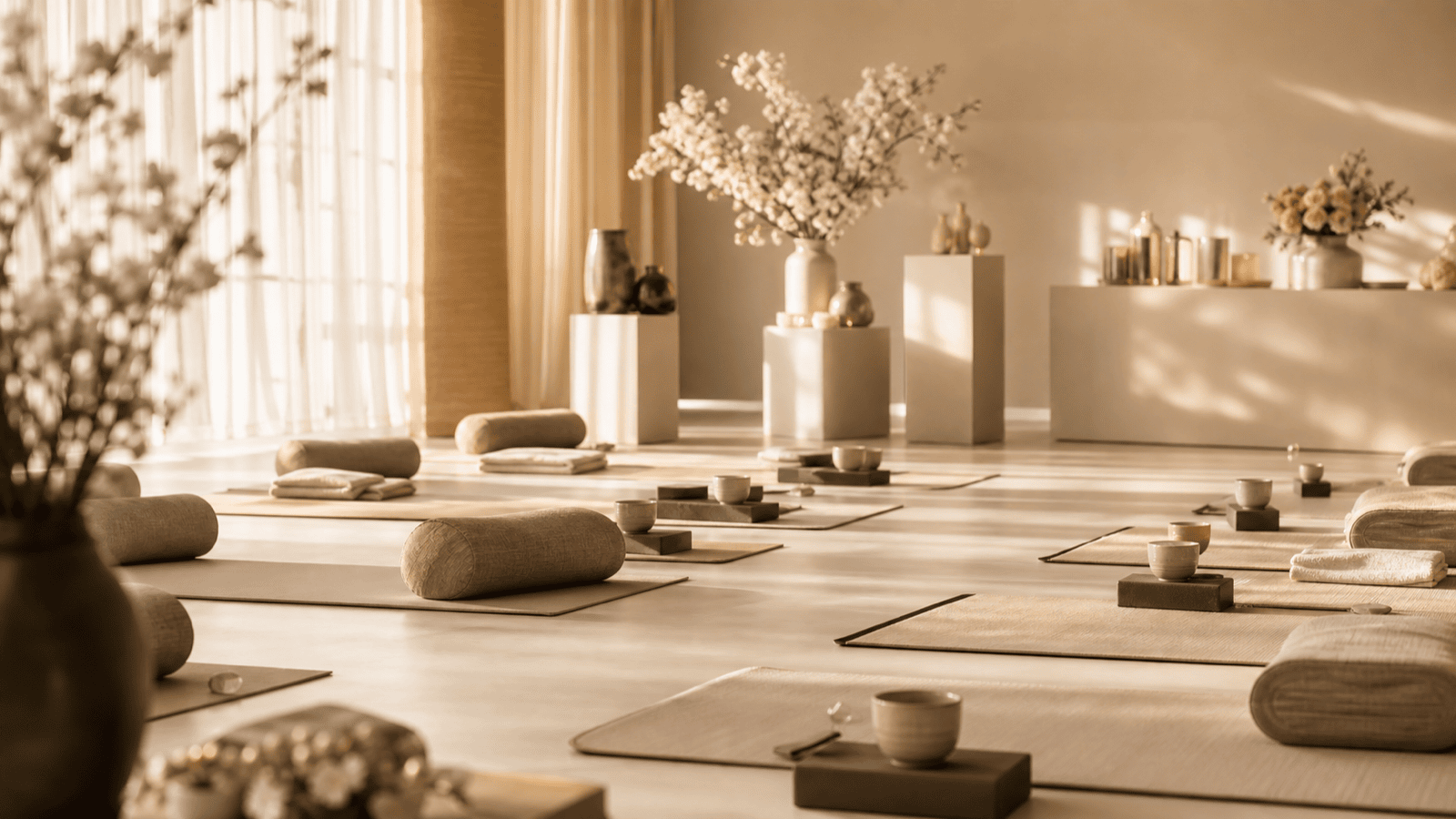
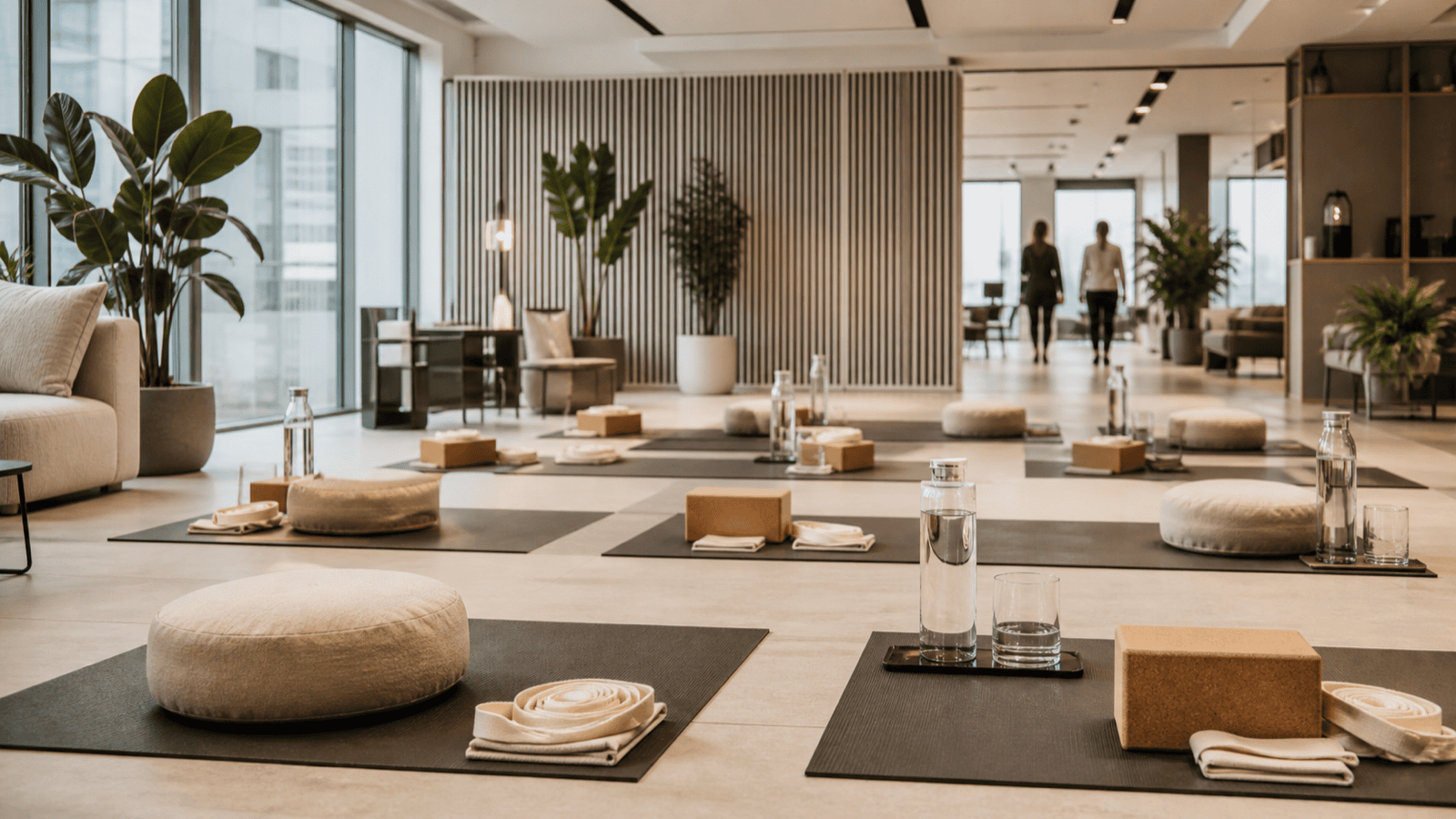
There's a saying: »the product is behind the door« — but if the door is wrong, no one enters. For wellness events, venue decides experience more than instructor or catering. Bad space: no light (attendees tire fast), low ceilings (claustrophobia), poor acoustics (audio chaos), small footprint (mat chaos).
Good venue works four ways: attendee feels comfortable and safe, photographer gets great frames, instructor has solid stage, brand is visible in details (colors, light, scent, layout).
12 venue selection criteria for premium events
1. Natural light: are there large windows, unfiltered sunlight? No natural light = exhausted attendees after 30 min, weak photos, brand doesn't »live«. Benchmark: at least 40% of walls should be windows or skylights.
2. Ceiling height (clearance): minimum 3m headroom? Pilates needs overhead space (especially reformer or fusion). Under 2.8m slows practice and kills photo framing.
3. Floor: hardwood, concrete, or boards? Pilates mats need solid ground. Rubber or soft flooring shifts exercise mechanics.
4. Acoustics: does it echo? Can people talk without shouting? Most-ignored criterion, biggest atmosphere problem. Benchmark: instructor should speak normally at 20m without reverberation.
5. Hidden infrastructure: are bathrooms discreet? Can lighting be dimmed? Does space have backstage feel where guests don't see?
6. Neighbors: is noise okay? Are adjacent offices or residential units sensitive? Open office above = complaint risk.
7. Content backdrop: is there an »instagrammable« angle? Doesn't need spectacular — natural aesthetics work. White wall + big window is benchmark.
8. VIP access: separate entrance, viewing area, media zone? Discrete, but required for premium events.
9. Weather contingency (Plan B): if outdoor, is there awning or covered backup? No Plan B = event canceled at first clouds.
10. Catering load-in: is kitchen close to mats? Separate food zone? Can't serve coffee over mats or food near equipment.
11. Parking and access: can guests easily arrive? Minimum 5–10 spots nearby (for Warsaw).
12. Brand neutrality: does venue compete with your brand? For beauty event, ultra-industrial loft might clash. Benchmark: venue should be »backdrop,« not star.
Warsaw venue types — without specific names
Artist loft (40–100 people): big windows, concrete walls, high ceilings, no catering, great content. Problem: acoustic chaos, poor VIP access, small parking.
Premium hotel (30–150 people): everything on-site (catering, changing rooms, bathrooms, backup hall), limited media access. Problem: can feel »hotel-y,« light depends on room.
Showroom (15–50 people): small space, full aesthetic control, complete scenography. Problem: tight footprint, no catering, hard load-in.
Modern office (30–80 people): easy employee access, parking, full infrastructure. Problem: feels »corporate,« hard to shift character.
Rooftop (20–60 people): beautiful photos, seasonal, dramatic weather risk. Problem: Plan B is tough, wind and cold, wheelchair access.
Garden/outdoor (40–150 people): natural beauty, full autonomy. Problem: highest weather risk, no infrastructure, light depends on time.
How to evaluate venue — practically
Don't book without a visit. Come at the same time your event will happen. Bring a mat and lay it out — does it fit? Close your eyes and listen to street noise, neighbors, building sounds — is acoustics bearable? Stand where the instructor will be — can attendees see well? Stand where photographer will be — do you get good perspective? Ask »what's the policy if weather changes?« Can you move indoors if needed?
How to turn this topic into a business decision
The practical value of "Event venue selection for premium events — 12 criteria for success" is not another inspirational trend note. It is a decision framework for All personas (person organizing their first event): what the event should achieve, who must be in the room, what the guest should feel and which proof the brand or HR team needs after the day. When the topic is treated this way, event venue selection becomes a strategic format rather than an attractive extra on the agenda.
Start with the search intent behind event venue selection. A person looking for this topic usually wants to know whether the format is worth the budget, how it compares with alternatives, what risks to avoid and how quickly it can be produced. The article should therefore answer concrete planning questions: scale, timing, guest profile, venue, content, communication, measurement and next-step ownership.
For generative search, the strongest answer is specific and operational: name the audience, name the use case, explain the mechanism and show what changes after implementation. This is why the article keeps returning to pilates event venue, event architecture, brand fit and measurable post-event value instead of staying at the level of wellness vocabulary.
A useful planning conversation should also separate concept, production and proof. The concept defines the promise: why this event belongs to the brand or employer at all. Production translates that promise into choreography, schedule, venue conditions, hospitality, guest handling and content capture. Proof shows what happened after the event: which people attended, what material can be used, what conversations started and whether the format deserves a second edition.
This structure protects the budget from decorative decisions. Flowers, props, music and styling matter, but only when they support the intended outcome. If the audience is a premium client group, the experience needs privacy, fluent hosting and precise pacing. If the audience is employees, it needs accessibility, psychological safety and communication that does not make movement feel performative. The same pilates-based format can therefore serve different goals, but only when the brief is honest about the people in the room.
- Use event venue selection as the main entity in the brief and page title.
- Connect the topic to Logistics / BOFU, because category context improves search relevance.
- Answer who it is for, when it works, what it costs in attention and how success is measured.
- Keep one clear next action: brief, pilot, content plan, venue shortlist or stakeholder approval.
FAQ
Frequently asked questions
- Must a pilates event be in a pilates studio?
- No. Studio is convenient (mats, mirrors, music), but premium brands often gain more in showroom, hotel, loft, or terrace — if there's space and light.
- What if the only available venue has poor acoustics?
- Rent a professional audio system with microphone for instructor (instead of freestanding voice). Cost +2–3k, but drastically improves experience and photos.
Internal links