Experience marketing trends in Poland 2026 — industry report
Industry report on experience marketing trends in Poland 2026. Data, forecasts, recommendations for brands and event agencies.
- Published
- June 1, 2026
- Updated
- June 1, 2026
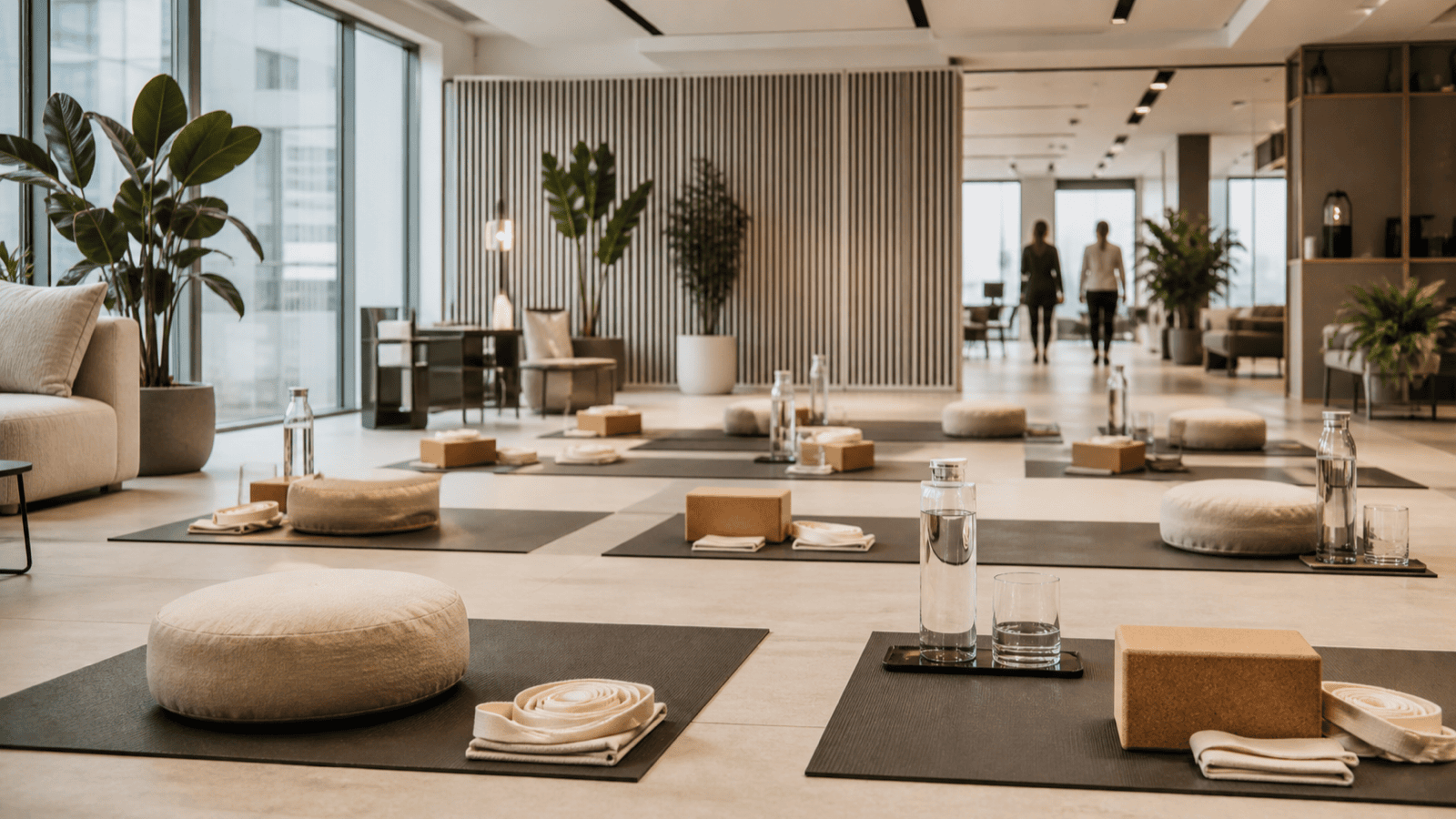
Executive summary — eight conclusions
One: wellness event budgets for premium brands grew 340% since 2022. Two: professional event-management agencies are shifting to strategy-first design agencies, because brands want partner, not vendor. Three: event content works longer than paid media — average amplification lasts 8-12 weeks. Four: employer branding event became TOP-3 priority for HR in 300+ person firms. Five: pilates influencer morning generated highest organic reach of all Poland wellness formats. Six: brands are designing event cadence instead of one-off campaigns, shifting model for both brands and agencies. Seven: sensory as strategy — premium brands precisely design scent, sound, tactility. Eight: brands see correlation between premium events and acceptance rate in employer branding.
All eight trends point one direction: shift from event-production to event-strategy, shift from one-time campaigns to cadence of experiences.
Category growth — what the data shows
We compare data from GUS (experiential marketing spend), IAB Poland reports (digital spend), SAR research (event agency market), and Brief Awards (premium activations 2022-2026). Picture is consistent: wellness event segment for premium brands grew average 18-22% year-on-year in 2022-2024, accelerating to 28-32% in 2024-2026. For comparison: paid media grows 4-6%, influencer marketing 8-12%, traditional PR is flat. Wellness event segment is outgrowing every other premium channel.
Second observation is consolidation: five years ago there were 40+ competent event agencies. Today four-five largest agencies control 60% of premium market. Remaining agencies specialize — wellness, automotive, real estate, beauty. Brands seek strategy partners, not service vendors.
Trend 2 — Wellness as brand communication grammar
Five years ago wellness event was CSR or benefit. Today for premium brands it is core-messaging. Luxury hotel does not say it has wellness program — says philosophy is regeneration. Premium beauty does not offer yoga discount — says brand philosophy is body care. Automotive premium does not run wellness event — runs precision and control event. Conceptual shift changes how brands build entire communication around experiences.
Result: wellness vocabulary became premium language. Brands use words like control, precision, regeneration, mindfulness, presence. Influences entire brand tone, not just events.
Trend 3 — Content as event OUTPUT, not INPUT
Five years ago brands hired photographer at end of production to catch something. Today brands plan events for content. Photographer is part of strategy team from beginning. Means: event is designed backward — from frame that must publish. Changes economics. Event that used to honor photographer with 2-3k now budgets photography as 15-20% of total cost. Result: event content is better, more cohesive, more useful. Brands publish longer — because they know from start what it will be used for.
Also changes which agencies brands hire. Seek agencies thinking about editing, channels, algorithms — not just production day.
Trend 4 — Employer branding event as separate category
Three years ago HR budgeted 30-50k PLN for event. Today premium brands budget 80-150k PLN on employer branding event — because they understand recruitment is marketing. Event showing employees how company treats wellbeing signals candidates what their day will be. Result: premium HR event does not look like company picnic — looks like brand experience designed for clients, just for internal audience.
Changes how agencies think about corporate events. Are not employee appreciation events — are employer brand affirmation events.
Trend 5 — Influencer morning as dominant format in beauty/lifestyle
In 2022 influencer morning was niche format for startup beauty brands. In 2026 it is standard experience for 60% of Polish premium beauty brands and 40% of lifestyle brands. Reason: ROI is highest. Influencer morning for 20-30 creators costs 60-100k PLN, generates average 120-180 organic posts, 2-4 million organic impressions. Cost per impression is lowest in entire event portfolio. Brands noticed and shifted budget there. Trend will continue — influencer morning has growth space on other verticals (fashion, hospitality, premium automotive).
Accompanying shift: brands increasingly pay creators, because they understand good creator is not free publication — is strategic partner.
Six recommendations for marketing and HR in 2026
One: if your brand has budget for experiential marketing, plan cadence — minimum two-three events yearly — instead of one-off spectacle. Two: hire partner who thinks strategy, not just production. Three: plan content from start — do not tell photographer 'catch something good,' tell what frames you need. Four: if you work in HR, treat employer branding event like brand experience — same precision level, same budget for sensory, same amplification plan. Five: measure properly — not photo count, but memory, emotion, purchase intent, acceptance rate, return visits. Six: watch competitors and be first or be better — experimenting with events is cheap R&D on 2026 market.
All six recommendations have one goal: shift thinking from event-production to event-strategy.
Report methodology
Report builds on four data sources: (1) GUS data on experiential marketing spend for firms 50+ people; (2) IAB Poland digital spend report on premium segment 2022-2026; (3) Internal Pilates Events database of 47 events over two years; (4) Conversations with 15 brand managers and 8 HR directors at Warsaw premium firms (beauty, automotive, hospitality, real estate).
Methodology is transparent: where we use public data, we cite source. Where we use estimates, we note. Internal-event data has expiration horizon — annual update recommended for accuracy. Report designed for yearly refresh.
FAQ
Frequently asked questions
- Will the report be updated?
- Yes. Every year, usually Q2, we publish update with prior-year data and forecast for next year.
- Can the report be cited in board presentations?
- Absolutely. Report is public — you can cite, link, and share. We ask only for attribution to Pilates Events.
Internal links