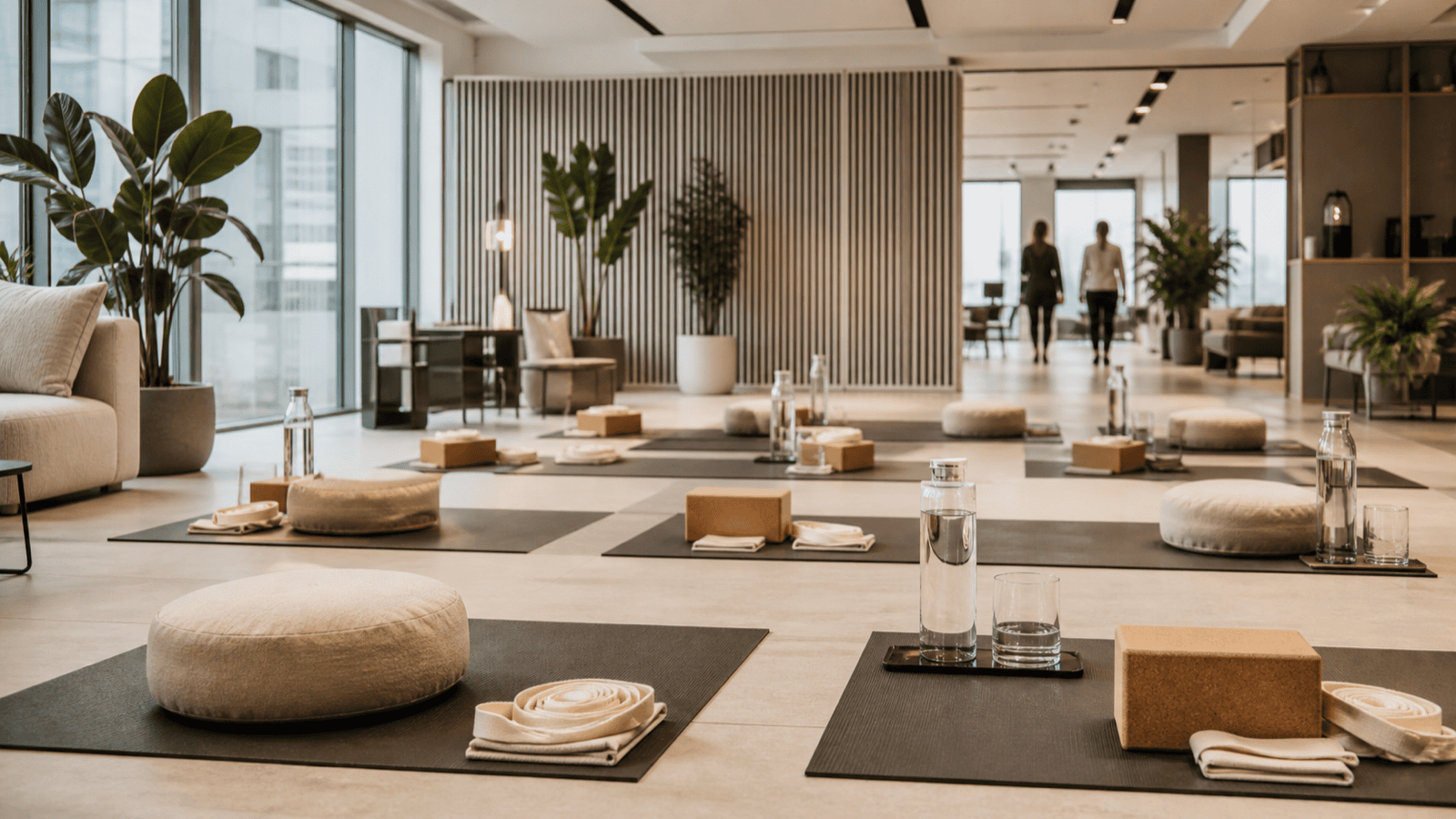
How to organize a pilates event step by step — complete timeline from brief to post-event
How to organize a pilates event in 12 weeks: brief, strategy, venue, catering, partners, communications and post-event content.
- Published
- June 1, 2026
- Updated
- June 1, 2026
12-week process — from brief to post-event
Pilates events aren't built in 2 weeks. Fast is 8 weeks, standard is 10–12. Below is the full process from week -12 (start) through week 0 (event) and week +4 (post-event).
Each phase has »warning signs« — points where an organizer should consider hiring an agency instead of DIY.
Week -12 to -10: Strategy and concept
This isn't »event idea,« it's answering business questions. Answer: 1. Goal: what should happen? (HR event, brand activation, VIP, launch, community?) 2. Audience: who's coming? (employees, clients, influencers, media?) 3. Headcount: how many? (15, 50, 100?) 4. Brand: what's the tone? (premium, accessible, professional?) 5. Budget: how much? 6. When: date? 7. Success: what comes next? (leads, publications, feedback, loyalty?)
Warning sign: »I don't know« — if you can't answer these clearly after thinking, stop and work through the brief on paper or with your team. Unclear goals = event chaos. Hiring an agency here saves a month of work.
Week -10 to -8: Scenario and format
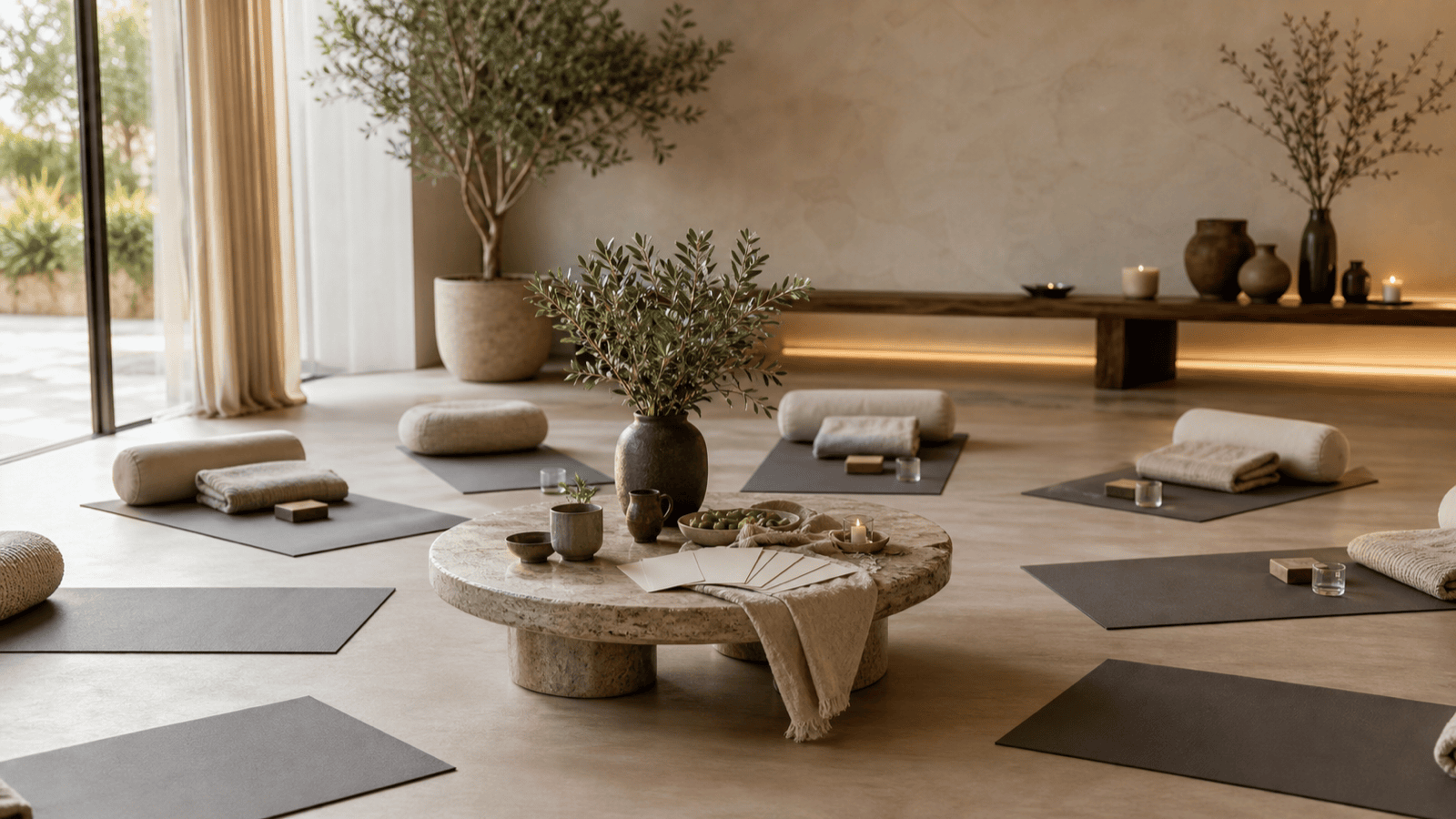
Scenario is »what happens« — minute by minute from guest arrival to goodbye. Format is »how it looks«: sections (welcome, pilates, product, catering), talent (instructor, host, staff), props (mats, pillows, drinks). Decide: 90 minutes or 3 hours? Does instructor speak or silent? Seated or standing meals? Photos when?
Warning sign: »we'll figure it out later« — scenario written last-minute is improvisation. Can't describe »what happens« on paper? Agency saves 3 days of scrambling.
Week -8 to -6: Venue and visual direction
Book venue: check at least 3 options, test light at event time, ask about Plan B, flexibility. Visual direction: decide colors, flowers, lighting, furniture. Brand should be visible but discrete (logo on welcome drink, not logo wall).
Warning sign: »take what's available« — weak budget on decor = gray event. Scenography doesn't need to be expensive (1–2k works), but must be designed. No vision? Agency time.
Week -6 to -4: Partners, sponsors, influencers
Instructor: hire and schedule briefing. Catering: menu talk, delivery times. Influencers (if any): book, negotiate, content brief. Media (if invited): pitch email, press kit. Brand partners (if any): gifts, products, promotional terms. Everyone gets: invite, scenario (so they know timing), role clarification.
Warning sign: »we'll email« — miscommunications like »I thought you'd photo, but you did« kill events. Agency has template comms for each role.
Week -4 to -2: Marketing and comms
Invitation (email + social): clear about »what it is« and »why attend.« Save-the-date 3 weeks ahead, reminder 1 week before. Guest list: who's coming? How many confirmations? Follow-ups? FAQ: »what do I wear«, »is this for beginners«, »what do I get«, »can I bring someone«? Internal comms (if HR): »this isn't a fitness test,« »everyone welcome,« »breakfast and relax.«
Warning sign: invite sent Friday before event, no RSVP list, guests don't know what to wear. Classic event chaos. Comms must start 3 weeks prior.
Week -2 to event day: Execution
Final briefing for instructor and all »talent«: scenario, timing, positions, where photographer is. Rehearsal (if new elements, brand artifacts, unfamiliar people): »what if instructor is late« (backup plan), »what if rain« (which Plan B), »what if fewer show up« (comfortable still?). Day before: venue check (mats, music, water?), final comms (»tomorrow, time X, entrance Y«). Event day: arrive 2h early, live briefing with instructor, photographer positioning, check that guests know where to change and sit post-session.
Warning sign: »we'll tell them day-of« — guests arrive uncertain or late. Day-before reminder essential.
After event: Content and impact (week +1 to +4)
Day +1: collect photos from photographer, edit top 30–50, send to influencers with tagging request. Days +2–+7: publish 3–5 social posts (welcome moment, people, pilates, product, guests) and thank-you email with materials. Days +8–+14: behind-the-scenes stories, testimonials, »how did you like it« quiz. Days +15–+28: repurpose materials in other channels (newsletter, LinkedIn, blog, PR). Week +4: report with attendee count, hashtag impressions, leads (if any), feedback (if surveyed).
Warning sign: »content later« — if you wait 3 weeks, the moment is dead. Materials must publish day +1 and +2.
12 most common beginner organizer mistakes
1. Too little time — »we have 4 weeks« instead of 12. Result: poor venue, unavailable instructor, no scenario. 2. No scenario — »we'll improvise.« Result: timing chaos, guests unsure. 3. Instructor no briefing — »just teach like usual.« Result: »classes« not »event experience.« 4. No comms — »just email invite.« Result: 30% no-show, 50% late. 5. Bad venue — »whatever's available.« Result: no light, bad acoustics, wrong space. 6. No catering — »we have drinks.« Result: hungry guests, early departures. 7. No content plan — »we'll photo what happens.« Result: bad frames, unusable materials. 8. No Plan B — »weather will be good.« Result: outdoor event, rain, chaos. 9. Instructor arrives day-before — »I'll call morning-of.« Result: no scenario run-through. 10. No follow-up — »event done.« Result: materials unused, no leads, people forget. 11. Everyone does everything — »we're all handling this.« Result: »did someone remember...« chaos. 12. No measurement — »count who showed.« Result: CFO asks »what was the impact,« you don't know.
Five signals you need an agency
1. »I don't know how« — if you feel lost at any phase, agency prevents mistakes. 2. »I have 100 things to do« — if it's an add-on to your job, someone needs to coordinate. Agency removes it from your plate. 3. »Event must generate leads« — if ROI matters, you need measurement design from the start. Agency does this standard. 4. »Influencers, media, partners« — if external players are involved, you need one contact point and coordination. Agency provides this. 5. »Last event was chaotic« — if previous events showed what could improve, agency ensures it.
FAQ
Frequently asked questions
- Can I organize a pilates event in 4 weeks?
- Only if: under 25 people, no influencers/media, no catering, small session. For brand activation or HR events, 4 weeks is risky. Minimum 8–10 weeks for real experience.
- Which phase takes longest?
- Longest: (1) finding good venue (2–3 weeks), (2) scenario with brand (1–2 weeks), (3) post-event content (4 weeks). Everything else is 1–2 weeks.
Internal links