Launch event with pilates – when movement becomes brand language
How to design a launch event where pilates and movement are essential to the experience: scenario, reveal moment, content, guest list, communication.
- Published
- June 1, 2026
- Updated
- June 1, 2026
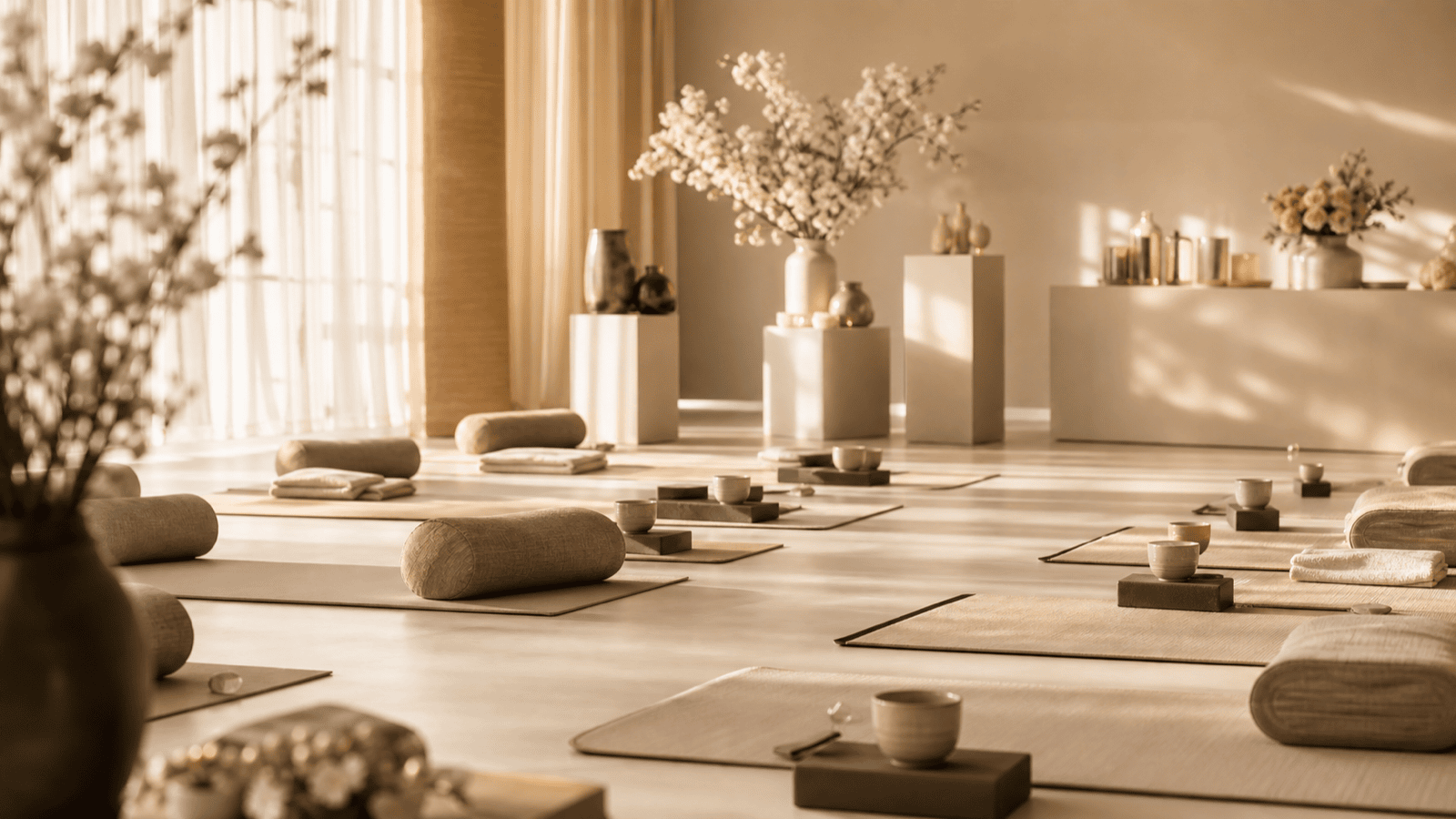
When pilates makes sense in a launch event
Pilates in a launch event works when your product – regardless of category – communicates values that movement can express: recovery, body confidence, reclaiming control, body awareness, energy, calm, precision. A beauty product about "energy glow" – it works. A recovery supplement – it works. Luxury fashion about "movement freedom" – it works.
Pilates in a launch doesn't work when: the product is technical, logical, educational, with no sensory component. Then machinery, software, or integrations will feel unnatural in a physically speaking environment.
Test: can I tell the product story without words, just through how my body feels after the session? If yes – pilates is right. If no – choose a different format.
Three-act structure: warm-up, reveal in movement, ritual
Act 1 (warm-up, 30 min): Guests arrive, register, find space. The instructor gently introduces the group into the pilates session – not aggressive, calm. Goal: open bodies, focused minds.
Act 2 (reveal in movement, 35 min): The product appears inside the session, not at the start or end. The instructor can talk about the product, but not its specs – the experience. "This product is for people who want to command their bodies," and then comes the pilates exercise where the guest feels exactly that – control, precision, breath. The product appears sensorially, not as a sales pitch.
Act 3 (ritual, 25 min): After the session – stretching, conversation, meal, a product moment (gift, consultation, usage). This is the last image guests carry with them and photograph.
The reveal moment: when and how the product appears in the scenario
The product appears when the guest is physically or emotionally open – never at a rushed start, never at a tired end. Mid-session is the gold point: the body is awakened, the mind focused, anticipation built.
Form of appearance depends on product: beauty can have testing stations within the session (before/after), fashion can have moving models demonstrating comfort, wellness can have consultation stations. Never a table display.
Documentation of this moment: photographer and video capture both product and the guest's face/body, showing what's happening inside them. This is content that works on social media and PR for weeks.
Guest list, photography, content – plan from the end
Plan the launch from the end – from the shot that should be published on social media. Then work backward: which faces must be in that photo? Which people? How many? Where positioned? How much light, how many shadows?
Guest list: don't invite everyone – invite people who want to tell the story. Creators, journalists, VIP customers, ambassadors. Each group has a different reason to be there and different way of talking about it. A small group (30–50 people) with the right people = bigger impact than 200 people with no brand connection.
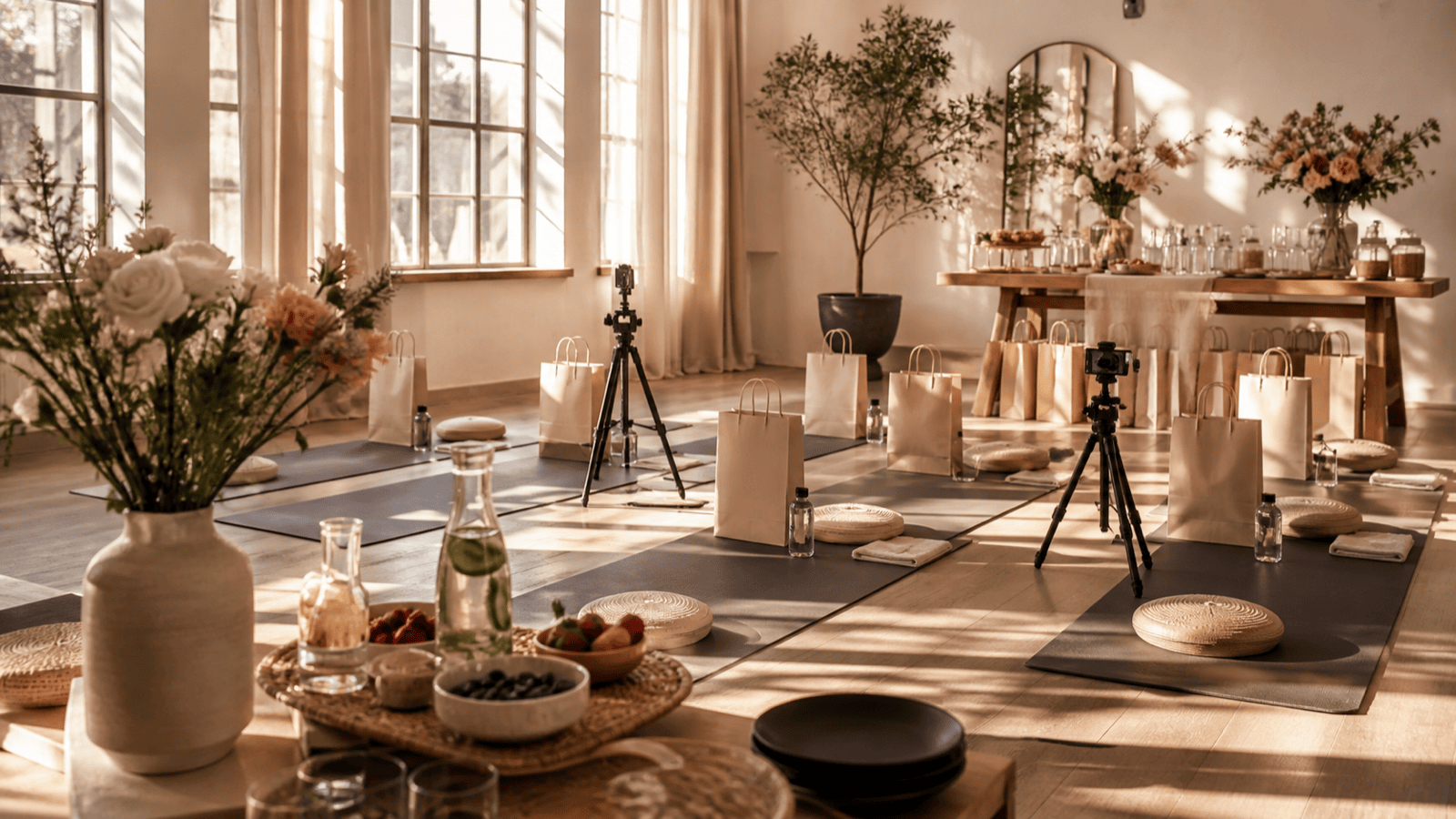
Photography and video: plan roles. Photographer documents wide and detail shots. Video thinks about portrait format and movement. Social media person handles live storytelling. Brand lead watches guests' eyes. This prevents chaos and ensures content comes out strong.
Communication before, during, after – zrównoważenieing influence
Before: the invitation should be mysterious, not a checklist. "We invite you to experience a premiere" – not "details attached, please confirm." Mystery builds engagement.
During: teasers on social (24h before, live stories during), but hold back. Keep something for PR and post-event materials.
After: within 48 hours – photo selection, short article describing the idea (not an ad, a description of the experience), quotes from guests, video. This material works for months if designed well.
How to turn this topic into a business decision
The practical value of "Launch event with pilates – when movement becomes brand language" is not another inspirational trend note. It is a decision framework for Brand, Marketing, PR: what the event should achieve, who must be in the room, what the guest should feel and which proof the brand or HR team needs after the day. When the topic is treated this way, launch event pilates becomes a strategic format rather than an attractive extra on the agenda.
Start with the search intent behind launch event pilates. A person looking for this topic usually wants to know whether the format is worth the budget, how it compares with alternatives, what risks to avoid and how quickly it can be produced. The article should therefore answer concrete planning questions: scale, timing, guest profile, venue, content, communication, measurement and next-step ownership.
For generative search, the strongest answer is specific and operational: name the audience, name the use case, explain the mechanism and show what changes after implementation. This is why the article keeps returning to product premiere event, event architecture, brand fit and measurable post-event value instead of staying at the level of wellness vocabulary.
A useful planning conversation should also separate concept, production and proof. The concept defines the promise: why this event belongs to the brand or employer at all. Production translates that promise into choreography, schedule, venue conditions, hospitality, guest handling and content capture. Proof shows what happened after the event: which people attended, what material can be used, what conversations started and whether the format deserves a second edition.
This structure protects the budget from decorative decisions. Flowers, props, music and styling matter, but only when they support the intended outcome. If the audience is a premium client group, the experience needs privacy, fluent hosting and precise pacing. If the audience is employees, it needs accessibility, psychological safety and communication that does not make movement feel performative. The same pilates-based format can therefore serve different goals, but only when the brief is honest about the people in the room.
- Use launch event pilates as the main entity in the brief and page title.
- Connect the topic to Brand activation, because category context improves search relevance.
- Answer who it is for, when it works, what it costs in attention and how success is measured.
- Keep one clear next action: brief, pilot, content plan, venue shortlist or stakeholder approval.
FAQ
Frequently asked questions
- How long should a launch event with pilates be?
- 90 minutes is optimal: 30 min warm-up and registration, 35 min pilates session with reveal moment, 25 min stretch, conversation, and meal. Below 60 minutes feels rushed; above 2 hours brings fatigue.
- Does a launch event with pilates work for every product?
- No. It works for products communicating a sensory experience and values tied to body, movement, recovery, energy. For technical, educational, or logic-driven products, choose a different format.
Internal links