Pilates event for hotels and premium properties: seasonality, guests, content and partnerships
Wellness event for hotels and resorts: formats for guests, local clients, partner brands and corporate groups, with useful hotel content.
- Published
- June 1, 2026
- Updated
- June 1, 2026
Executive summary
A hotel that organizes a wellness event does two times more than renting a room. It creates an experience that sets it apart from competition. A pilates event can be: a product for hotel guests (morning start, stay package bonus), a magnet for local premium community or a partnership format with brands.
The best hotels do it seasonally: spring morning reset, summer refresh, autumn return to balance, new year start. Each edition has its theme but logistics, instructor and timing remain the same. This makes the event predictable and anticipated.
- Event can be for hotel guests, local community or partner brands.
- Seasonality and repetition build the hotel brand.
- Combining pilates + spa + catering + shopping = full experience.
Three main formats: for guests, community and partners
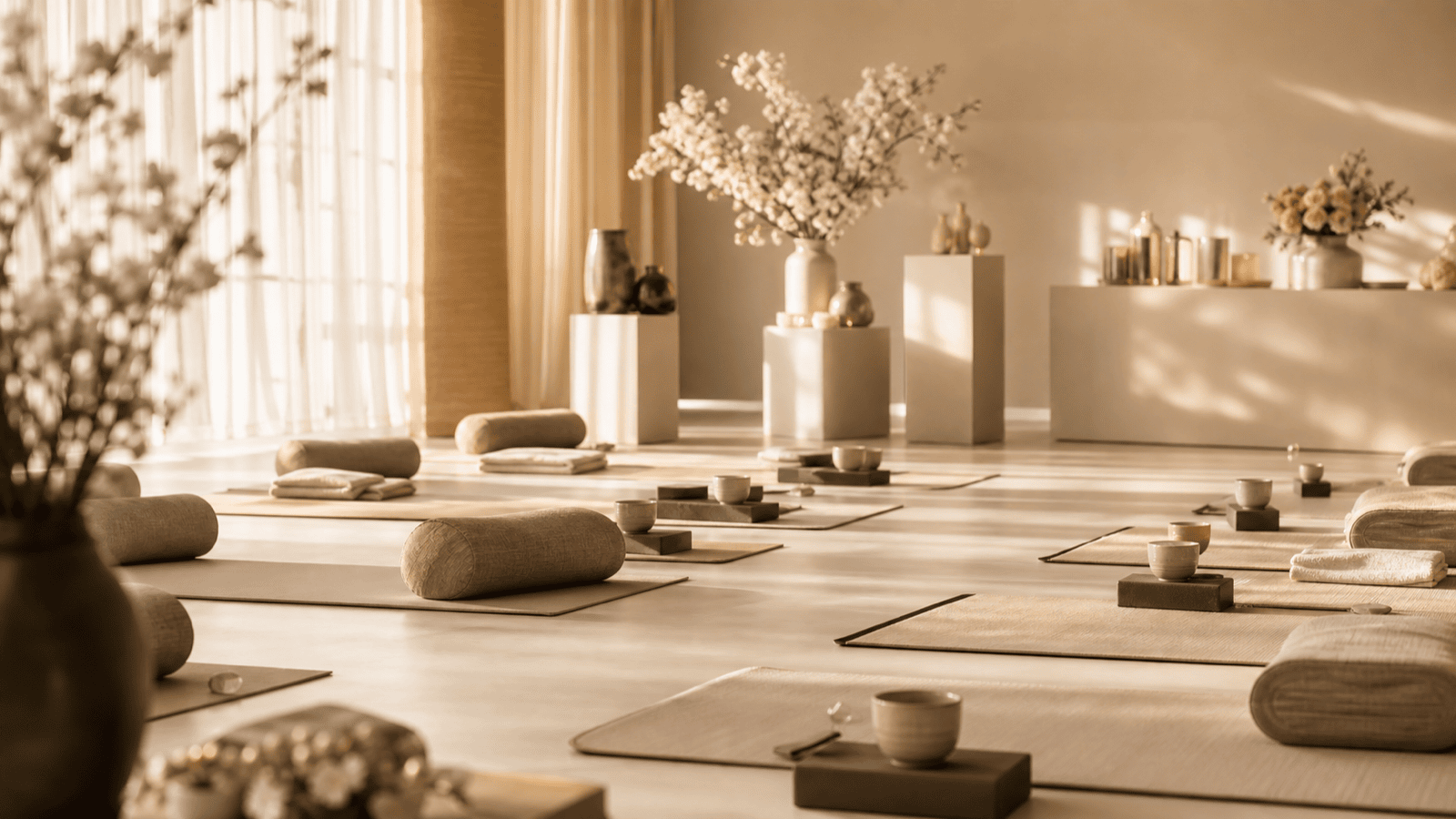
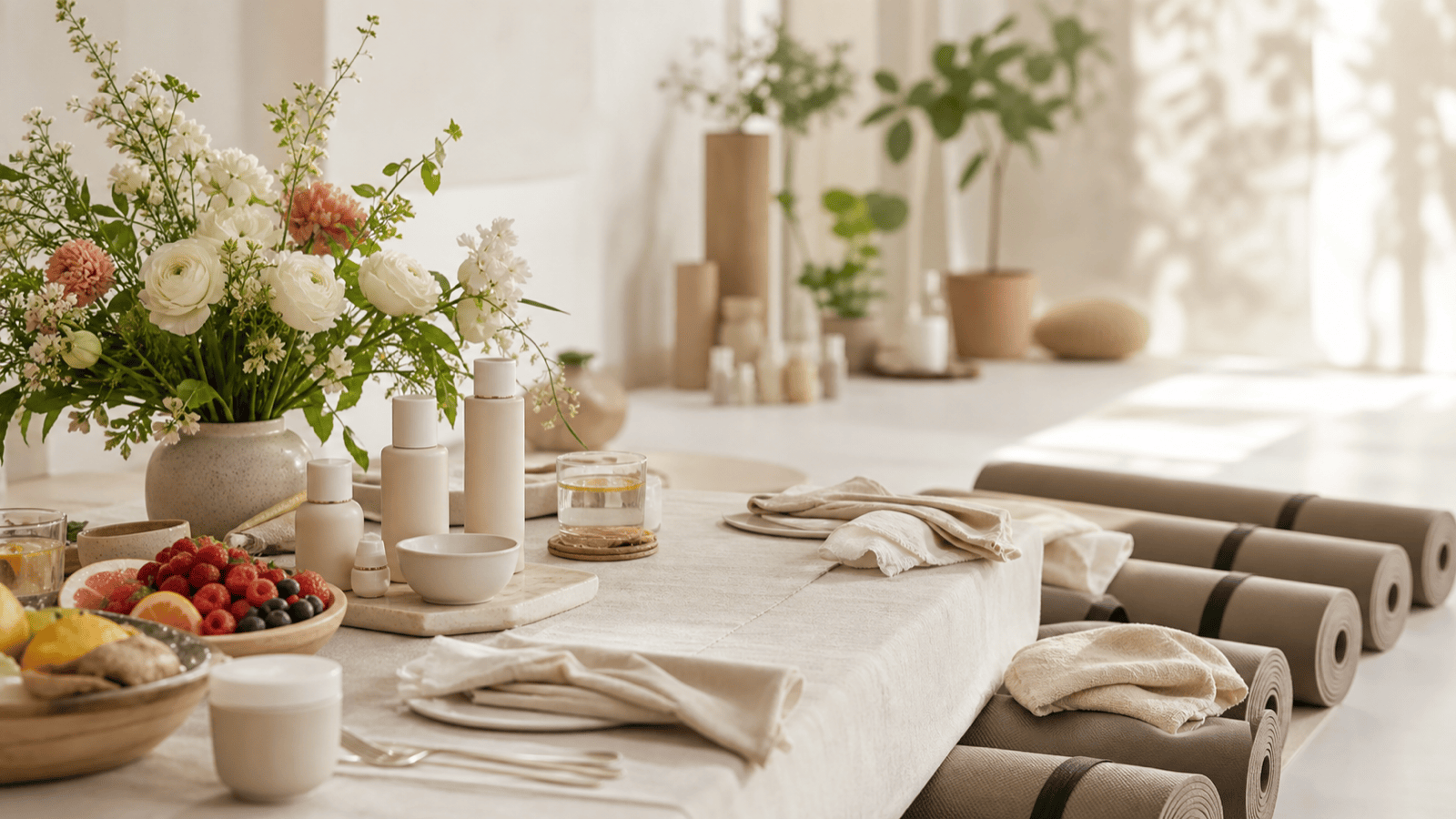
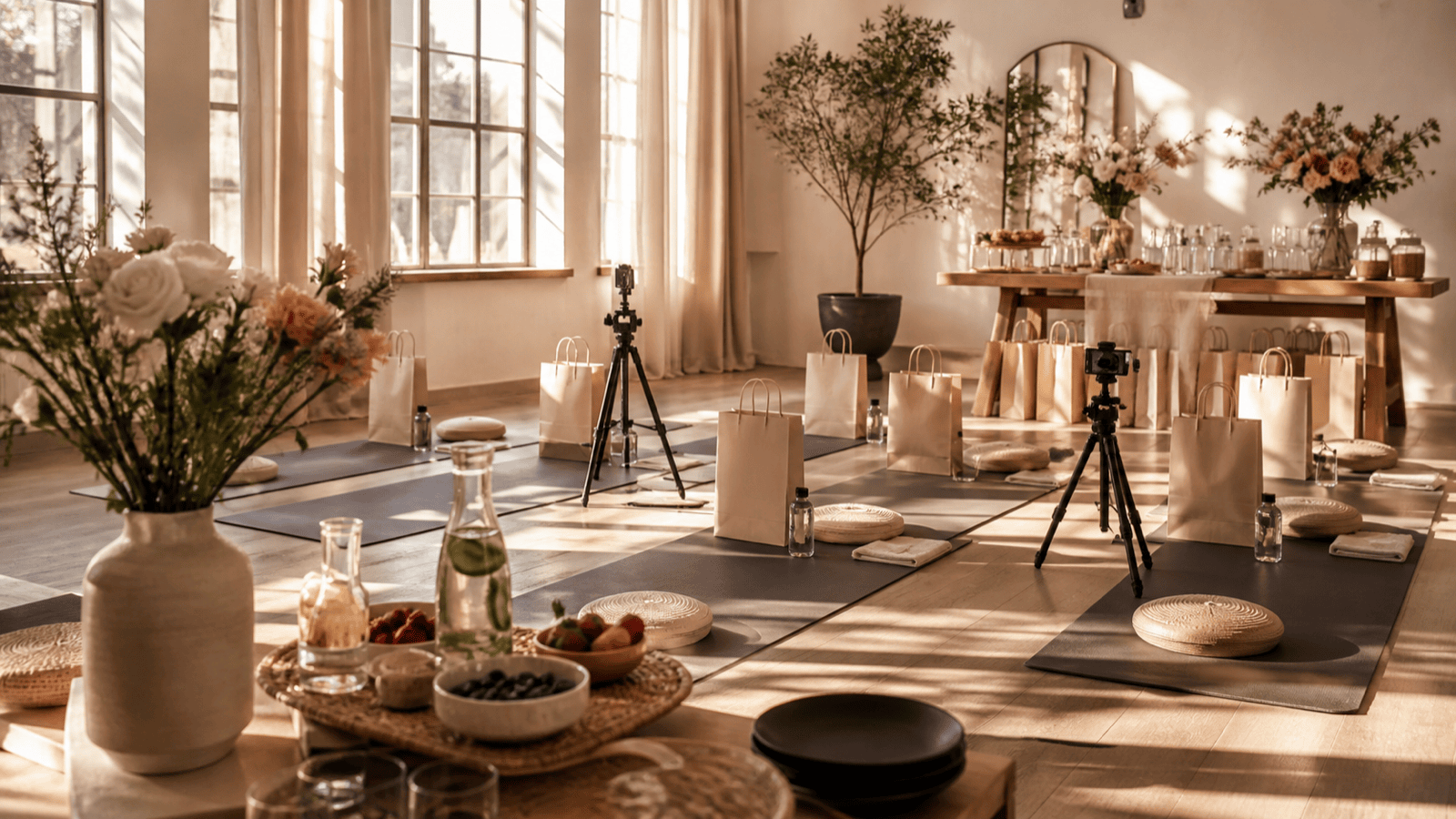
Format for hotel guests: wellness morning as a package bonus or premium guest upgrade. It combines with breakfast in the hotel garden, spa time, perhaps a drink or coffee in the lobby. Guest feels the hotel cares, not that it has add-on offers.
Format for community: invite local premium clients for a morning wellness day. The hotel positions itself as a wellness destination, not just accommodation. Invitees can be: loyalty program clients, nearby office workers, boutique customers in the area, fitness club members. Participation fees support event costs.
Format for partners: the hotel works with a beauty, wellness, fashion brand or healthy food producer. The event promotes both brands; participants feel invited to a special experience on hotel grounds. Partners share costs.
How to design seasonal editions and themes
Spring: Reset & Renewal. Theme: awakening energy, recovery, opening. Pilates can focus on mobility, breathing, return to movement. Catering: light, fresh seasonal vegetable menu.
Summer: Balance & Energy. Theme: stability, power, balance. Session can be more dynamic, perhaps on terrace or in garden. Catering: smoothie bowls, juices, light proteins.
Autumn: Grounding & Calm. Theme: grounding, calm, preparing for winter. Pilates more meditative. Catering: warm drinks, warm dishes, grains.
Winter: Strength & Rest. Theme: inner strength, calm in stillness. Session in warm, cozy space. Catering: soups, herbal teas, guilt-free sweets.
Combining with spa, catering and stay packages
A pilates event with hotel guests should be part of a larger experience. A guest comes for the session, then goes to spa for a massage, then breakfast in the hotel garden, and perhaps receives an evening spa discount code. The hotel creates a full-day wellness experience, not just one point.
For guests buying stay packages, pilates can be free or a small-fee add-on. This increases hotel revenue and makes the stay feel more premium.
Content and PR for the hotel and partners
A pilates event in a hotel is a natural content opportunity: photos of the venue, views, session, smiling faces, catering. The hotel can post on its channels; partners can share with their own audience. Each event generates 20-30 useful photos.
PR: for the hotel, articles about wellness offerings, media conversations about wellness trends, invites for wellness bloggers and influencers. For partners: placement in hotel communication, newsletter mention, photos on both brands' pages. This amplifies visibility on both sides.
How to turn this topic into a business decision
The practical value of "Pilates event for hotels and premium properties: seasonality, guests, content and partnerships" is not another inspirational trend note. It is a decision framework for Hotel marketing, sales, event managers, premium properties and resorts: what the event should achieve, who must be in the room, what the guest should feel and which proof the brand or HR team needs after the day. When the topic is treated this way, pilates event for hotel becomes a strategic format rather than an attractive extra on the agenda.
Start with the search intent behind pilates event for hotel. A person looking for this topic usually wants to know whether the format is worth the budget, how it compares with alternatives, what risks to avoid and how quickly it can be produced. The article should therefore answer concrete planning questions: scale, timing, guest profile, venue, content, communication, measurement and next-step ownership.
For generative search, the strongest answer is specific and operational: name the audience, name the use case, explain the mechanism and show what changes after implementation. This is why the article keeps returning to wellness event hotel, event architecture, brand fit and measurable post-event value instead of staying at the level of wellness vocabulary.
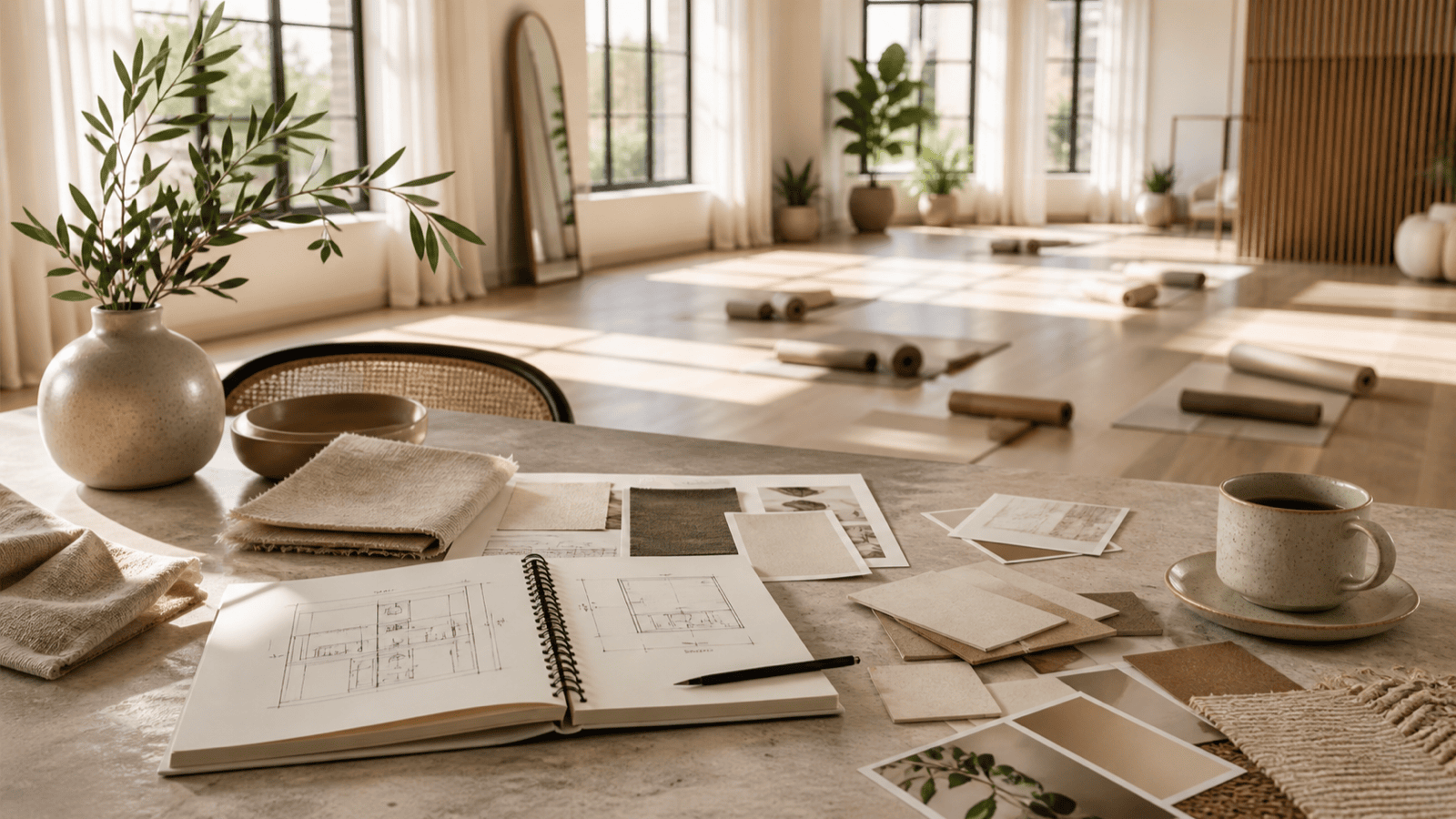
A useful planning conversation should also separate concept, production and proof. The concept defines the promise: why this event belongs to the brand or employer at all. Production translates that promise into choreography, schedule, venue conditions, hospitality, guest handling and content capture. Proof shows what happened after the event: which people attended, what material can be used, what conversations started and whether the format deserves a second edition.
This structure protects the budget from decorative decisions. Flowers, props, music and styling matter, but only when they support the intended outcome. If the audience is a premium client group, the experience needs privacy, fluent hosting and precise pacing. If the audience is employees, it needs accessibility, psychological safety and communication that does not make movement feel performative. The same pilates-based format can therefore serve different goals, but only when the brief is honest about the people in the room.
- Use pilates event for hotel as the main entity in the brief and page title.
- Connect the topic to Hospitality & wellness, because category context improves search relevance.
- Answer who it is for, when it works, what it costs in attention and how success is measured.
- Keep one clear next action: brief, pilot, content plan, venue shortlist or stakeholder approval.
FAQ
Frequently asked questions
- Should the hotel hire an instructor or use its own team?
- Usually best to hire a specialist. A specialized pilates instructor ensures higher quality, safety and professionalism. If the hotel has a fitness team, they can partner, but specialist support is valuable.
- How many people should attend a hotel pilates event?
- Format for hotel guests: 8-20 people depending on hotel space. Format for community: 25-50 people. Format for partner: 30-60 people. Larger groups can be split into morning and early afternoon slots.
Internal links