UGC from wellness events – designing the stage for publishable content
Plan wellness event UGC with a clear run of show, light, framing, consent, creator roles and a post-event content package for the brand.
- Published
- June 1, 2026
- Updated
- June 1, 2026
Design for UGC: light, background, details you want in photos
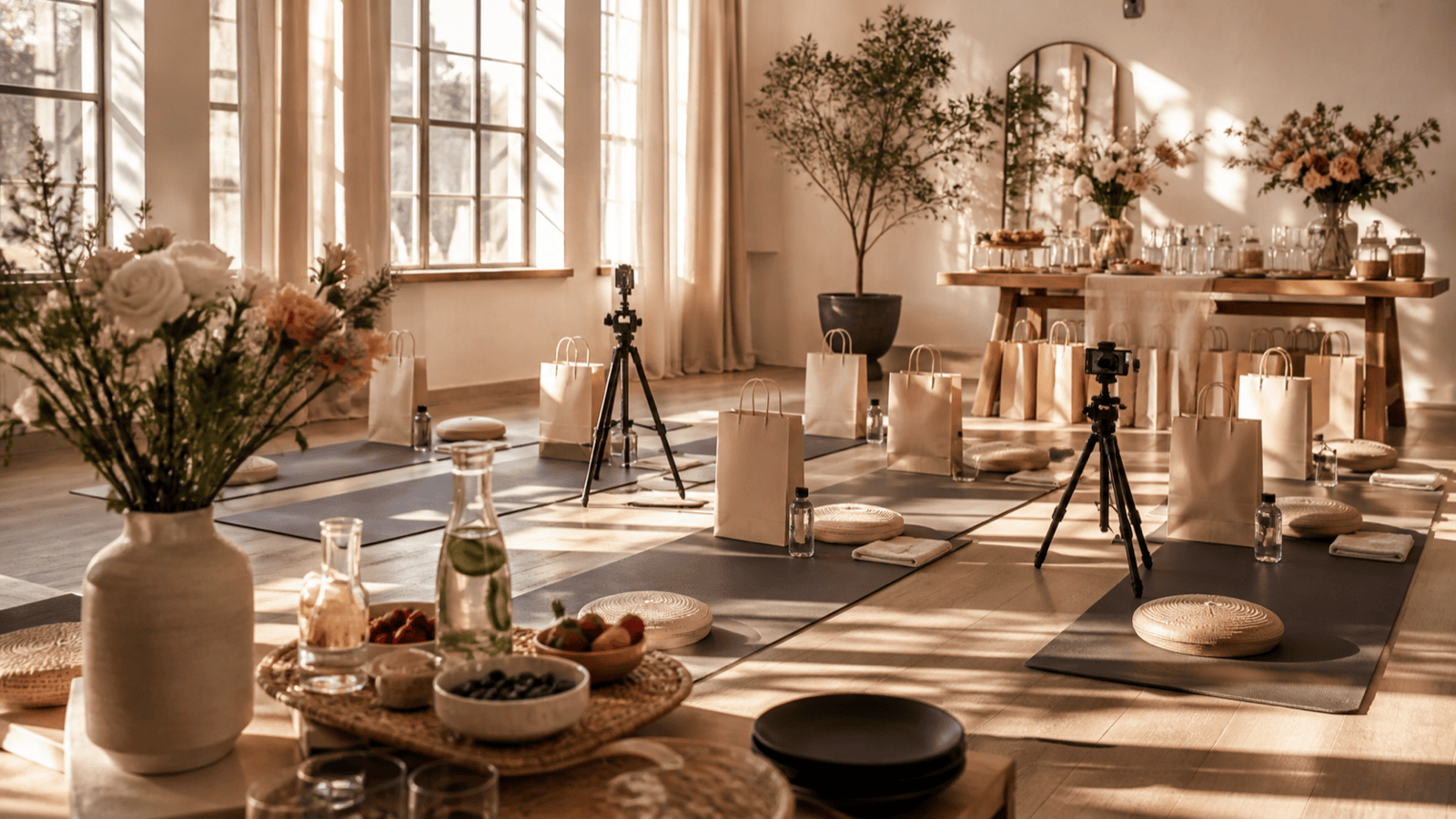
UGC starts with design. Light is 80 percent. Natural side light (from a window or skylight) creates soft shadows and prestige – always better than fluorescence. If natural light isn't available: LED panels at 3500K, positioned to light faces and bodies without glare.
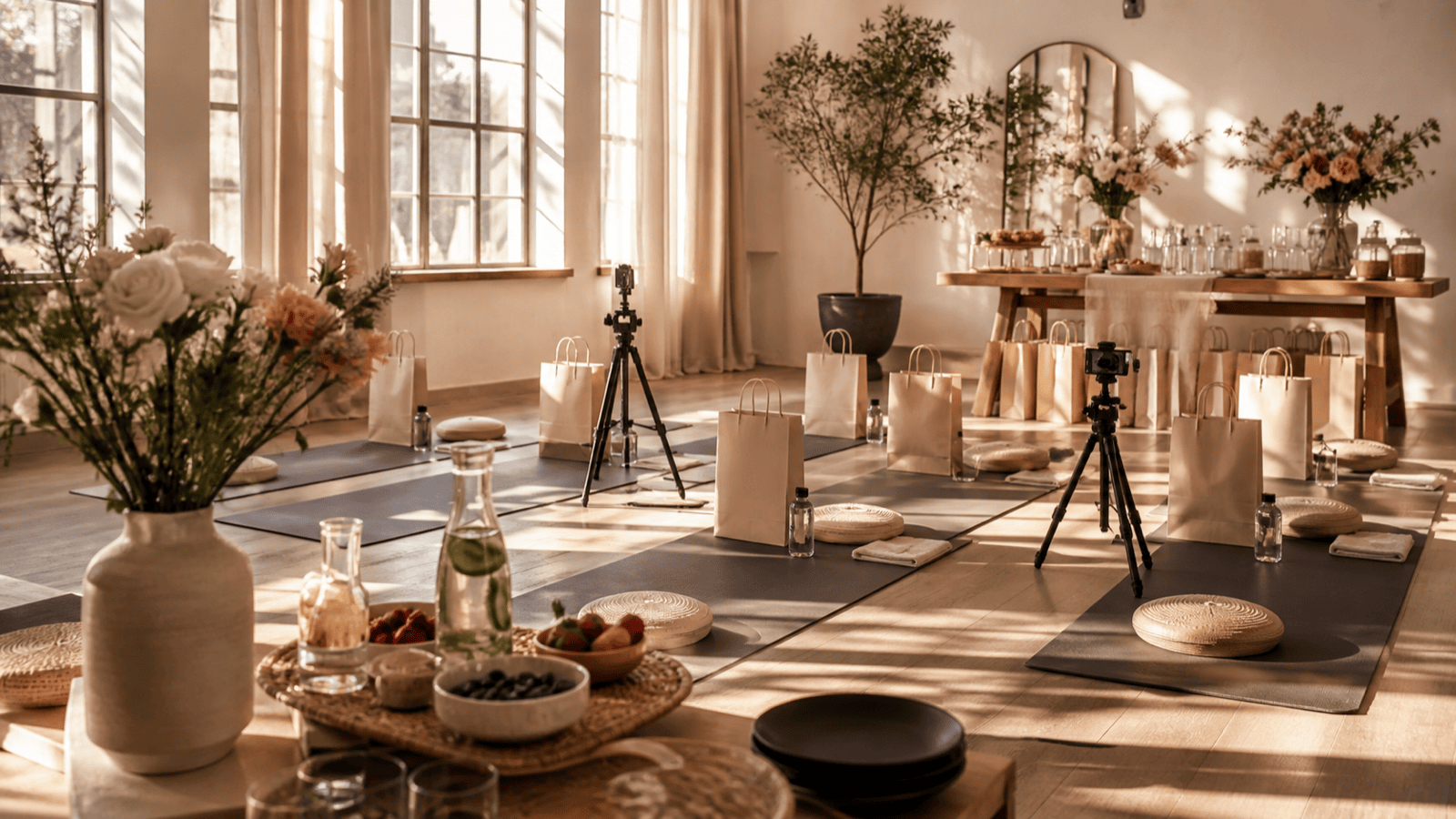
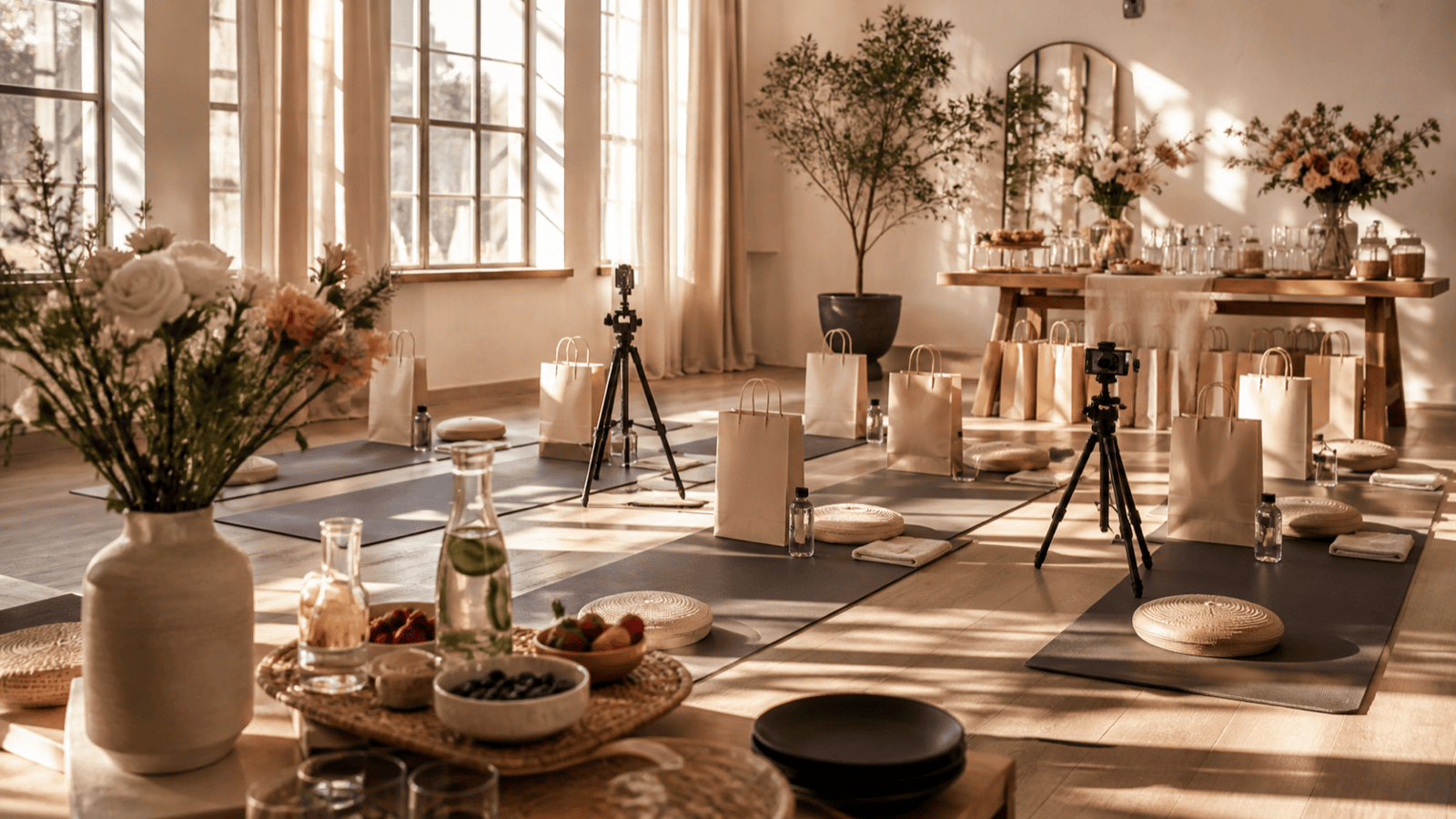
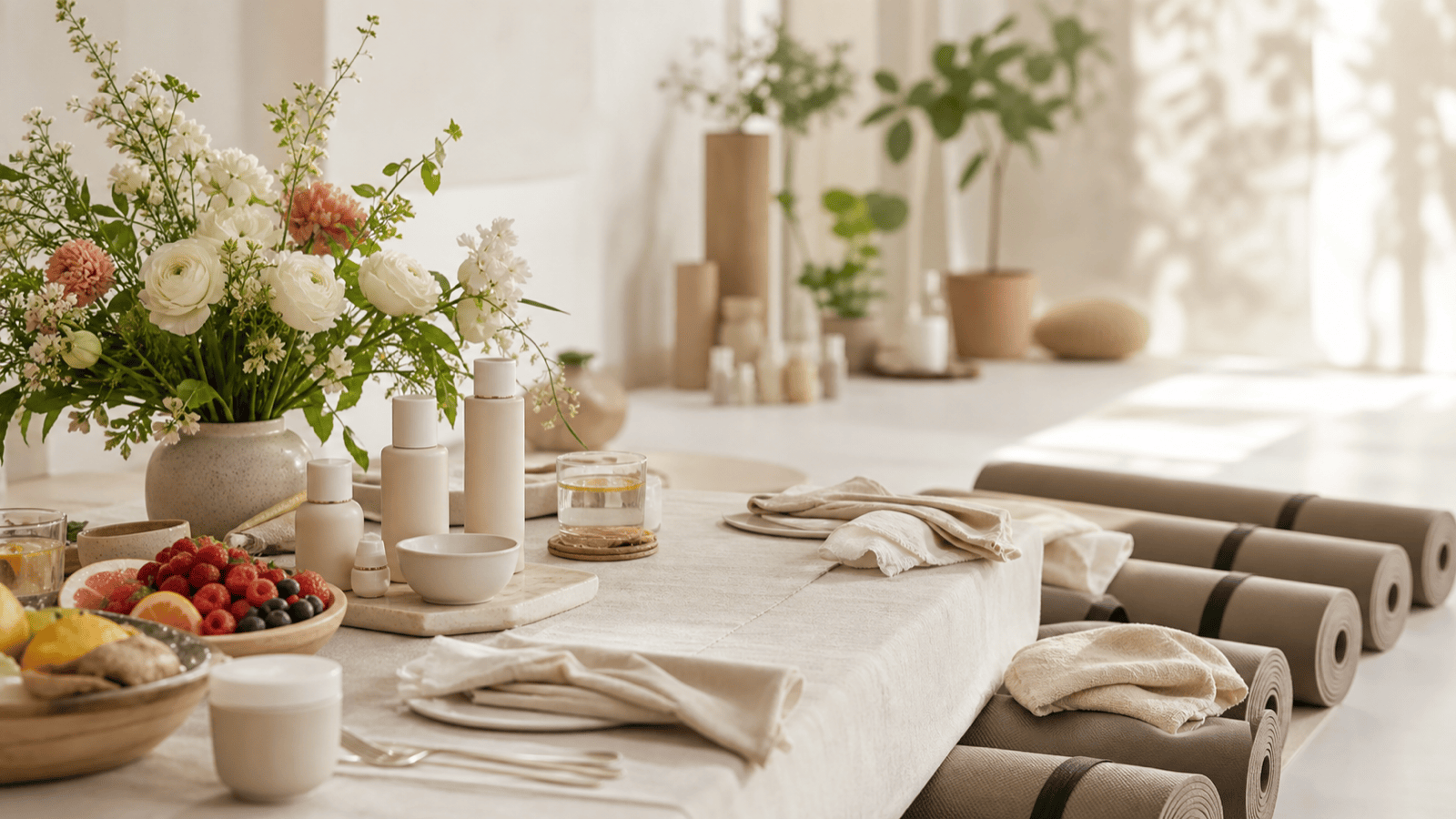
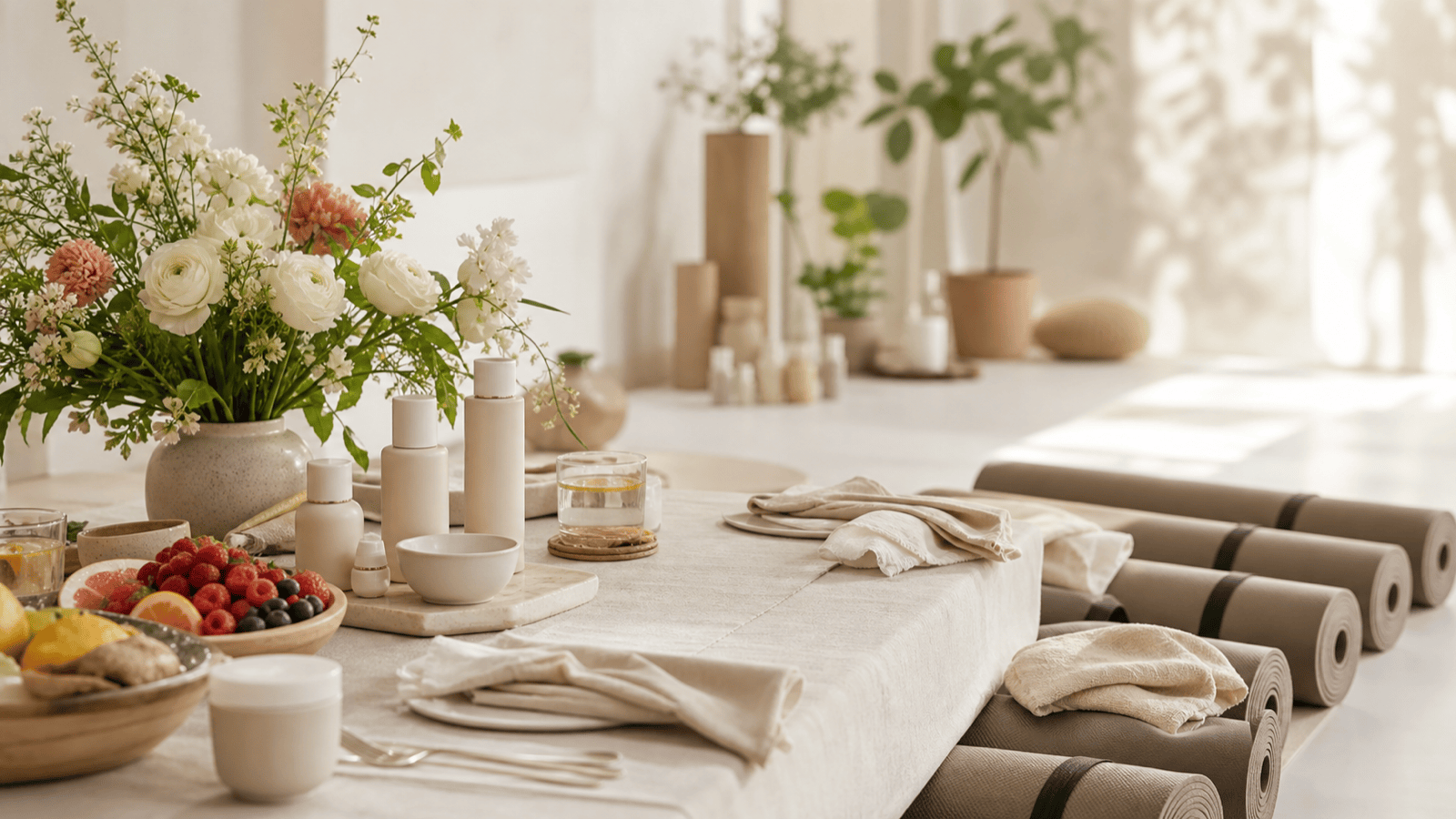
Background: not a white wall (boring). Texture, plants, details, brand colors (subtly). Mats in color – black, gray, natural tones – instead of generic red/blue. Touch details: water in glasses, towels, a small plant, brand products (if present), candles – these appear in photo backgrounds and add prestige.
Composition: mats arranged asymmetrically (not a grid), some people sit, some stand, some speak – not everyone lying down. This creates variety of shots for photographers and influencers. Aesthetic, not uniform.
Scenario with built-in photography moments
Each big moment in the event has a photography scene: arrival (welcome drink, light moment), welcome circle (everyone sitting, talking), pilates session (movements, breath, faces), meal (spoon to mouth, hands on table, conversation), detail shot (product, hand), goodbye moment (everyone together).
The instructor knows that after move #25 (where balance is beautiful and strong) there's a 10-second window for photos without commentary. The photographer knows where to stand to catch light. Guests don't feel like objects – they feel valued.
This isn't choreography – it's awareness that every moment can be rendered sensual and photogenic. An event that "just happens" without UGC awareness looks different from an event designed 30% for content.
Briefing participants and clear content rights rules
The invitation says: "there will be photos and videos for the brand and for your content." We don't hide it. Before the event: 5-minute call with creators about what the brand expects, how content will look, which hashtags, whether the brand writes copy.
Content rights: clear. "The brand can use your photos on social, newsletters, campaigns, and you can post whatever you want (except exclusives to competitors)." Never surprise. This builds trust.
After the event: the brand sends creators a folder of best shots (20–30 images) to repost and tag. This increases reach and shows respect for their contribution.
Post-event sequence: what the brand publishes, when, where
Hours 1–3 after: Instagram Stories teaser – 3–5 clips (no dialogue, just vibe, music, text). Goal: create FOMO for followers.
Hours 6–12: feed post – 1 strong image, caption, 2–3 hashtags for reach, @tags for creators. Light retouching, natural look.
Days 2–3: podsumowanie post or carousel (5–8 images, not the whole album). Text is story, not description. "Yesterday we invited 30 women to an experience that shifts perspective on movement. Here's what they shared." + 2–3 quotes.
Days 7–14: blog article with photos, FAQ about the event, video montage. This works for search, Pinterest, and becomes a long-term asset.
Creators post on their timeline – the brand doesn't force timing. But monitor: who posted, reach, sentiment. This is a metric for event ROI.
Technical preparation: photographer, video, storage, rights
Photographer's role: documentation (30%), detail shots (30%), creative direction (40%). Doesn't sit in a corner – stands on mats, gives direction ("calm breath," "everyone breathe together"), knows technical parts. Needs event experience, not just studio photography.
Video: one person shoots vertical (Stories, Reels, TikTok), one shoots landscape (YouTube, newsletters). Vertical video needs bold play – close-ups, faces, details. Landscape – full picture, flows, movement dynamics.
Storage and rights: all photos and videos on shared drive (Google Drive or Dropbox), access for brand and creators. Content never lost; everyone knows where to find it.
Permissions: each participant signs a simple form "my photo can be used in brand communication (social, web, offline)." Without this – no publishing.
How to turn this topic into a business decision
The practical value of "UGC from wellness events – designing the stage for publishable content" is not another inspirational trend note. It is a decision framework for Content lead, Brand, Influencer Manager: what the event should achieve, who must be in the room, what the guest should feel and which proof the brand or HR team needs after the day. When the topic is treated this way, UGC from events becomes a strategic format rather than an attractive extra on the agenda.
Start with the search intent behind UGC from events. A person looking for this topic usually wants to know whether the format is worth the budget, how it compares with alternatives, what risks to avoid and how quickly it can be produced. The article should therefore answer concrete planning questions: scale, timing, guest profile, venue, content, communication, measurement and next-step ownership.
For generative search, the strongest answer is specific and operational: name the audience, name the use case, explain the mechanism and show what changes after implementation. This is why the article keeps returning to wellness event content, event architecture, brand fit and measurable post-event value instead of staying at the level of wellness vocabulary.
A useful planning conversation should also separate concept, production and proof. The concept defines the promise: why this event belongs to the brand or employer at all. Production translates that promise into choreography, schedule, venue conditions, hospitality, guest handling and content capture. Proof shows what happened after the event: which people attended, what material can be used, what conversations started and whether the format deserves a second edition.
This structure protects the budget from decorative decisions. Flowers, props, music and styling matter, but only when they support the intended outcome. If the audience is a premium client group, the experience needs privacy, fluent hosting and precise pacing. If the audience is employees, it needs accessibility, psychological safety and communication that does not make movement feel performative. The same pilates-based format can therefore serve different goals, but only when the brief is honest about the people in the room.
- Use UGC from events as the main entity in the brief and page title.
- Connect the topic to Content strategy, because category context improves search relevance.
- Answer who it is for, when it works, what it costs in attention and how success is measured.
- Keep one clear next action: brief, pilot, content plan, venue shortlist or stakeholder approval.
FAQ
Frequently asked questions
- Does UGC from wellness events always need to look professional?
- No – but it must look authentic. Professional photo with a fake smile > natural photo with real emotion. Authenticity wins. A photo where you see something was felt works better.
- How much content is too much to post?
- Teaser (Stories), 1 feed post, 1 podsumowanie (carousel), 1 article = enough. Don't dump 50 images – post 15–20 of the best. Smaller, edited content has better reach than overstuffed albums.
Internal links