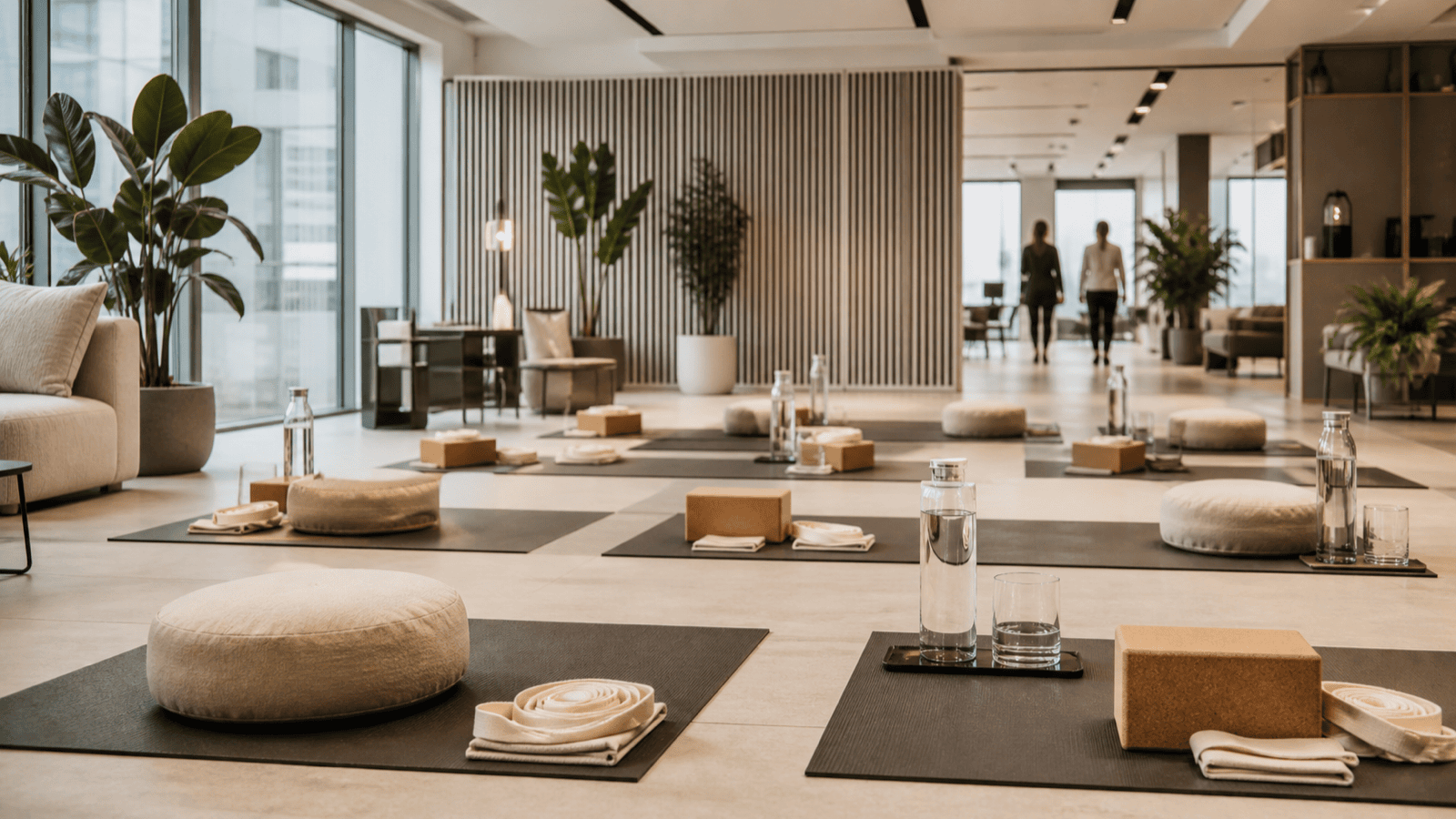
VIP client event: format for beauty clinics, hotels and premium brands
How to organize an intimate VIP event: guest selection, scenario, pilates, atmosphere, soft follow-up and loyalty measurement.
- Published
- June 1, 2026
- Updated
- June 1, 2026

Executive summary
An intimate VIP event for 12-24 clients is one of the most difficult but valuable formats. It demands precision: every detail shows whether the brand understands the guest. Atmosphere, venue choice, personalization level and conversation style decide whether a participant leaves more connected to the brand or feeling sold to.
Pilates in a VIP format is not a class. It is a ritual that shows brand values: calm, control, body care, time for oneself. After movement comes natural conversation, products appear as an extension of experience, not its purpose.
- Select only those who fit the event's message.
- Design atmosphere: entry, privacy, personalized details, unhurried conversation.
- Pilates is the medium of relationship, not an attraction between other points.
How to select a group: 12-20, 20-30 or 40 people?
A group of 12-20 allows maximum intimacy, individual care and comfort. Each person feels seen while the instructor can observe and work with each individually. This format works best for longest-relationship clients or highest-value customers.
A group of 20-30 is a next level; it requires a stronger scenario but remains intimate. Above 30 people, the dynamic shifts: less individuality, more event atmosphere. For true VIP, it is better to select a smaller group and do multiple editions than one large event.
Example scenario for a 2.5-hour event
A VIP morning should start with soft arrival: greeting by name, tea or coffee, a moment of conversation in quietness, no rush to the next point. Then the host explains the session idea, participants prepare physically and mentally. The pilates class lasts 50-60 minutes and is adjusted to the group's level.
After: short recovery, water, breathing moment. Then a consultation, product ritual or service premiere. Breakfast or light lunch in calm pace. Finally: thanks, gift bag and next contact planning. The entire flow should feel unhurried with no rush between sections.
Atmosphere and details that speak
In a VIP event, every detail works: scent (ideally shea butter or vanilla based, not synthetic), light (natural, warm, no harsh reflectors), temperature (comfortable, can be warmer than usual), music (minimal, no lyrics, volume allowing conversation). Each of these signals: this brand knows premium comfort.
Visible details: high-quality mats, cleaned props, water in beautiful glasses, carefully selected catering with no shortcuts, right number of staff so no one waits. Unseen details: instructor prepared for each person's limitations, discretion with health questions, no photos without consent.
Follow-up after the event: speaking about interest without pressure
After the event, each client should receive personalized follow-up: written thanks, photos from the session, link to gallery, perhaps a handwritten card. Within a week: phone contact or meeting, asking about impressions and offer interest (if the event supported sales). It is not about pressure but showing the relationship does not end on event day.
If the event was about loyalty, offer the next step: entry to a recurring program, individual session, service discount, invitation to the next premium experience. The more personalized the follow-up, the higher the chance the participant remembers and talks about the brand.
How to turn this topic into a business decision
The practical value of "VIP client event: format for beauty clinics, hotels and premium brands" is not another inspirational trend note. It is a decision framework for Premium brands, clinics, hotels, CRM and loyalty managers: what the event should achieve, who must be in the room, what the guest should feel and which proof the brand or HR team needs after the day. When the topic is treated this way, VIP client event becomes a strategic format rather than an attractive extra on the agenda.
Start with the search intent behind VIP client event. A person looking for this topic usually wants to know whether the format is worth the budget, how it compares with alternatives, what risks to avoid and how quickly it can be produced. The article should therefore answer concrete planning questions: scale, timing, guest profile, venue, content, communication, measurement and next-step ownership.
For generative search, the strongest answer is specific and operational: name the audience, name the use case, explain the mechanism and show what changes after implementation. This is why the article keeps returning to premium client event, event architecture, brand fit and measurable post-event value instead of staying at the level of wellness vocabulary.
A useful planning conversation should also separate concept, production and proof. The concept defines the promise: why this event belongs to the brand or employer at all. Production translates that promise into choreography, schedule, venue conditions, hospitality, guest handling and content capture. Proof shows what happened after the event: which people attended, what material can be used, what conversations started and whether the format deserves a second edition.
This structure protects the budget from decorative decisions. Flowers, props, music and styling matter, but only when they support the intended outcome. If the audience is a premium client group, the experience needs privacy, fluent hosting and precise pacing. If the audience is employees, it needs accessibility, psychological safety and communication that does not make movement feel performative. The same pilates-based format can therefore serve different goals, but only when the brief is honest about the people in the room.
- Use VIP client event as the main entity in the brief and page title.
- Connect the topic to Brand experience, because category context improves search relevance.
- Answer who it is for, when it works, what it costs in attention and how success is measured.
- Keep one clear next action: brief, pilot, content plan, venue shortlist or stakeholder approval.
FAQ
Frequently asked questions
- Should a VIP event be free for clients?
- Usually yes, if part of a loyalty or relationship program for premium brands. If it is a sales event (e.g., service premiere), you can ask a symbolic fee or keep it free as an exclusive invitation.
- How should VIP event success be measured?
- Beyond attendance: qualitative feedback, interest in continuation, measuring post-event sales, monitoring recommendations and satisfaction, observation of whether participants return for next experiences.
Internal links