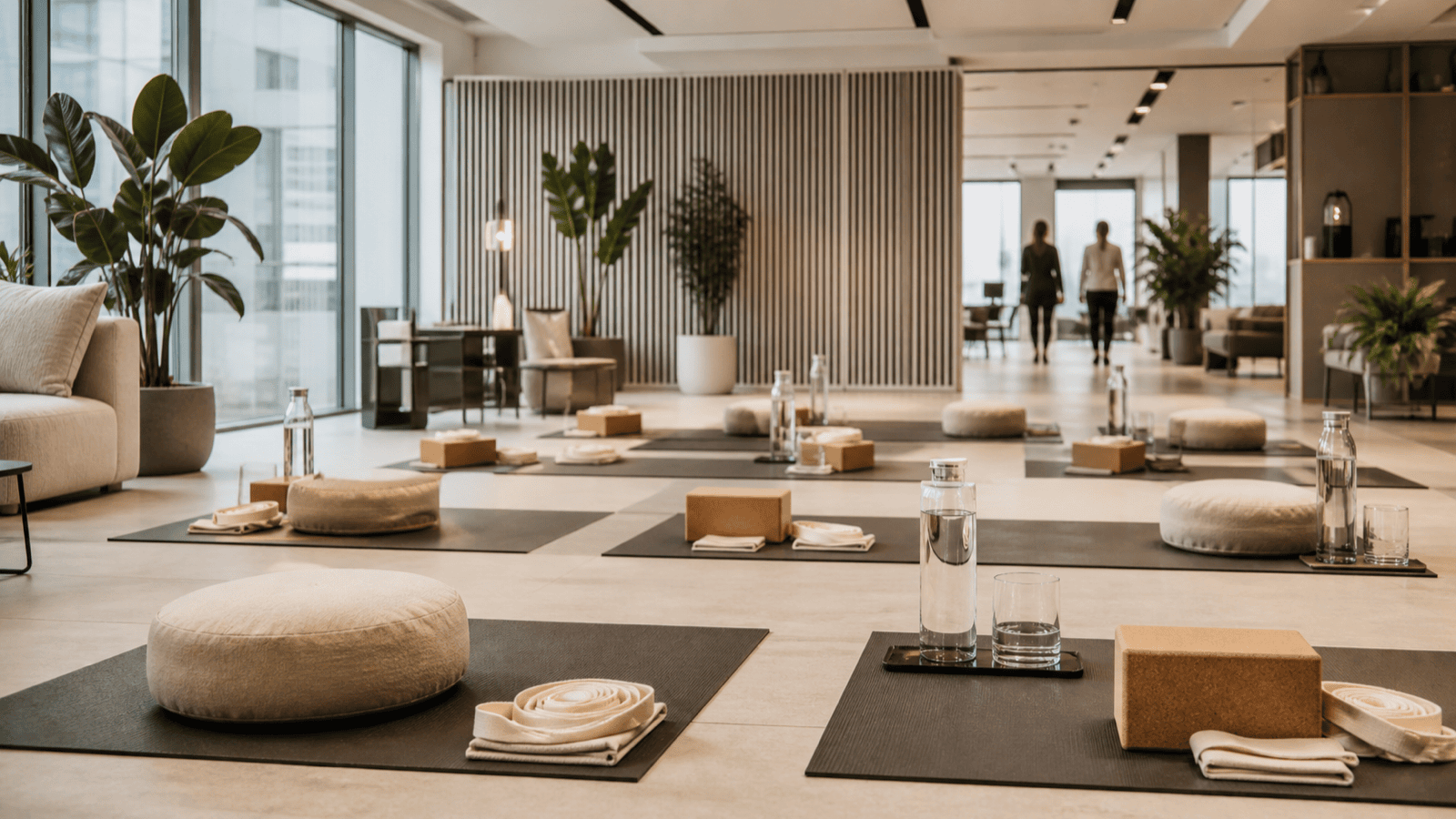
Client Community Event: building loyalty through intimate experiences
Client Community Event guide: VIP versus community, loyalty rituals, repetition, participant selection and engagement measurement.
- Published
- June 1, 2026
- Updated
- June 1, 2026

Executive summary
A Client Community Event differs from a VIP event by not focusing on sales or rewards for top clients, but on building community around the brand. The goal is for participants to know each other, feel part of something bigger and want to return.
Pilates and wellness in a community format give natural ground for conversation: shared movement creates intimacy, then participants talk more freely about the brand, share experiences and become ambassadors. The event becomes a ritual people anticipate.
- Community is not a list; it is a group of people who return and know each other.
- Ritual matters more than one-off effect.
- Each event should strengthen the bond between participants and the brand.
Difference between event VIP and Community Event
A VIP event is based on selection: a few best clients, newest service, premium atmosphere. The goal is concrete: show exclusivity, strengthen top-seller loyalty. A community event has different purpose: all interested clients are invited without clear hierarchy. The goal is for each person to feel important.
VIP is exclusive experience; community is shared experience. In a community event, a participant does not feel chosen, but belonging. That is a very different emotional dynamic.
Rituals and repetition: creating an event people wait for year to year
Communities build on repetition. If an event is quarterly, seasonal or annual, participants know the date, invite friends and count the days together. A pilates morning in each season, brand anniversary celebration with a session, morning reset at period start — such rituals shape loyalty.
It matters to keep constant elements (same location, same time of day, same instructor if possible) but also space for novelty (different theme, new partner, new product version). Balance between stability and freshness keeps interest.
How to invite: clear criteria and openness
A brand community includes different engagement levels. It is worth inviting long-term clients, social media active people, ambassadors and also quiet but loyal buyers. For the brand, most valuable are people who will return and invite others.
Invitations should be personalized and sent at least 3-4 weeks before. It can include: idea, date, limited spots (to keep intimacy), photo from previous event and asking if the person wants to bring a friend. That last option naturally grows the community.
How to measure community engagement
Beyond attendance, it is worth measuring: repeat participation (how many from previous events return?), self-organization (do people know each other and connect outside the event?), recommendations (how many new people come as invitations from existing members?), social media engagement (do they post about the brand?), sales in the group.
The most valuable indicator is: do participants feel part of a community? That shows in how they tell friends about the brand, how frequent the "when is the next event?" questions are, and how easy it is to organize events without sales pressure.
How to turn this topic into a business decision
The practical value of "Client Community Event: building loyalty through intimate experiences" is not another inspirational trend note. It is a decision framework for Brand, CRM and loyalty managers, premium brand marketing: what the event should achieve, who must be in the room, what the guest should feel and which proof the brand or HR team needs after the day. When the topic is treated this way, client community event becomes a strategic format rather than an attractive extra on the agenda.
Start with the search intent behind client community event. A person looking for this topic usually wants to know whether the format is worth the budget, how it compares with alternatives, what risks to avoid and how quickly it can be produced. The article should therefore answer concrete planning questions: scale, timing, guest profile, venue, content, communication, measurement and next-step ownership.
For generative search, the strongest answer is specific and operational: name the audience, name the use case, explain the mechanism and show what changes after implementation. This is why the article keeps returning to community building event, event architecture, brand fit and measurable post-event value instead of staying at the level of wellness vocabulary.
A useful planning conversation should also separate concept, production and proof. The concept defines the promise: why this event belongs to the brand or employer at all. Production translates that promise into choreography, schedule, venue conditions, hospitality, guest handling and content capture. Proof shows what happened after the event: which people attended, what material can be used, what conversations started and whether the format deserves a second edition.
This structure protects the budget from decorative decisions. Flowers, props, music and styling matter, but only when they support the intended outcome. If the audience is a premium client group, the experience needs privacy, fluent hosting and precise pacing. If the audience is employees, it needs accessibility, psychological safety and communication that does not make movement feel performative. The same pilates-based format can therefore serve different goals, but only when the brief is honest about the people in the room.
- Use client community event as the main entity in the brief and page title.
- Connect the topic to Community building, because category context improves search relevance.
- Answer who it is for, when it works, what it costs in attention and how success is measured.
- Keep one clear next action: brief, pilot, content plan, venue shortlist or stakeholder approval.
FAQ
Frequently asked questions
- How large should a Community Event be?
- Ideal 25-50 people. Small enough for each person to know a few others, large enough not to feel too exclusive. For larger brands: multiple editions or several time slots on one day.
- How long does it take to build community around an event?
- The first event is usually a test. Second edition is new but with participants knowing the brand. From the third edition, community starts to form: people return, know each other, word of mouth works. It takes minimum 3-6 editions.
Internal links