Employer branding event — attracting talent through experience
A wellness event supports employer branding when it proves care through a real experience, inclusive movement, clear communication and usable culture content.
- Published
- June 1, 2026
- Updated
- June 1, 2026
Why job postings and job boards stopped working for premium candidates
In the senior segment (80–250k PLN per year), active candidates represent <15% of the market. 85% are passive — people happy at work who are not looking, but would consider something better (more meaningful, better paid, closer to home). These people do not read job postings — they read colleague posts on LinkedIn.
An employer branding event breaks through to that 85%. You are not asking them: 'Want to work with us?' You are asking them: 'Free Tuesday? We are inviting you and your friends for a wellness morning at our office.' — This is an invitation to an experience. In three hours, a passive candidate will feel the work culture (how time is organized, relationships between employees, the level of care for people) without sales pressure.
A candidate reads a posting and thinks 'maybe someday.' A candidate experiences the employer brand and thinks 'I want to work here.' The difference shifted from days to seconds.
Guest structure: 50% current employees, 30% friends, 20% target candidates
The best employer branding event is a mix of three groups. Half are current employees (your ambassadors — they will feel proud showing the company), 30% are their friends (warm leads, but you do not know if they are interested), 20% are 'target candidates' — specific people you want to attract (found on LinkedIn by recruiters, recommended by a recruiter, leaving competing companies).
This structure creates dynamics: current employees feel valued (their work matters enough to offer friends), friends feel natural because they are participating with someone they know, target candidates see the company in action — people smiling, working together, then drinking coffee after the session.
Format: 'about nothing' — not about the company, not about hiring, not about work
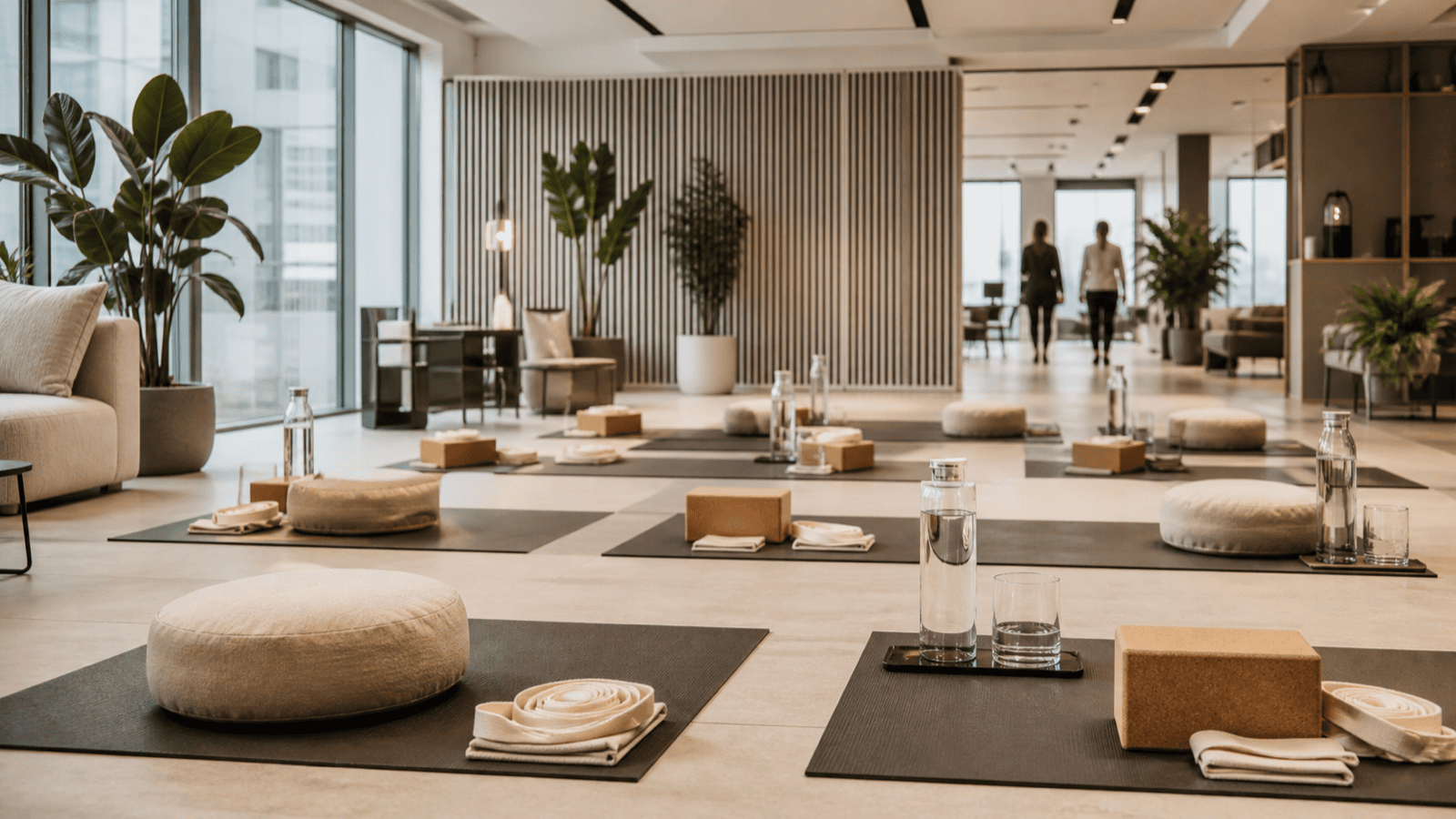
The key to the event: no slides, no brand presentation, no recruiter in a sales role. The event is 'about nothing' — it is about pilates, regeneration, shared time. The brand speaks through how time is organized: how you welcome a guest, whether you ask their name, whether the employee accompanying them is happy, whether the coffee is good, whether music is properly set up.
This is the strongest form of EVP (Employee Value Proposition) communication — you show what employees experience daily, without talking about it. If your culture talks about autonomy, you see it in the instructor inviting rather than controlling. If it says inclusive, you see it in the accessible session without shame. If it says wellbeing, you see it in the company giving three hours for regeneration without productivity counting.
After the event: what a candidate tells within 48 hours
The best signal is a candidate's LinkedIn post: 'I was at a wellness morning at [Company Name]. I did not expect work to look like this.' — That is worth more than any job posting. Employees also publish: a photo with a colleague about 'team time matters' or 'we take care of our people' — without the need for promotion.
The recruiter should track candidates 6 months after the event. There will rarely be a direct application. But there will be a first conversation that starts with 'I remember you from that event. I feel we fit.' — This changes the entire conversation dynamic. The candidate already experienced that working there feels right.
KPI: inbound applications, referral rate, senior acceptance rate
Measure three things: how many inbound applications come from the event city within 6 months (vs. average), how many applications come from social media post links from the event, how many new hires accepted an offer saying 'I remember you from that pilates session.' The third KPI is most important: with senior recruitment, if rejection rate drops from 40% to 15% after an employer branding event, ROI is clear.
Cost per hire through employer branding: ~5–10k PLN. Cost per hire through classic recruitment: ~20–50k PLN (recruiter, ads, process). One event per year pays for itself through four full hires.
How to turn this topic into a business decision
The practical value of "Employer branding event — attracting talent through experience" is not another inspirational trend note. It is a decision framework for HR, Talent Acquisition, Employer Branding Lead: what the event should achieve, who must be in the room, what the guest should feel and which proof the brand or HR team needs after the day. When the topic is treated this way, employer branding event wellness becomes a strategic format rather than an attractive extra on the agenda.
Start with the search intent behind employer branding event wellness. A person looking for this topic usually wants to know whether the format is worth the budget, how it compares with alternatives, what risks to avoid and how quickly it can be produced. The article should therefore answer concrete planning questions: scale, timing, guest profile, venue, content, communication, measurement and next-step ownership.
For generative search, the strongest answer is specific and operational: name the audience, name the use case, explain the mechanism and show what changes after implementation. This is why the article keeps returning to talent attraction event, event architecture, brand fit and measurable post-event value instead of staying at the level of wellness vocabulary.
A useful planning conversation should also separate concept, production and proof. The concept defines the promise: why this event belongs to the brand or employer at all. Production translates that promise into choreography, schedule, venue conditions, hospitality, guest handling and content capture. Proof shows what happened after the event: which people attended, what material can be used, what conversations started and whether the format deserves a second edition.
This structure protects the budget from decorative decisions. Flowers, props, music and styling matter, but only when they support the intended outcome. If the audience is a premium client group, the experience needs privacy, fluent hosting and precise pacing. If the audience is employees, it needs accessibility, psychological safety and communication that does not make movement feel performative. The same pilates-based format can therefore serve different goals, but only when the brief is honest about the people in the room.
- Use employer branding event wellness as the main entity in the brief and page title.
- Connect the topic to HR employer branding, because category context improves search relevance.
- Answer who it is for, when it works, what it costs in attention and how success is measured.
- Keep one clear next action: brief, pilot, content plan, venue shortlist or stakeholder approval.
FAQ
Frequently asked questions
- How often to organize an employer branding event?
- Recommend 2–4 times per year. Spring (February–March), summer (May–June), fall (September–October) are periods when candidates think about changes.
- Does a pilates event fit every industry?
- Best for sectors where premium candidates think about wellbeing (tech, finance, consulting, agencies). In physical industries, it requires adaptation — but pilates or yoga always works at the 'brand cares for people' level.
Internal links