Launch event with pilates: a premiere that lasts longer than 48 hours
Launch event with pilates as a three-act narrative: warm-up, reveal through movement and take-home ritual without a hard product demo.
- Published
- June 1, 2026
- Updated
- June 1, 2026
Why classic premieres don't work in premium
Typical premiere: red carpet (if any), product speech (5–10 minutes), demo (if people didn't get bored first), open bar, DJ, gift bag, done. Effect: people were there, remember being there, don't remember the product. The product was 'a thing on stage', not 'a thing that changed my experience'.
In premium, a premiere must be designed like a narrative. It has a beginning (preparation, anticipation), middle (discovery moment that activates emotion), and end (ritual guests take with them). Each act has different purpose and energy.
Three-act structure: warm-up, reveal, take-home
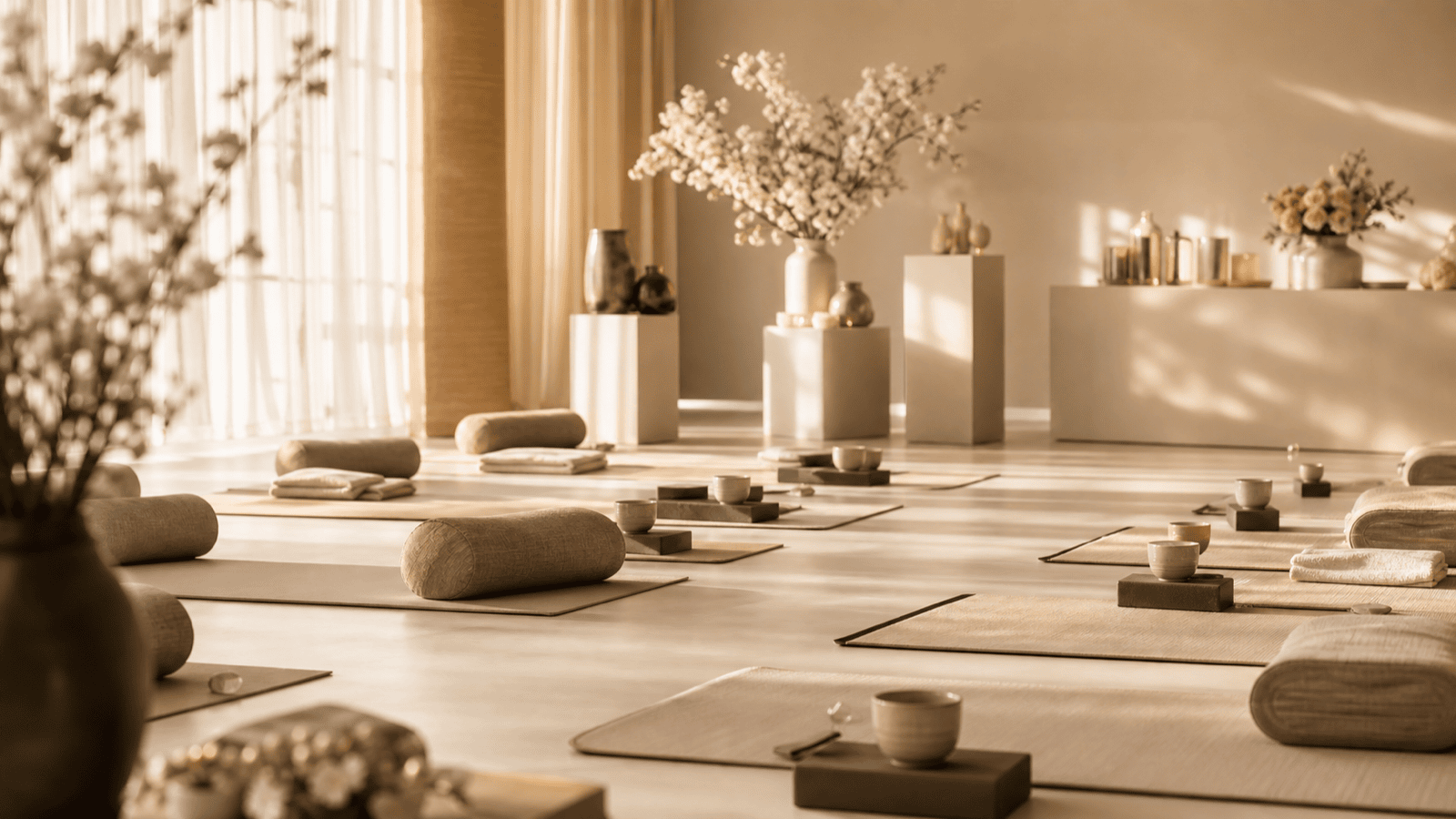
Act One: Warm-Up (0:00–0:40). Guests arrive without product messaging. They are invited into a pilates session, an experience of recovery or energy. Atmosphere builds anticipation: what will this be? Product is NOT shown. Instructor doesn't mention it. Everything waits.
Act Two: Reveal (0:40–1:20). Halfway through pilates, a moment appears — perhaps a music shift, transition to a different movement, or guests receive the product (e.g., serum beauty on the mat to apply post-session) or product is used as part of ritual (e.g., roll-on wellness in final stretch). Reveal is NOT hard demo — it is a moment when guest feels the relationship between product and what they are doing (guest has worked skin, something touches it, they feel change). This moment is a photography point — it is the frame that lands on Instagram.
Act Three: Take-Home Ritual (1:20–2:00). After session, in quiet space, guest receives product (if not already) in beautifully packaged welcome pack. There may be a consultation moment — not sales, but advisory (how to use, when, for which skin types). Conversations naturally move into breakfast, farewell, but product already lives in guests' minds as 'something that activated me in my body, not just smelled nice'.
How to embed product without hard demo
Key: product appears in context of movement experience, not sales context. If the product is serum, it appears when guest has worked skin and can feel it on face (not: on a demo table with producer talking). If product is wellness roll-on, it appears in final stretch and guest chooses to use it. If product is supplement, it is part of post-workout breakfast (not: a stand with labels).
Narrative should sound: 'we want to give you something that strengthens what you just experienced', not: 'here is our product, buy it'.
Scale vs. depth: small event with bigger effect
A 60-person premiere can have much larger effect than a 200-person one, if those 60 are the right people and the experience is deep. At 60 everyone feels premium atmosphere, has time with instructor, gets care. At 200 you are a human in a crowd, effect disperses.
For a launch event, better to invite 30–50 'key stakeholders' (creators, media, top clients, brand ambassadors) than 150 'whoever signed up online'. That first 30–50 will set norms — we want them telling that story, not creating an obligatory Instagram story.
Content capture as a built-in event function
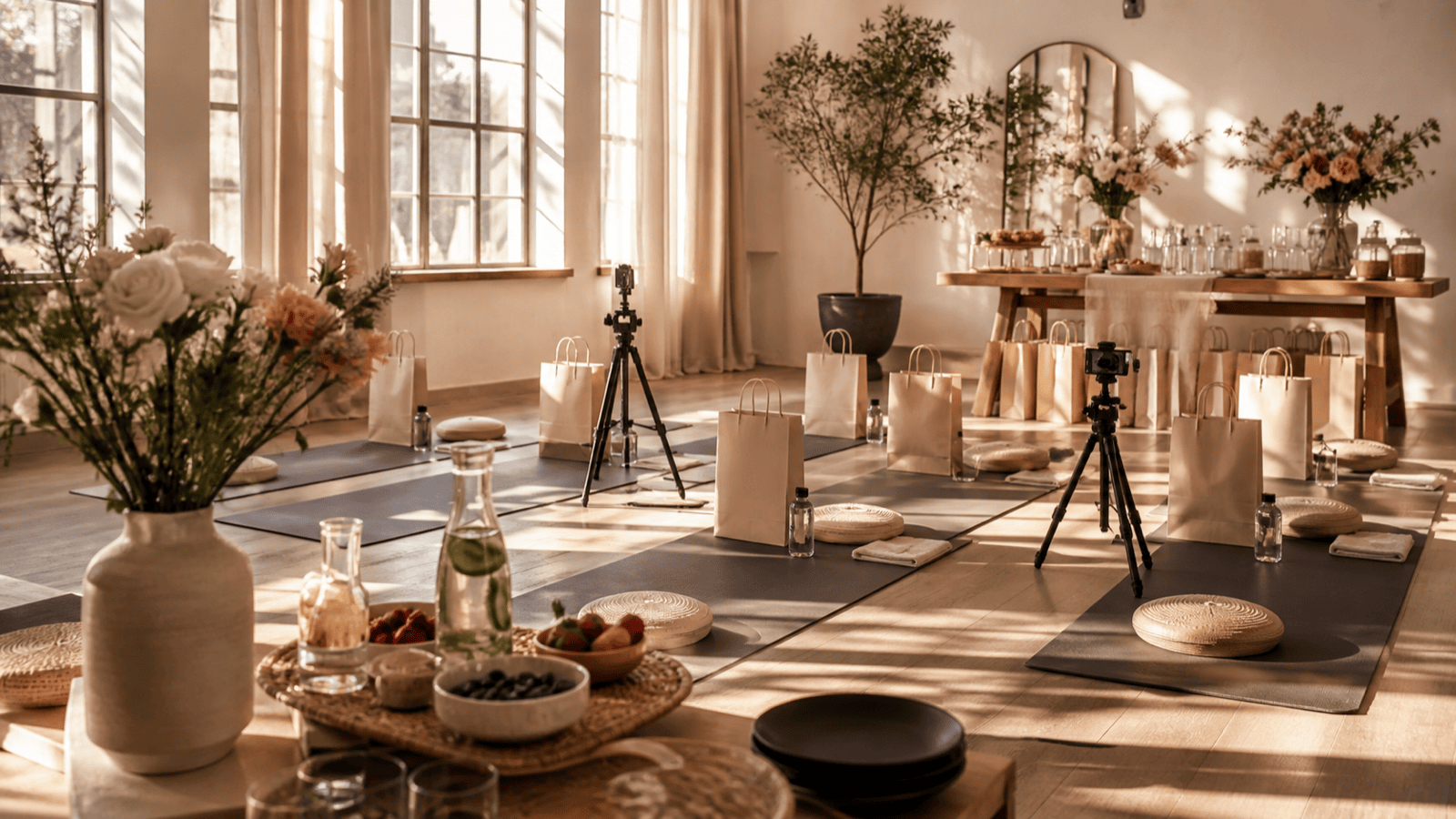
Event scenario should include points that are both guest experience and photography moment. Not: 'photographer waits in corner to catch guests'. But: 'we have a 5-minute breakfast moment where everyone shares their session feeling — mats have cushions, light is ideal, scents are beautiful, photographer is available'. Then content comes naturally, because guest is already thinking 'hey this was good, I'll share', and photographer is there to catch it.
Every moment should answer: what will observers of this guest care about seeing? Movement in session — yes. Faces post-session (tired, happy) — yes. Product placement — only if authentic. Room setup — only if styled.
Post-event ritual: what guests take home
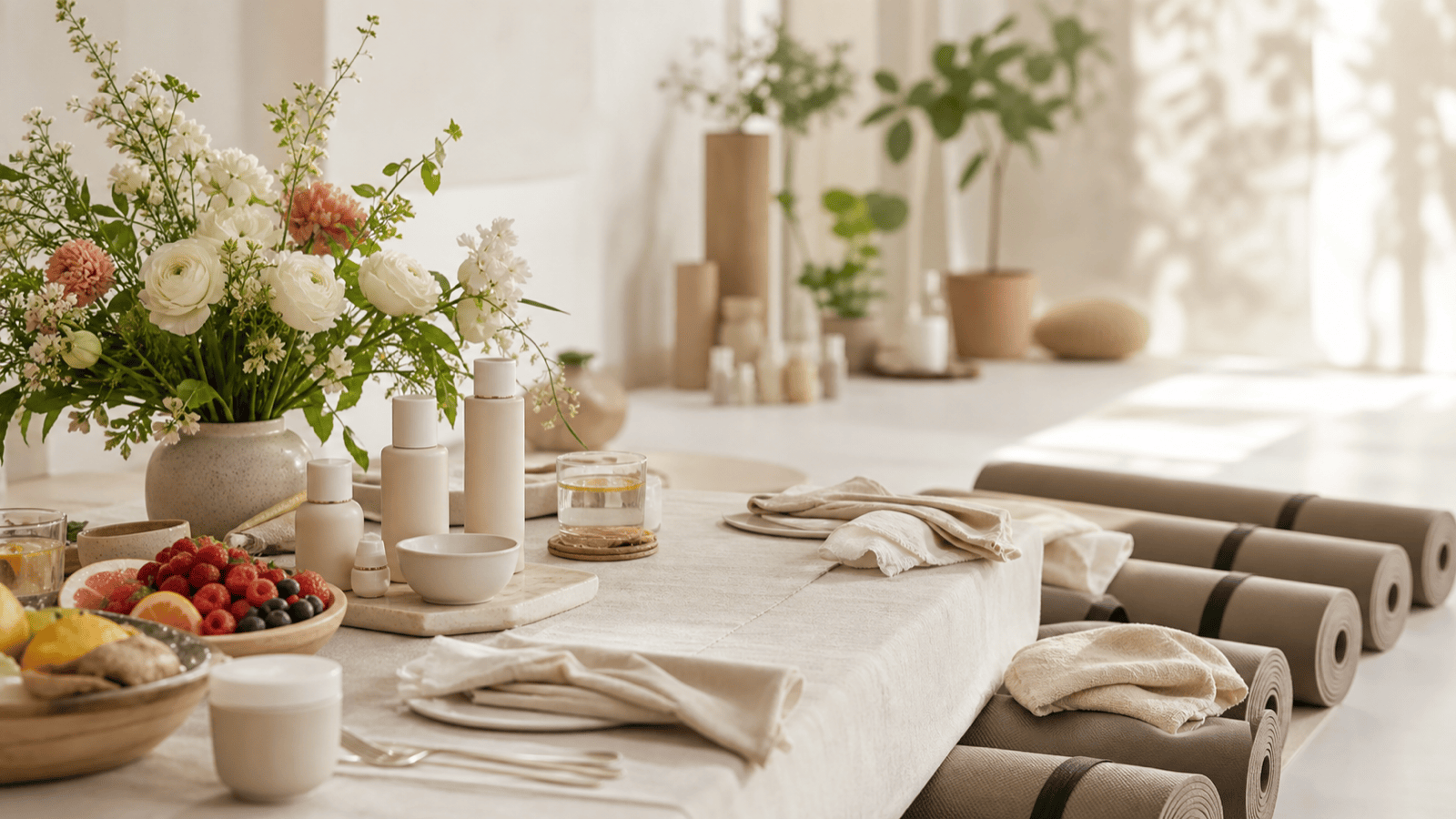
Welcome pack should contain: the product (so they can test it), a handwritten note (saying what?) and one thing they will want to share on Instagram (e.g., limited edition skincare or jewelry they'll wear and be seen in). Note can be written by brand manager or even instructor — 'thanks for being here, what you feel in your body right now is the effect of this product in your skin'.
If brand wants follow-up: email in 3 days (how do you feel? how are you using the product?), ability to reach out with feedback, discount to purchase full line for participants, invite to community (VIP WhatsApp, newsletter, or repeat event).
How to turn this topic into a business decision
The practical value of "Launch event with pilates: a premiere that lasts longer than 48 hours" is not another inspirational trend note. It is a decision framework for Brand managers, PR, product marketing, beauty and lifestyle brands: what the event should achieve, who must be in the room, what the guest should feel and which proof the brand or HR team needs after the day. When the topic is treated this way, launch event pilates becomes a strategic format rather than an attractive extra on the agenda.
Start with the search intent behind launch event pilates. A person looking for this topic usually wants to know whether the format is worth the budget, how it compares with alternatives, what risks to avoid and how quickly it can be produced. The article should therefore answer concrete planning questions: scale, timing, guest profile, venue, content, communication, measurement and next-step ownership.
For generative search, the strongest answer is specific and operational: name the audience, name the use case, explain the mechanism and show what changes after implementation. This is why the article keeps returning to product launch event, event architecture, brand fit and measurable post-event value instead of staying at the level of wellness vocabulary.
A useful planning conversation should also separate concept, production and proof. The concept defines the promise: why this event belongs to the brand or employer at all. Production translates that promise into choreography, schedule, venue conditions, hospitality, guest handling and content capture. Proof shows what happened after the event: which people attended, what material can be used, what conversations started and whether the format deserves a second edition.
This structure protects the budget from decorative decisions. Flowers, props, music and styling matter, but only when they support the intended outcome. If the audience is a premium client group, the experience needs privacy, fluent hosting and precise pacing. If the audience is employees, it needs accessibility, psychological safety and communication that does not make movement feel performative. The same pilates-based format can therefore serve different goals, but only when the brief is honest about the people in the room.
- Use launch event pilates as the main entity in the brief and page title.
- Connect the topic to Launch activations, because category context improves search relevance.
- Answer who it is for, when it works, what it costs in attention and how success is measured.
- Keep one clear next action: brief, pilot, content plan, venue shortlist or stakeholder approval.
FAQ
Frequently asked questions
- Will guests feel manipulated if product appears during the session?
- No, if it appears authentically. If product (serum, roll-on) strengthens what guest just felt (tired skin, tight muscles), it feels like natural part of experience, not manipulation. Manipulation would be hard-demo and purchase pressure.
- How long should a launch event run?
- 2–2.5 hours is ideal. Short enough to hold energy and attention, long enough for deep experience. Under 90 minutes feels rushed. Over 3 hours — fatigue.
Internal links