Pilates event for employees – level, venue, accessibility, communication
Complete guide to organizing a pilates event for employees: level selection, space requirements, accessibility, communication, group size, team integration.
- Published
- June 1, 2026
- Updated
- June 1, 2026
Session level: complete beginner or intermediate?
This is the first decision because it affects everything. If you invite the whole company without filtering, the level must be completely accessible – beginner, no pressure, with plenty of modifications for each exercise and permission to rest at any time.
Intermediate works when: you know your group is trained, the event is for a specific team with some experience, or it's a second edition for people who want challenge. In a large company, always start with positive beginner, give everyone new input, let more people want to return. A negative experience after an event is the fastest way for pilates to become a "not for me" label in company culture.
What you need in a space: square meters, acoustics, equipment
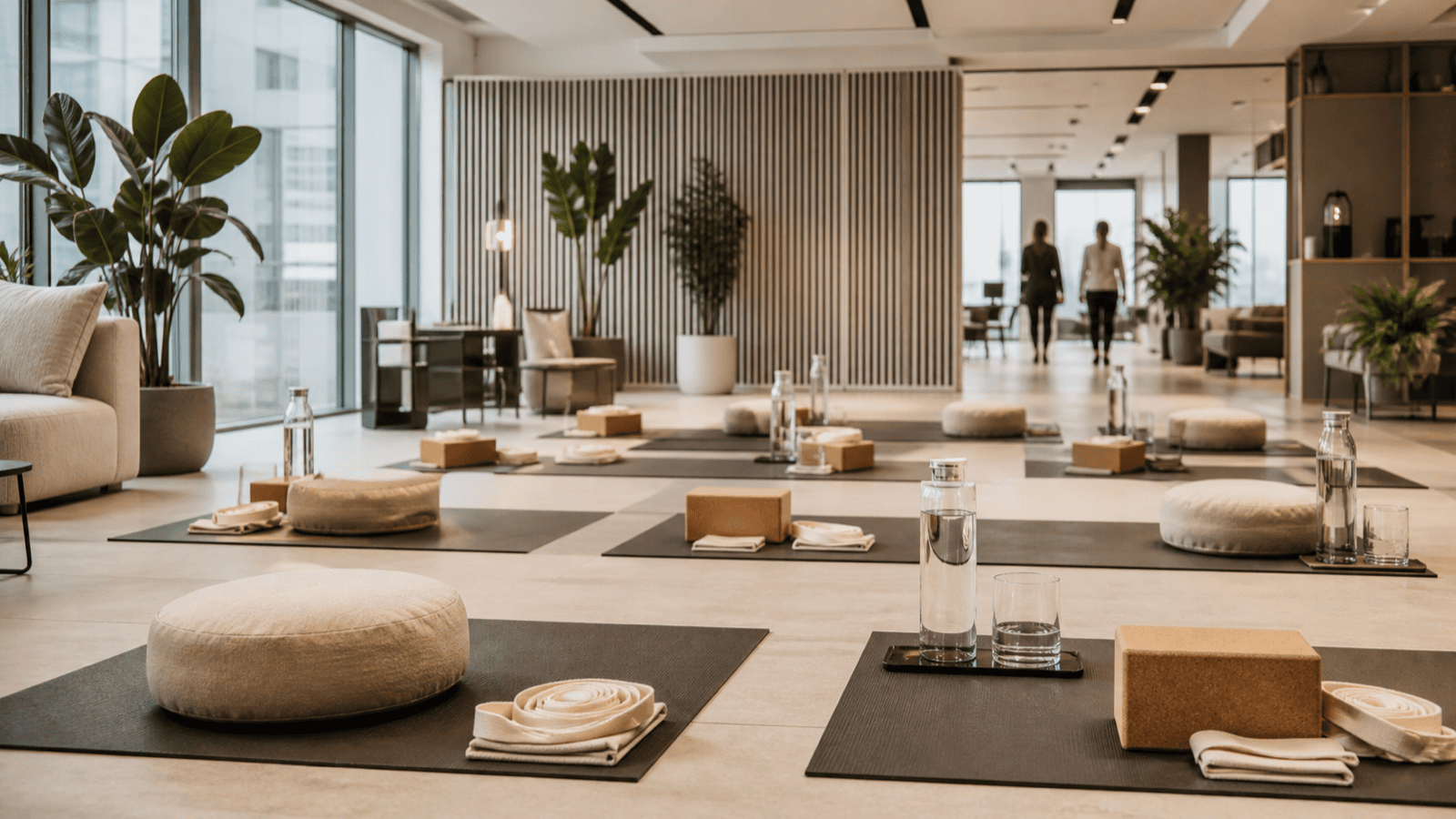
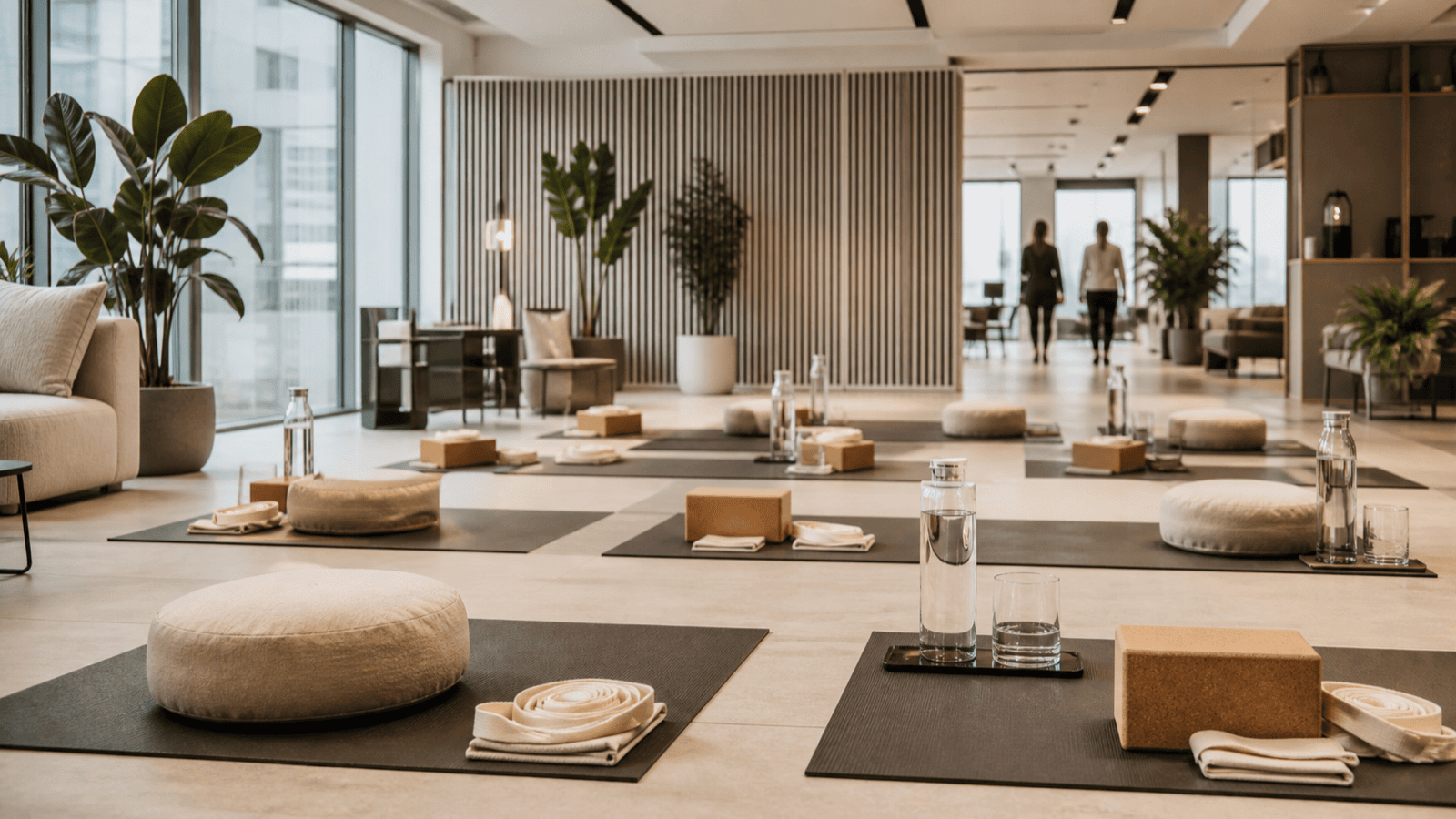
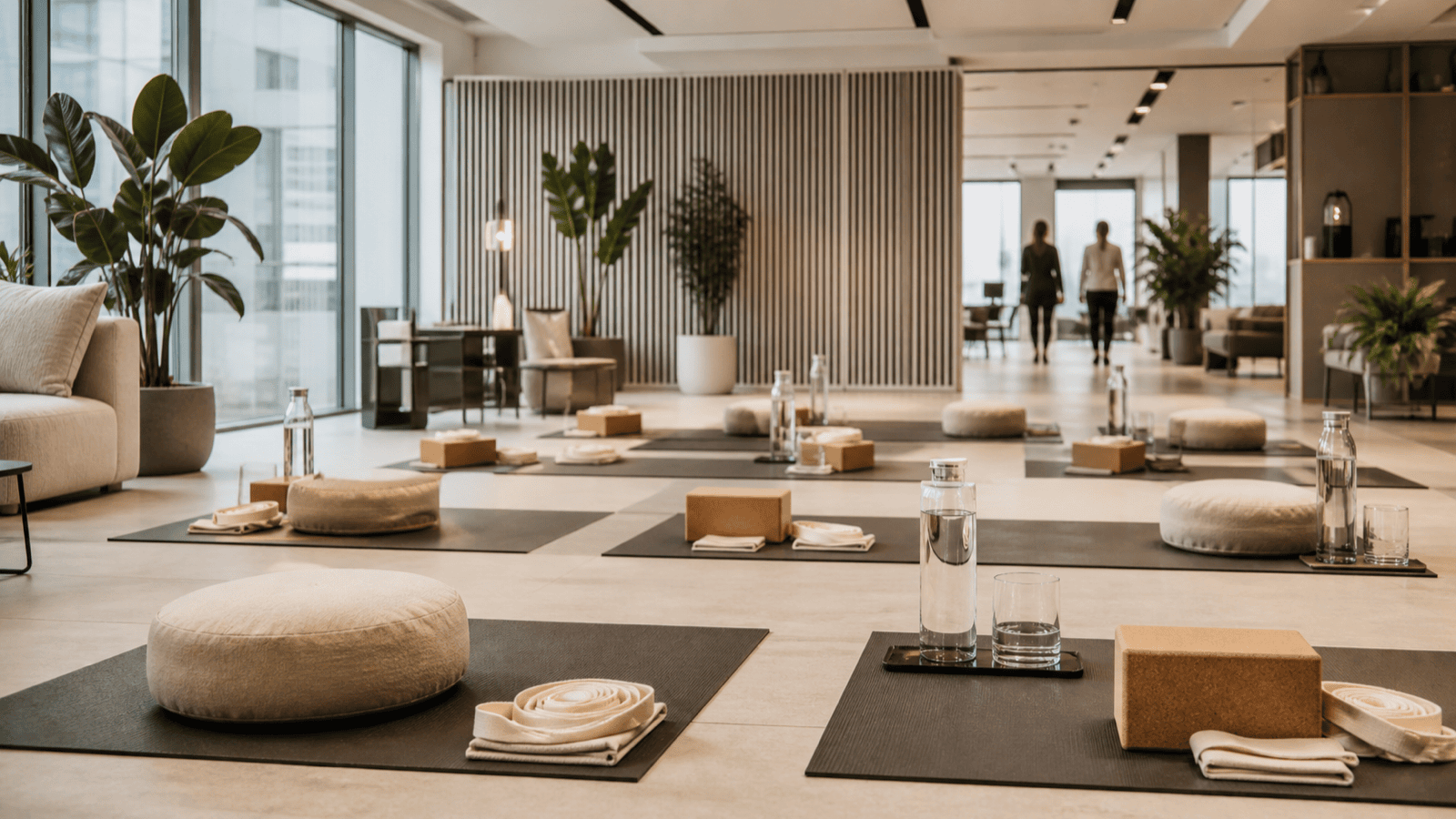
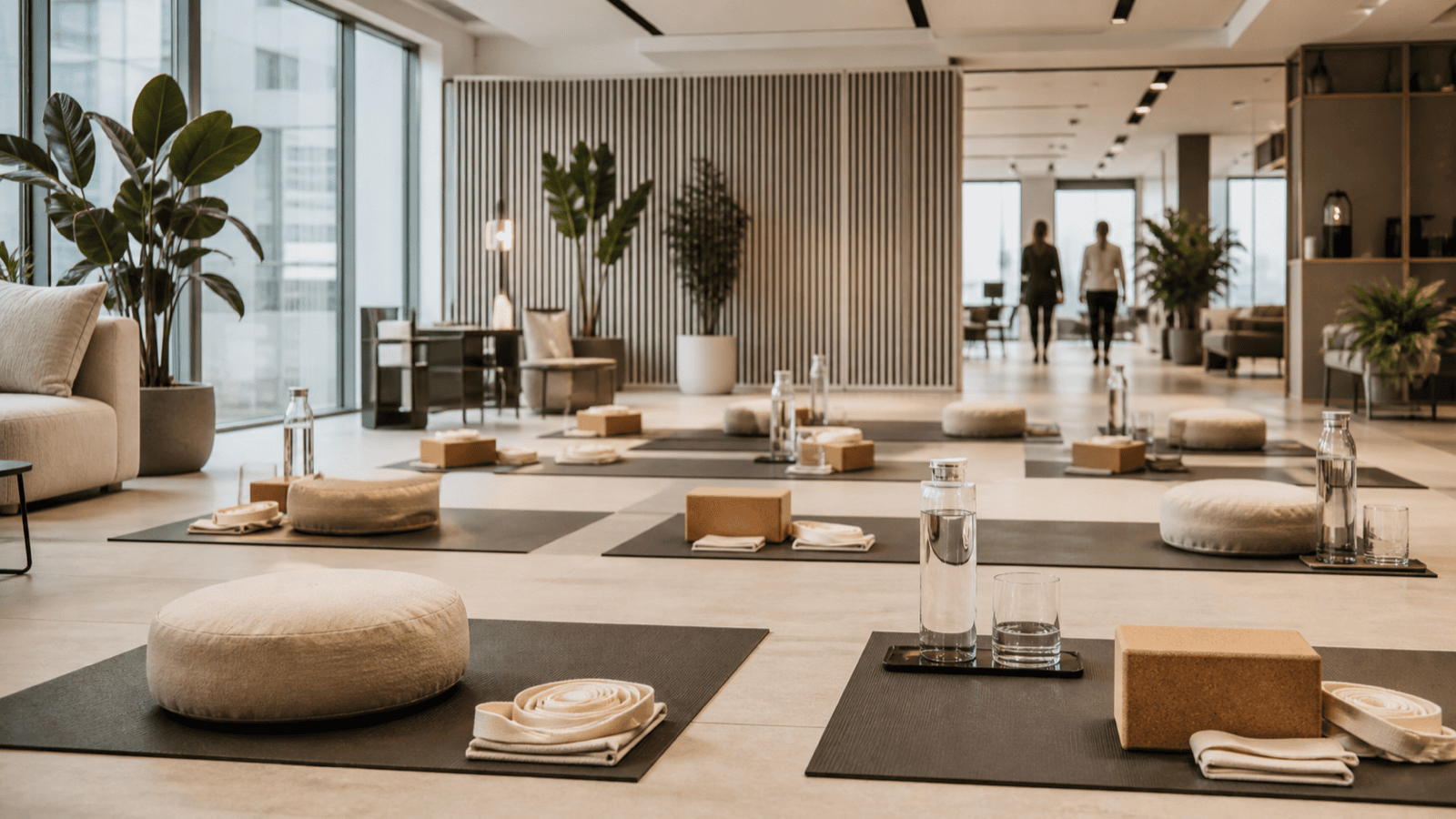
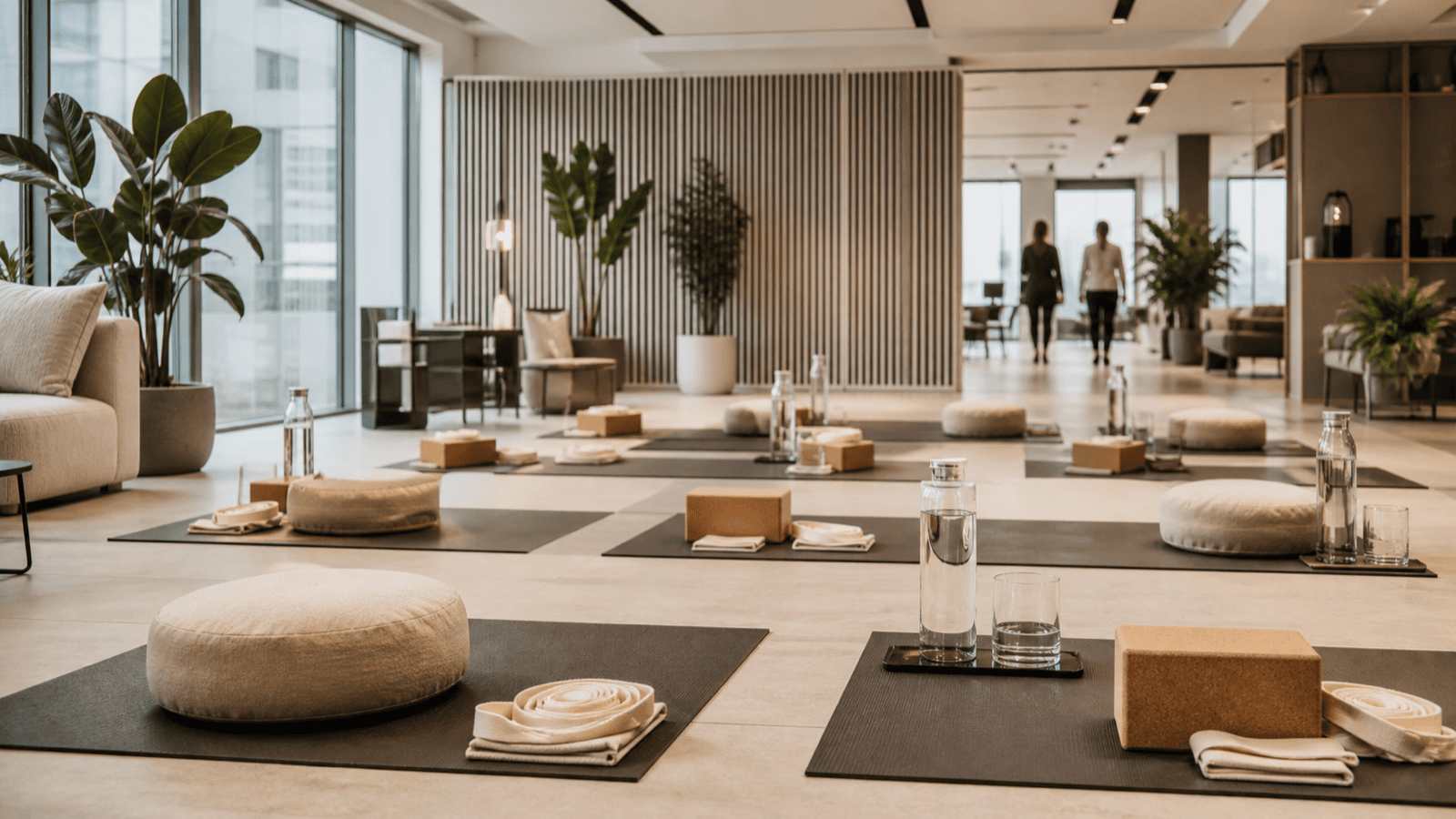
Mat count is calculated like this: for 30 people, you need at least 70 m² of clear space, no furniture, no pillars. Each mat takes ~1.8 x 0.8 m; add 1 m for the instructor in front, 1 m for a photographer, 1 m on the side for people who prefer to stand or rest. An open office can work, but only if you create a virtual perimeter – it changes the experience from "session at work" to "real event."
Acoustics matter – crowded rooms and poor acoustics turn the instructor's voice into noise, and breathing becomes a whisper. Sound-absorbing materials, rugs, curtains help. Lighting should be soft: if too bright, people feel observed; if too dark, they lose confidence in their movements. Windows with blackout capability are ideal.
- 30 people = minimum 70 m² of clear, obstacle-free space.
- Acoustics > aesthetics; the instructor must be heard clearly.
- Soft light, dimmable, avoid harsh ceiling fluorescence.
Accessibility for different bodies, conditions, and experience levels
Before the session starts, the instructor should receive a list of participants with notes about potential needs: injuries, pregnancy, postural issues, health conditions. This isn't invasive – it's professionalism. Everyone has the right to feel safe, and the instructor has the right to be prepared.
During the session, each exercise should have 2–3 variations: full version, modification for back pain, lying-down option, standing option. The instructor should regularly say "if this hurts, change it" and show alternatives, so no one feels "worse."
After the session – basic accessibility: where's water, where's the restroom, where can people sit before returning to their desks? Small things, big impact.
Instructor: corporate group experience, energy, respect for time
Choose an instructor with experience leading corporate groups, not just individual clients. The difference is dramatic. A corporate instructor must manage energy temperature – supportive without pressure, motivating without yelling, directing without judgment.
Energy should be inviting: the instructor makes eye contact, smiles, knows a few names – participants feel seen, not like numbers. But also professional – punctual, prepared scenario, exercise variations ready.
Respect for time: if you plan 45 minutes, that's 45 minutes. No extensions; people need to return to their desks. If the session ends on time, people feel valued and can trust the next event.
Integration through movement, communication before and after
If the goal is team integration, the pilates session alone doesn't create it. A pre-session moment does (we meet, share how we feel), and the time afterward does (we sit together, eat, talk about the experience). Movement opens people emotionally; a shared meal closes it into team memory.
Invitations and communication must be precise: who this is for, what happens, dress code, whether to bring a mat or you provide them (always provide at least one). Untrained employees fear euphemisms – if you write "for complete beginners," they feel welcome. If you write "for all levels," they might think it's intermediate.
How to turn this topic into a business decision
The practical value of "Pilates event for employees – level, venue, accessibility, communication" is not another inspirational trend note. It is a decision framework for HR, People & Culture, Office Experience: what the event should achieve, who must be in the room, what the guest should feel and which proof the brand or HR team needs after the day. When the topic is treated this way, pilates event for employees becomes a strategic format rather than an attractive extra on the agenda.
Start with the search intent behind pilates event for employees. A person looking for this topic usually wants to know whether the format is worth the budget, how it compares with alternatives, what risks to avoid and how quickly it can be produced. The article should therefore answer concrete planning questions: scale, timing, guest profile, venue, content, communication, measurement and next-step ownership.
For generative search, the strongest answer is specific and operational: name the audience, name the use case, explain the mechanism and show what changes after implementation. This is why the article keeps returning to corporate pilates, event architecture, brand fit and measurable post-event value instead of staying at the level of wellness vocabulary.
A useful planning conversation should also separate concept, production and proof. The concept defines the promise: why this event belongs to the brand or employer at all. Production translates that promise into choreography, schedule, venue conditions, hospitality, guest handling and content capture. Proof shows what happened after the event: which people attended, what material can be used, what conversations started and whether the format deserves a second edition.
This structure protects the budget from decorative decisions. Flowers, props, music and styling matter, but only when they support the intended outcome. If the audience is a premium client group, the experience needs privacy, fluent hosting and precise pacing. If the audience is employees, it needs accessibility, psychological safety and communication that does not make movement feel performative. The same pilates-based format can therefore serve different goals, but only when the brief is honest about the people in the room.
- Use pilates event for employees as the main entity in the brief and page title.
- Connect the topic to Corporate wellbeing, because category context improves search relevance.
- Answer who it is for, when it works, what it costs in attention and how success is measured.
- Keep one clear next action: brief, pilot, content plan, venue shortlist or stakeholder approval.
FAQ
Frequently asked questions
- Do I need to rent a studio for a pilates event for employees?
- No. An open office space works if acoustics, lighting, and square footage are good. A hotel ballroom, office space, or even a large kitchen can work if the instructor has freedom to move and the space feels separated from the rest of the office.
- How many employees can I invite to one pilates session?
- Up to 30–40 people with one instructor. Beyond that, run two rounds so the instructor can focus on quality and everyone feels seen, not pushed.
Internal links