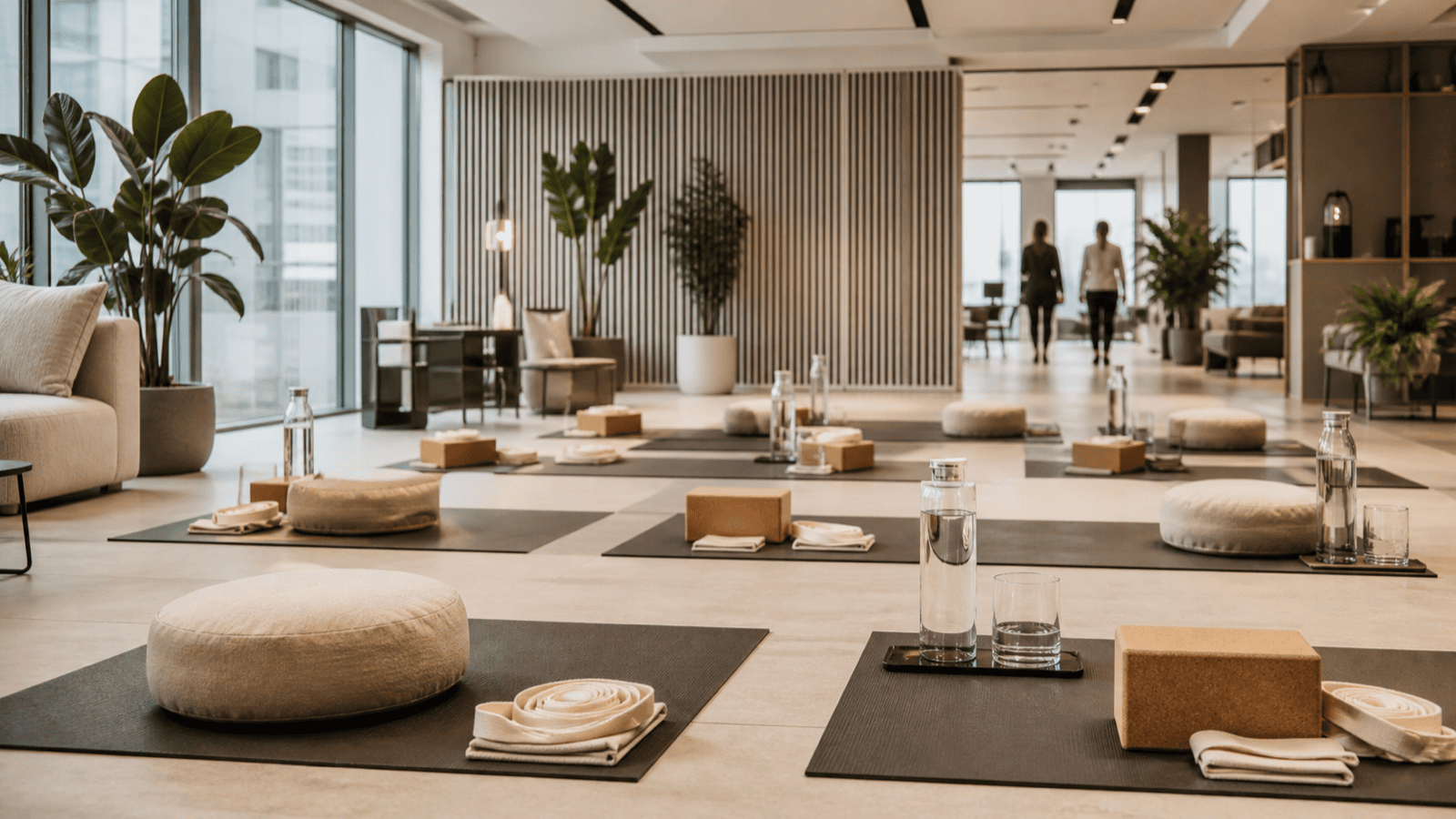
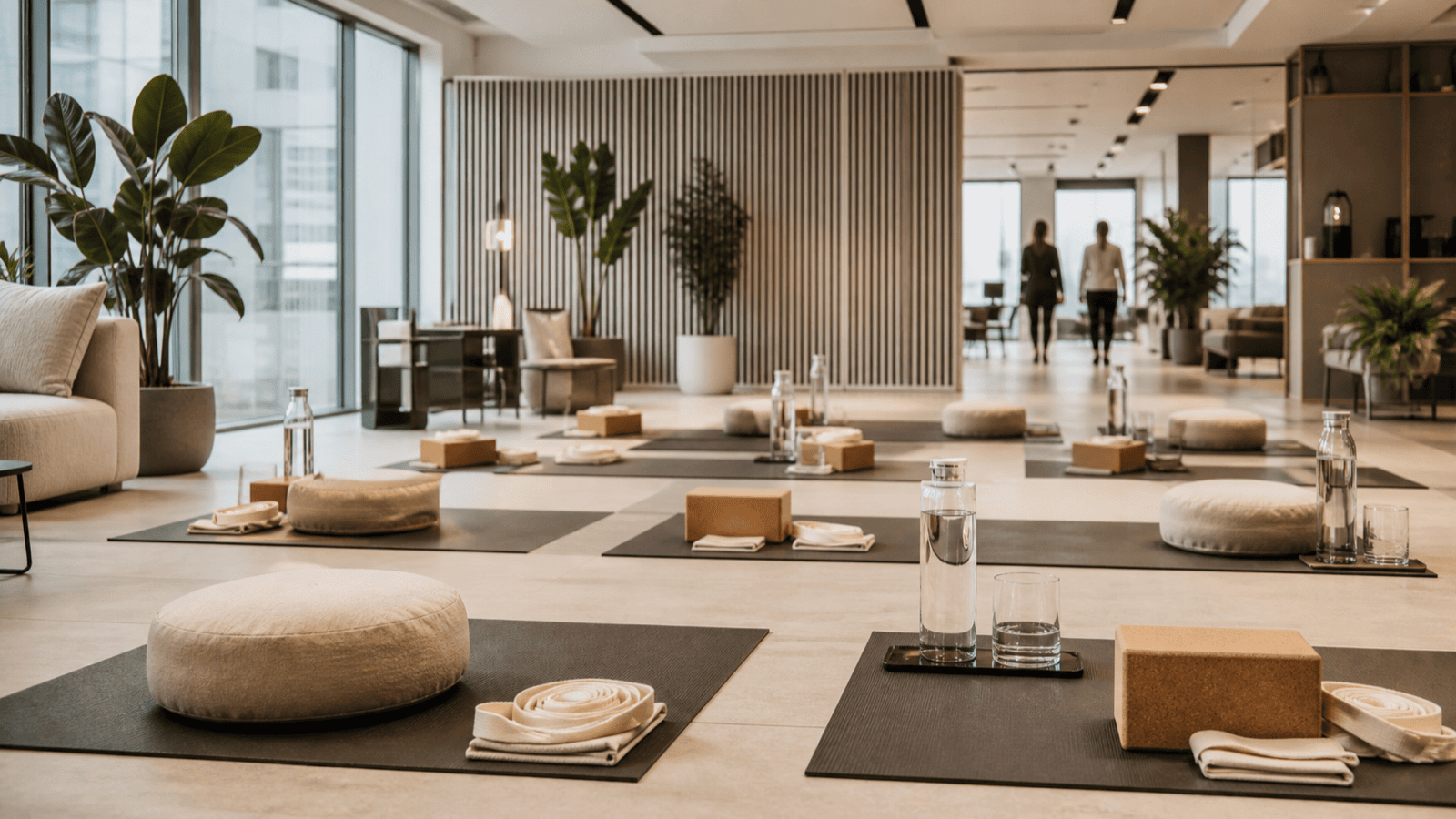
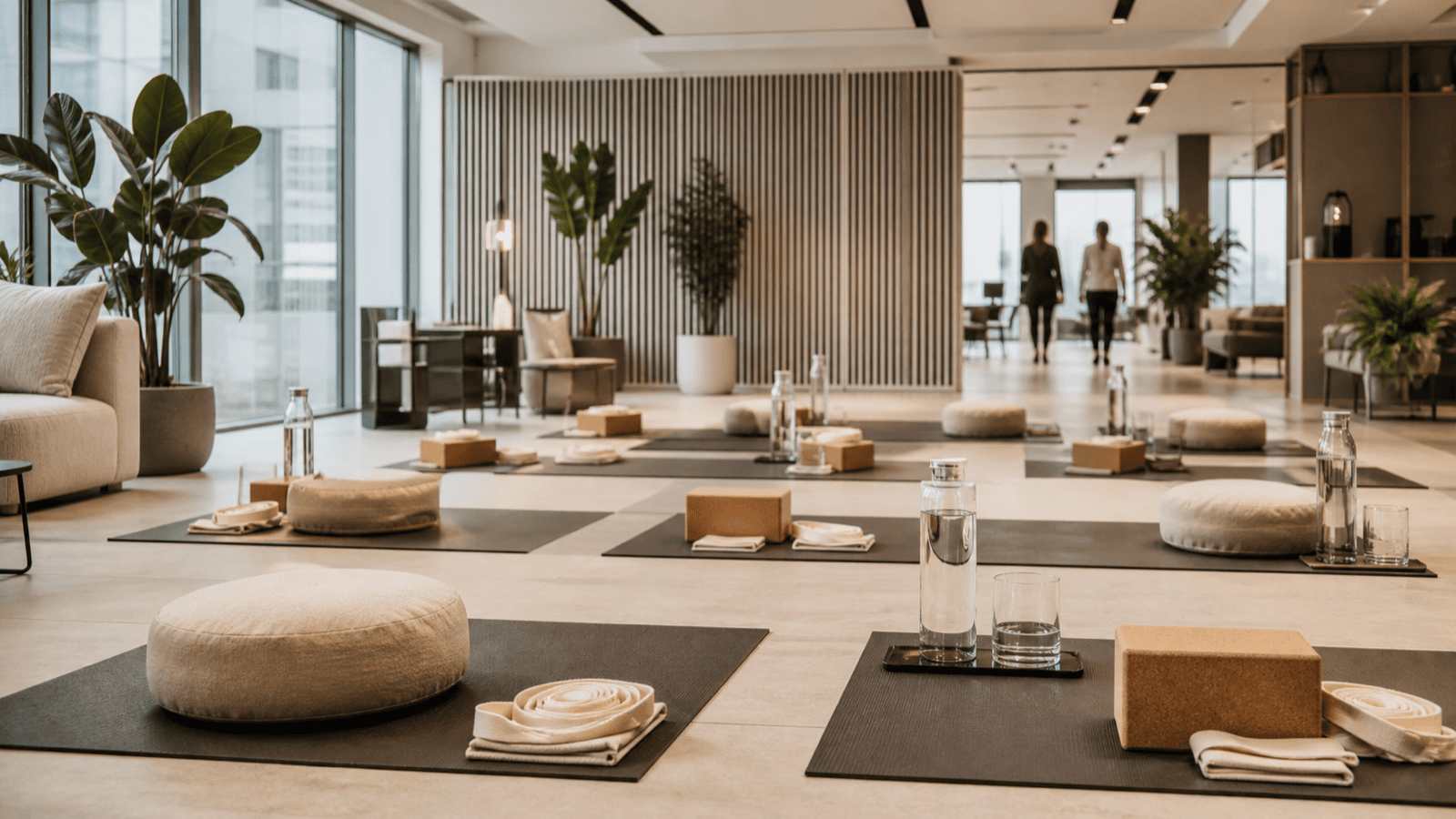
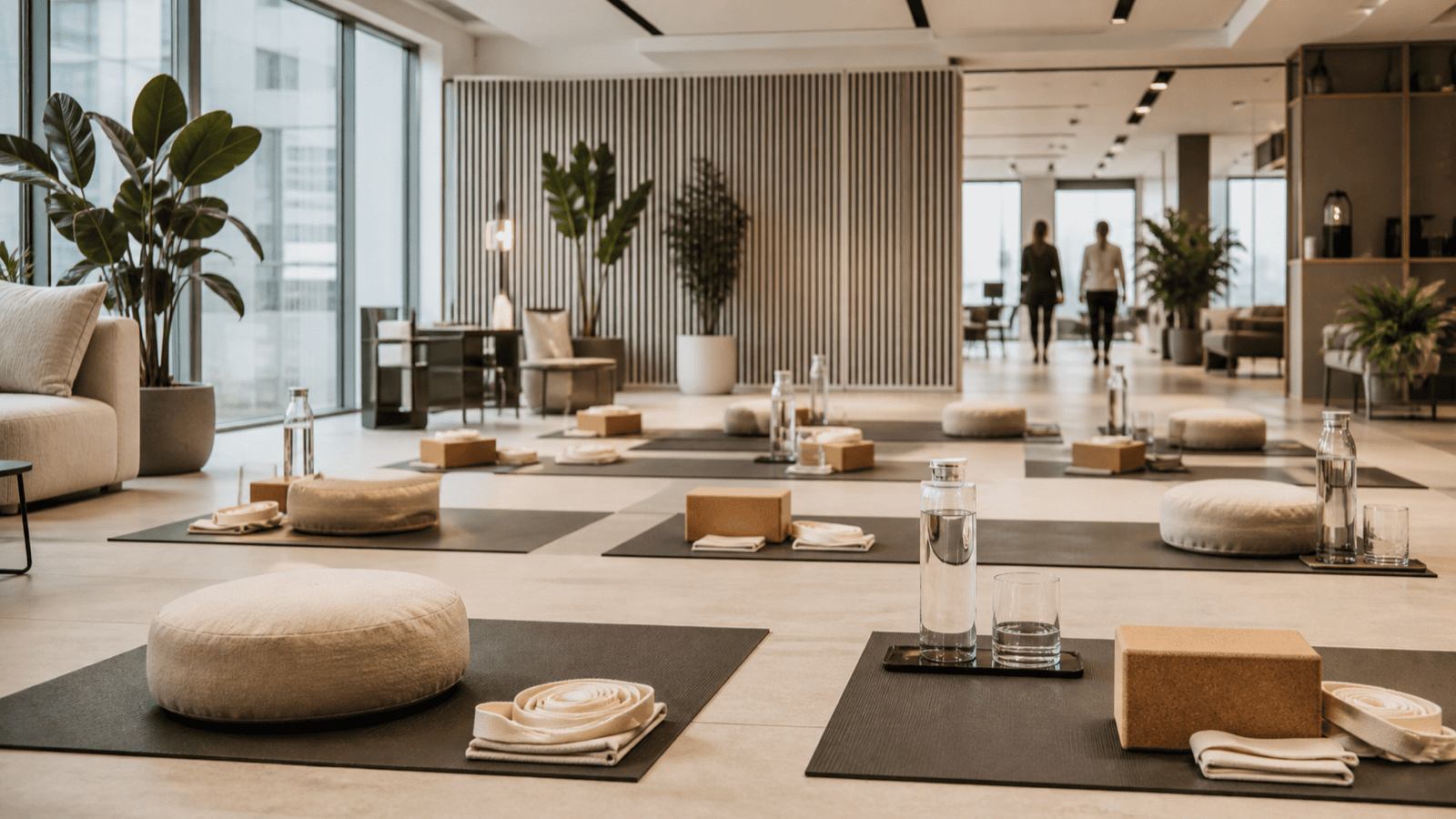
Health day at work – a scenario that actually works
Practical guide: how to plan a health day at work with pilates, HR goals, schedule, communication and outcome measurement for the entire team.
- Published
- June 1, 2026
- Updated
- June 1, 2026
When a health day makes sense, and when it doesn't
A health day works in three situations: after an intense quarter, as a starter for ongoing wellness initiatives, or when signaling a cultural shift about how the company values people. The problem is that many companies organize a health day not because it's strategically needed, but because there's an anniversary, leftover budget, or they saw a competitor do it.
Before you book an instructor and a room, answer: what specific team state do you want to change? Burnout after a project? Low engagement after a return to office? Is this a signal that the company cares? The goal shapes everything: timing, duration, who you invite, and how you communicate.
If you don't have a clear goal, a health day becomes a benefit without meaning. It's wasted budget for HR, a calendar entry for attendees, and nothing for your organizational culture.
The HR goal defines the format, not the other way around
You can run a 90-minute pilates session for the whole team during work hours, two rounds for 50 people each, or a hybrid format where remote employees join live. Each approach signals a different goal.
If you want to show the company supports recovery, schedule the session 10am–11am, so people have time before work and can start the day reset. If the goal is team integration, run two sessions followed by a shared meal. If you want to measure engagement, you need to know now what success looks like: attendance rate, feedback, number of people recommending it to others, or interest in repeating it.
- Recovery after project → calm morning, small group, shorter session.
- Team integration → two rounds + shared meal, more time for conversations.
- Employer branding → format with internal communication permission, photos for channels.
Scenario architecture: preventing boredom and building narrative
Common mistake: invitation, 60 minutes of pilates, done. Better: invitation with purpose, 15 min welcome, 45 min pilates, 15 min stretch and conversation, 30 min meal. This structure builds narrative instead of feeling like an obligation.
Before the session: ask about level, what hurts, how people want to feel. This makes the employee the hero, not a participant. During: the instructor communicates breath, offers modifications for different bodies, creates welcoming energy. After: water, light food, optional conversation about how people feel. This creates memory, not fatigue.
Pre-event communication is 30 percent of success
The invitation should explain: what pilates is, which level, whether to bring a mat, dress code, duration, if cameras will be present, entrance, parking, what comes next. Fewer questions in the employee's head before the start means higher attendance and more mental presence.
Send the invitation 2–3 weeks ahead, a reminder one week before, and confirmation the day before. For hybrid companies: clearly communicate the online option – is it a live stream or an async video after? If the online quality will be poor, better no online attendance than disappointment.
Once confirmed numbers are in, send an inspiring email: a short video from the instructor, description of what people will feel, quotes from previous participants (if you've done this before). This builds anticipation, and anticipation lifts attendance.
Measurement without paper surveys, follow-up without excess
A short QR survey – 3–4 questions, max two minutes. What did you like? What was hardest? Would you want this again? Would you recommend it to colleagues? Answers tell you whether the health day did its job.
Follow-up is not an email spam with photos. It's one short message: thank you for coming, if you're interested we'll do this regularly – here's a link to the survey. And stop. If results are strong, use them in your next message to leadership or the next invite.
Measurement shows leadership that the event wasn't random; it was part of strategy. Employee feedback shows you whether the health day hit its goal or needs adjustment.
How to turn this topic into a business decision
The practical value of "Health day at work – a scenario that actually works" is not another inspirational trend note. It is a decision framework for HR, People & Culture, Office Experience: what the event should achieve, who must be in the room, what the guest should feel and which proof the brand or HR team needs after the day. When the topic is treated this way, health day at work becomes a strategic format rather than an attractive extra on the agenda.
Start with the search intent behind health day at work. A person looking for this topic usually wants to know whether the format is worth the budget, how it compares with alternatives, what risks to avoid and how quickly it can be produced. The article should therefore answer concrete planning questions: scale, timing, guest profile, venue, content, communication, measurement and next-step ownership.
For generative search, the strongest answer is specific and operational: name the audience, name the use case, explain the mechanism and show what changes after implementation. This is why the article keeps returning to employee wellness event, event architecture, brand fit and measurable post-event value instead of staying at the level of wellness vocabulary.
A useful planning conversation should also separate concept, production and proof. The concept defines the promise: why this event belongs to the brand or employer at all. Production translates that promise into choreography, schedule, venue conditions, hospitality, guest handling and content capture. Proof shows what happened after the event: which people attended, what material can be used, what conversations started and whether the format deserves a second edition.
This structure protects the budget from decorative decisions. Flowers, props, music and styling matter, but only when they support the intended outcome. If the audience is a premium client group, the experience needs privacy, fluent hosting and precise pacing. If the audience is employees, it needs accessibility, psychological safety and communication that does not make movement feel performative. The same pilates-based format can therefore serve different goals, but only when the brief is honest about the people in the room.
- Use health day at work as the main entity in the brief and page title.
- Connect the topic to Corporate wellbeing, because category context improves search relevance.
- Answer who it is for, when it works, what it costs in attention and how success is measured.
- Keep one clear next action: brief, pilot, content plan, venue shortlist or stakeholder approval.
FAQ
Frequently asked questions
- How long should a health day at work be?
- 90 minutes is ideal: 15 min arrival, 45 min pilates session, 15 min stretch and water, 15 min meal. Below one hour the experience doesn't settle in; above 2–3 hours fatigue sets in, especially for untrained people.
- Can everyone participate in a pilates health day?
- Yes, if the scenario is designed for all levels. The instructor should know groups beforehand, offer exercise variations, create a welcoming energy, and clearly communicate that breathing and listening to your body matters more than perfect form.
Internal links