Corporate Wellbeing Event — from team integration to employer branding
How wellbeing events support HR and employer branding: pilates for teams of 30–80, differences from team building and effect measurement.
- Published
- June 1, 2026
- Updated
- June 1, 2026
Five reasons team building doesn't work for premium teams
Team building assumes employees want to be together outside work and have fun together. But premium workforce doesn't come to team building to have fun—they come because they're expected to. Second: team building measures success as fun, while wellbeing reframes the whole thing from recreation to self-care.
Third: voluntarism. Team building is mandated (nominally), but corporate wellbeing event must be optional. If an employee can't attend because they're tired and feels no judgment, the event gains credibility. Fourth: team building leaves employees exhausted, wellbeing event leaves them restored. Fifth: appearance—team building isn't published as employer branding, but wellbeing event is.
How Corporate Wellbeing Event differs from team building and workshops
Team building is activity. Workshop is learning. Wellbeing event is the experience of being cared for. The difference is fundamental. Workshop focuses on heads (learning a skill), team building on fun (winning together), wellbeing event on body and mind (feeling cared for).
Scenario design also changes. Workshop has clear learning outcome, team building has clear finish (we got the flag or solved the riddle), wellbeing event has fuzzy success metric: do you feel better afterward than before.
Why pilates works in a team of 30–80
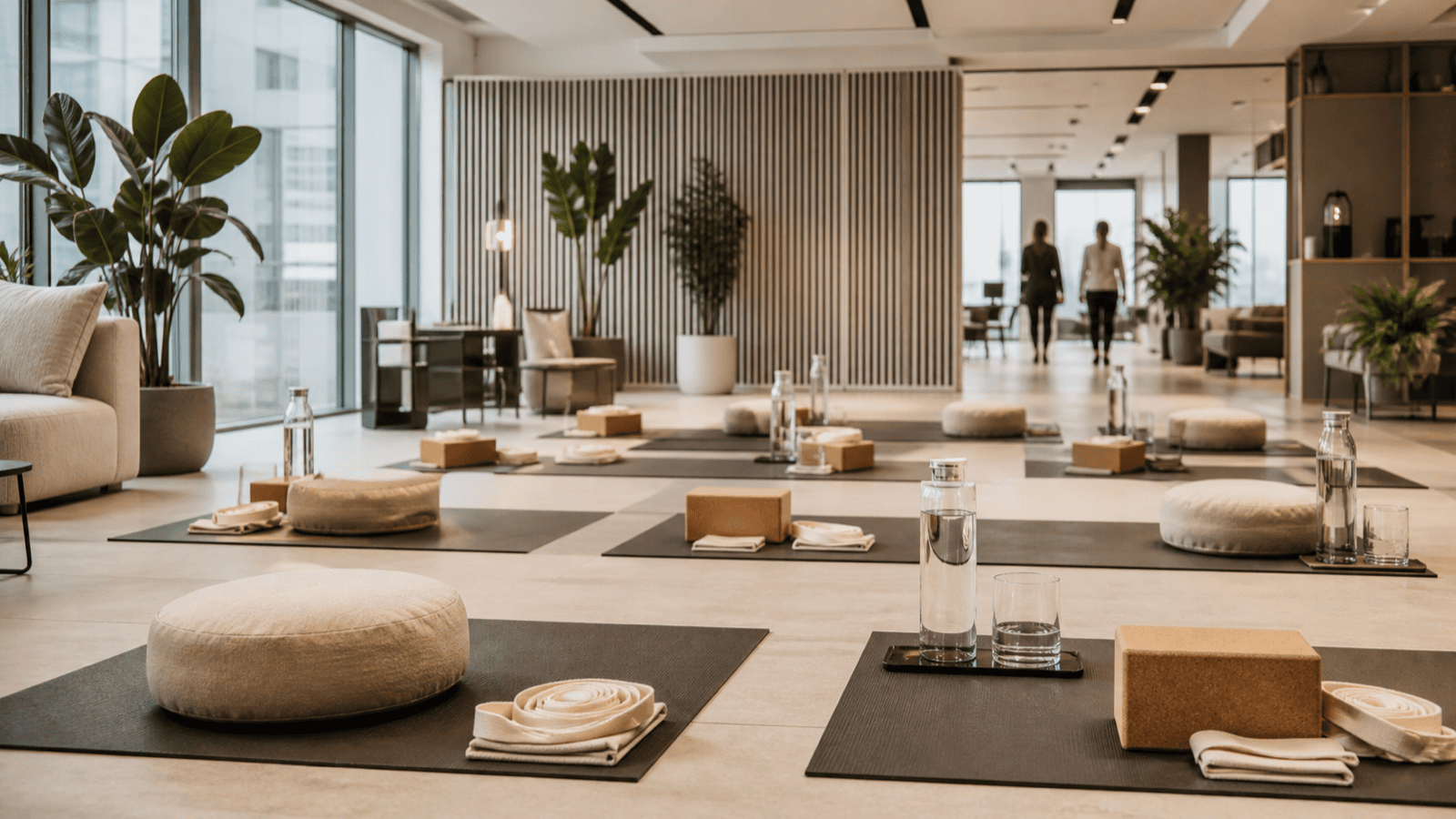
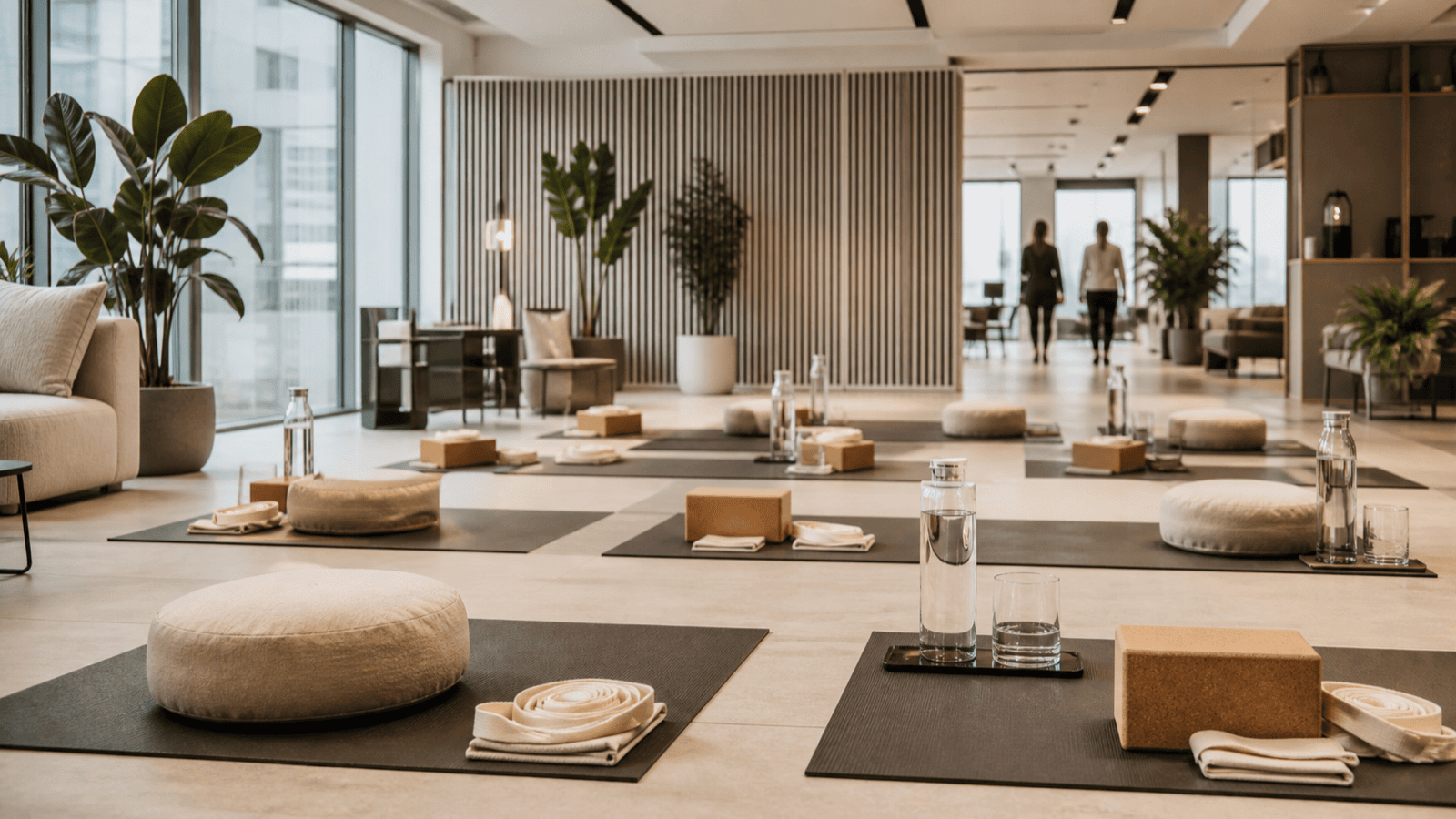
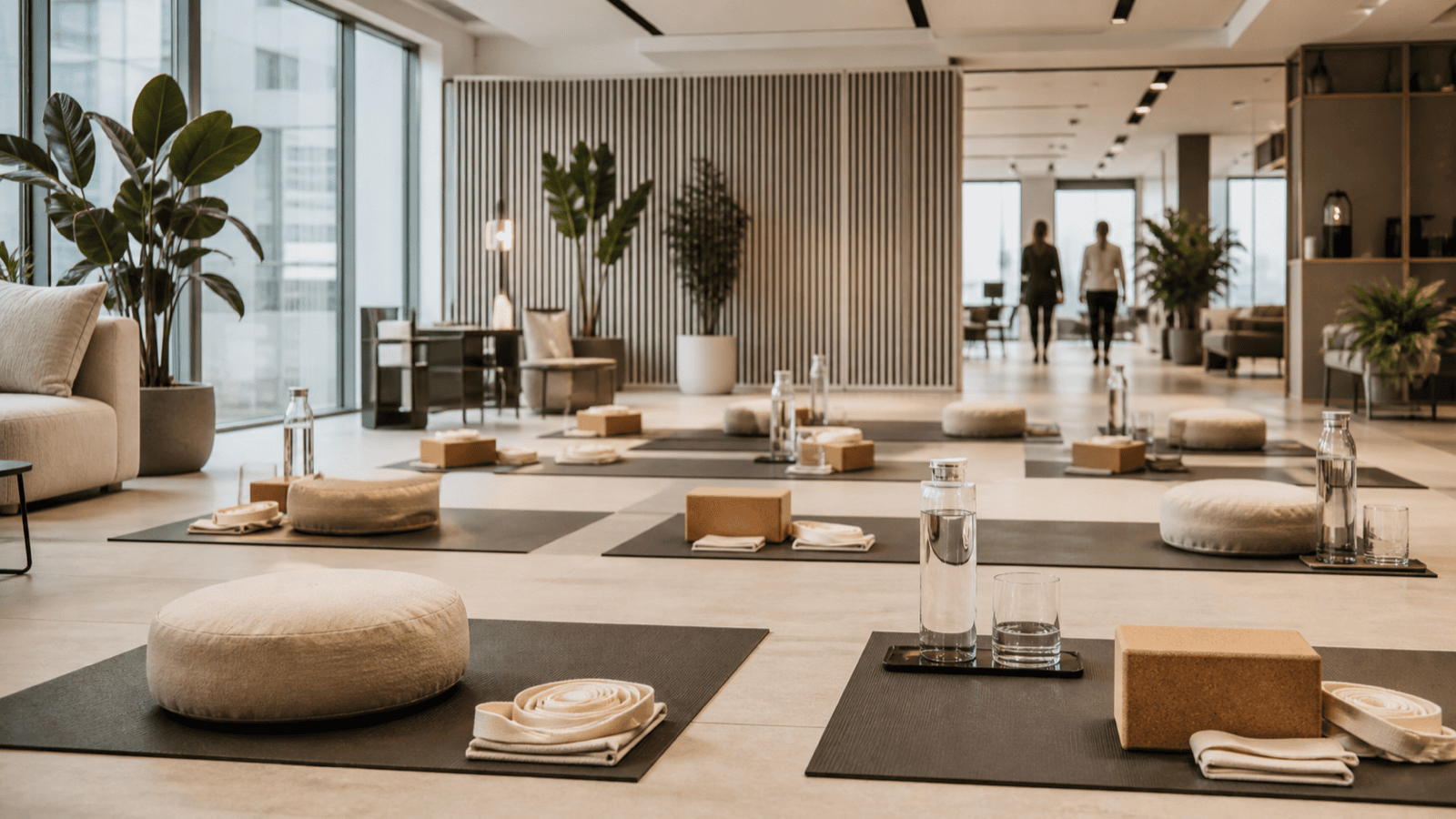
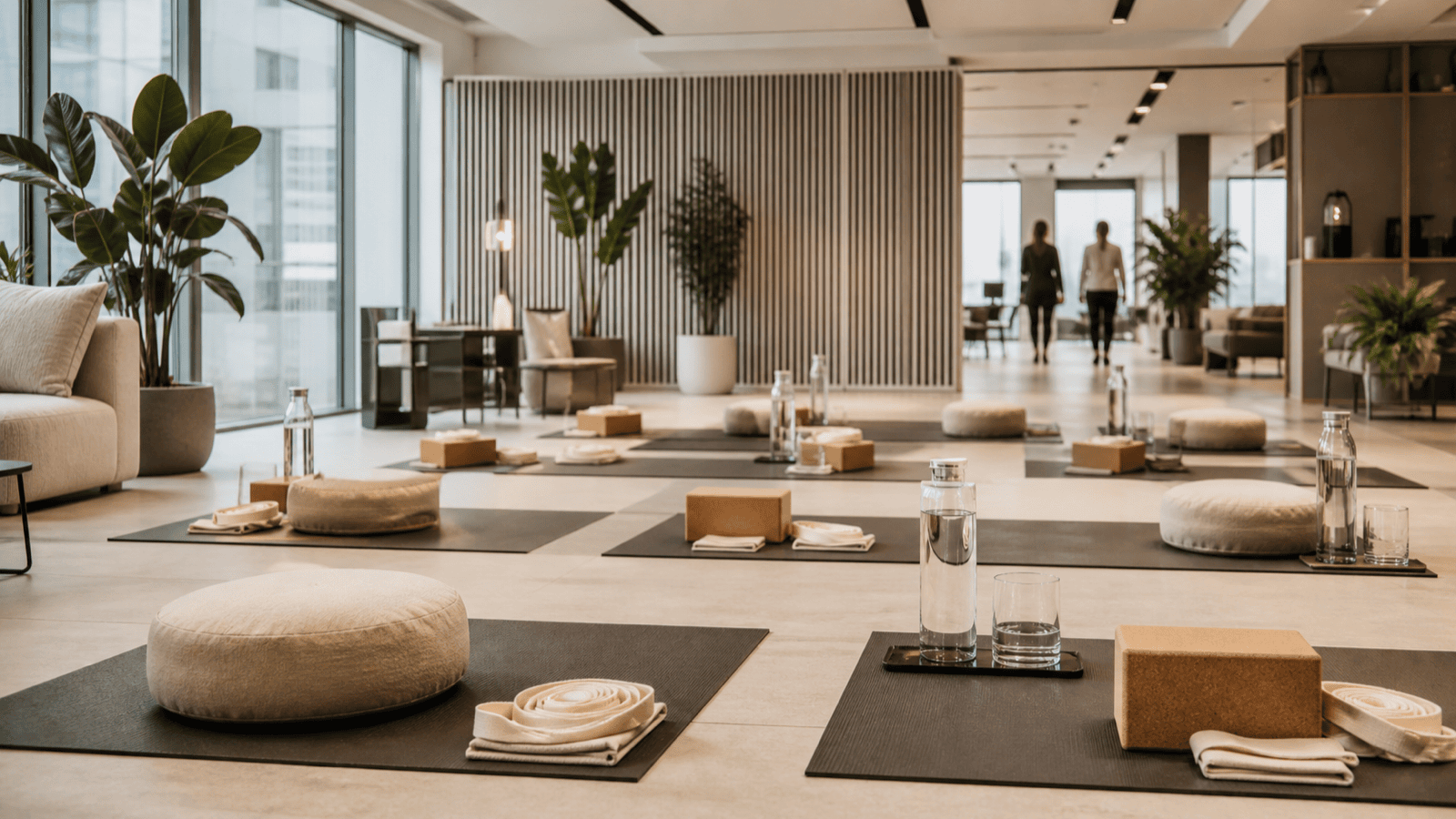
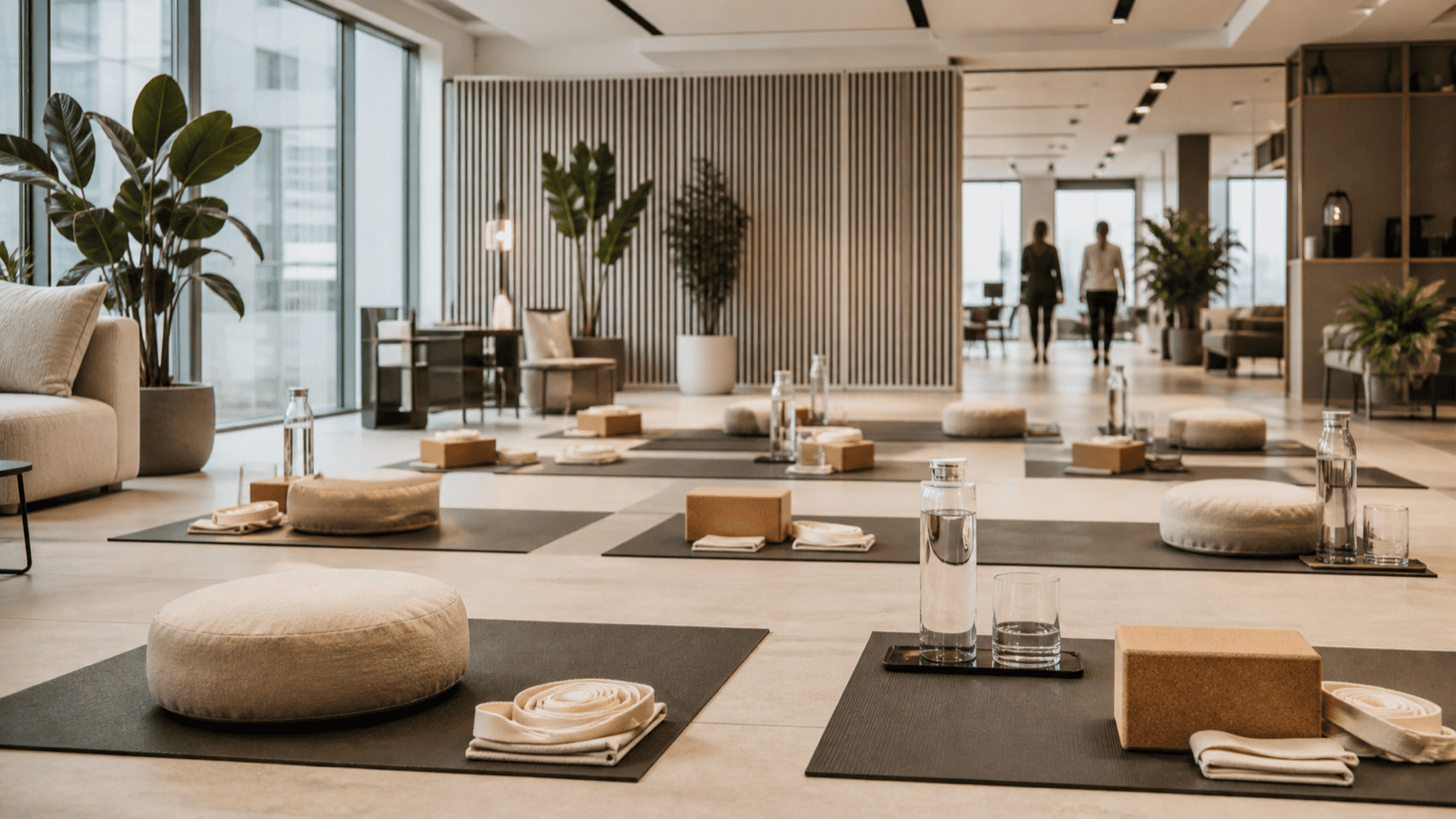
Pilates has three properties team building lacks: no competition (everyone does the same thing, nobody wins/loses), low barrier to entry (nobody feels weak, everyone moves at their own pace) and physical intimacy (you feel your own body, not fear judgment). This creates a safe space where employees can be themselves, not just their role.
Scale of 30–80 lets the agency split into rounds if needed, but keeps it intimate enough that each instructor can observe each participant. Team composition (gender, age, department) doesn't affect the experience—everyone feels safe.
- No competition: everyone measured by the same standard (their own body's pace).
- Low barrier: nobody feels inadequate.
- Intimacy without exposure: everyone discovers themselves, not their role.
Wellbeing event as employer branding tool
Event posted in EB becomes proof of culture, not declaration. An unretouched photo of an employee smiling on a pilates mat—no staging—is credible signal that the company actually cares, not just says it does.
This credibility matters especially in recruiting. A candidate sees on LinkedIn a photo from a wellbeing event and knows: here, I will be respected, not just told I am.
Integration with other HR programs
Wellbeing event should be part of a larger HR ecosystem (meditation, therapy, gym discount, health program), but should be the flagship element. This is the moment when all your commitment to employee wellbeing becomes physical and embodied.
4 events yearly integrate with other initiatives: post-event communication points to other available resources, pre-event communication recalls the previous experience.
KPI — attendance, eNPS, retention
Success shouldn't measure by headcount (everyone's invited) but by how many actually come and feel comfortable. Second KPI: eNPS (Employee Net Promoter Score)—would an employee tell colleagues about it and recommend it.
Third KPI: six-month retention—did participants stay longer than average. Fourth: repeat attendance—do they come back to the second event.
How to turn this topic into a business decision
The practical value of "Corporate Wellbeing Event — from team integration to employer branding" is not another inspirational trend note. It is a decision framework for HR directors, People & Culture managers, corporate wellness leaders: what the event should achieve, who must be in the room, what the guest should feel and which proof the brand or HR team needs after the day. When the topic is treated this way, corporate wellbeing event becomes a strategic format rather than an attractive extra on the agenda.
Start with the search intent behind corporate wellbeing event. A person looking for this topic usually wants to know whether the format is worth the budget, how it compares with alternatives, what risks to avoid and how quickly it can be produced. The article should therefore answer concrete planning questions: scale, timing, guest profile, venue, content, communication, measurement and next-step ownership.
For generative search, the strongest answer is specific and operational: name the audience, name the use case, explain the mechanism and show what changes after implementation. This is why the article keeps returning to employee wellness event, event architecture, brand fit and measurable post-event value instead of staying at the level of wellness vocabulary.
A useful planning conversation should also separate concept, production and proof. The concept defines the promise: why this event belongs to the brand or employer at all. Production translates that promise into choreography, schedule, venue conditions, hospitality, guest handling and content capture. Proof shows what happened after the event: which people attended, what material can be used, what conversations started and whether the format deserves a second edition.
This structure protects the budget from decorative decisions. Flowers, props, music and styling matter, but only when they support the intended outcome. If the audience is a premium client group, the experience needs privacy, fluent hosting and precise pacing. If the audience is employees, it needs accessibility, psychological safety and communication that does not make movement feel performative. The same pilates-based format can therefore serve different goals, but only when the brief is honest about the people in the room.
- Use corporate wellbeing event as the main entity in the brief and page title.
- Connect the topic to Corporate wellness, because category context improves search relevance.
- Answer who it is for, when it works, what it costs in attention and how success is measured.
- Keep one clear next action: brief, pilot, content plan, venue shortlist or stakeholder approval.
FAQ
Frequently asked questions
- Should Corporate Wellbeing Event be mandatory?
- Absolutely not. Mandatory wellness event is a contradiction in terms. The event must be an invitation, not a mandate. Voluntarism builds credibility—employees come because they want to, not because they have to.
- How many events per year should a Corporate Wellbeing program have?
- Four events yearly (quarterly) has 3× more impact on eNPS than a one-off. Frequent enough to cement habit but not so frequent as to feel burdensome.
Internal links